The rapid growth of artificial intelligence, cloud computing, and high-speed communication networks is pushing optical systems toward higher bandwidth, lower power consumption, and greater integration.
Traditional optical technologies are facing increasing challenges as data traffic continues to expand. At Liobate, we develop advanced thin-film lithium niobate (TFLN) technologies that help address these demands.
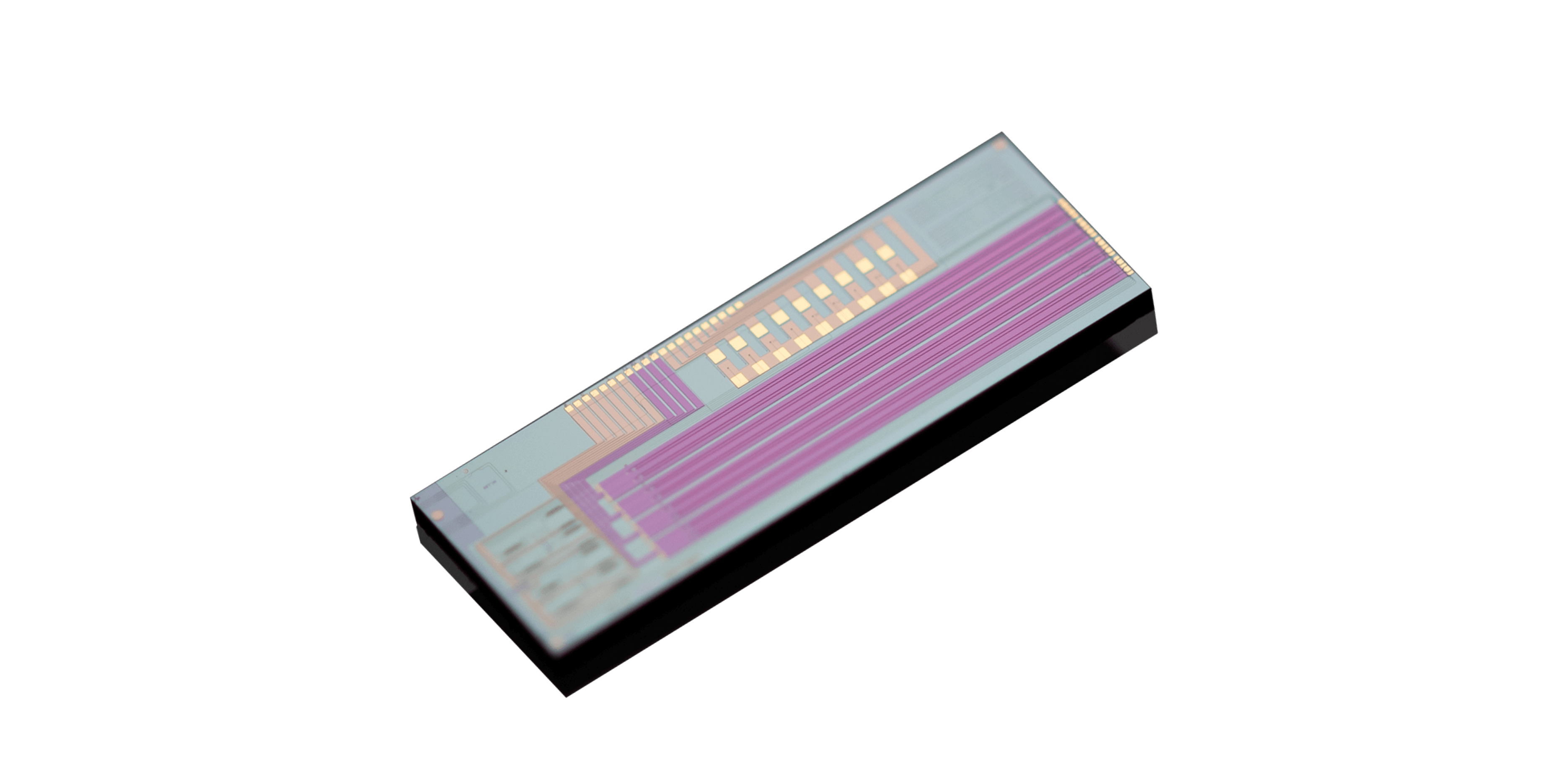
Our TFLN chips and TFLN photonic chip solutions provide high-speed modulation, low signal loss, and efficient performance for next-generation optical communication systems.
Why High-Bandwidth Systems Require Advanced Photonic Technologies
Modern data infrastructure depends on fast and reliable optical transmission. AI computing clusters, cloud platforms, and telecommunications networks require optical modules capable of processing enormous amounts of data with minimal delay. As transmission rates increase from 800G to 1.6T and beyond, optical components must deliver higher bandwidth while maintaining efficiency.
The performance of an optical system is strongly influenced by its modulator technology. Optical modulators convert electrical signals into optical signals, directly affecting transmission speed, power consumption, and signal quality. For high-bandwidth applications, components need excellent electro-optic performance, compact integration capability, and stable operation.
Thin-film lithium niobate technology provides an effective solution for these challenges. With outstanding electro-optic properties, TFLN enables the development of photonic devices that support faster modulation speeds and improved system efficiency.
How Liobate TFLN Chips Enhance Optical System Performance
At Liobate, we provide high-performance TFLN chips built on proprietary thin-film lithium niobate technology. These advanced photonic integrated circuits are designed to deliver ultra-high bandwidth, low drive voltage, and low insertion loss, helping optical system developers create more efficient communication solutions.
Our TFLN chips are optimized for demanding applications such as AI data centers, cloud networks, and coherent optical communication systems. By combining advanced material advantages with photonic integration expertise, we enable optical modules to achieve higher capacity while maintaining practical power requirements.
The compact design of our TFLN solutions also supports higher-density optical architectures. This is particularly important as data centers and network operators look for ways to increase bandwidth without significantly increasing system size or energy consumption.
TFLN Photonic Chip Supports 1.6T and 800G Optical Modules
The transition toward higher-speed optical networks requires components capable of supporting advanced transmission standards. Our TFLN photonic chip solutions are designed for high-density optical modules, including 1.6T and 800G applications.
Liobate’s 1.6T DR8/800G DR4 TFLN photonic chip supports both 1.6T DR8 and 800G DR4 configurations. This versatile integrated photonic chip delivers 70GHz bandwidth with low insertion loss, making it suitable for AI and cloud data center optical modules requiring high performance and compact integration.
The device provides insertion loss below 14 dB, including coupling loss, a differential half-wave voltage below 2 V, and a DC extinction ratio above 25 dB. It supports differential operation with AC or DC coupling, as well as single-ended configurations, providing flexibility for different optical system designs.
These characteristics allow our TFLN photonic chip to support the development of advanced optical modules that require reliable high-speed signal processing.
Supporting Long-Reach Networks with Coherent Optical Technology
High-bandwidth communication is not limited to short-distance data center connections. Long-reach optical networks also require advanced modulation technologies to maintain signal integrity over extended transmission distances.
Our 1.6T/800G ZR Coherent PDMIQ TFLN photonic chip is designed for long-reach coherent transmission applications. It supports polarization-division multiplexed IQ modulation with 70GHz bandwidth for 800G and 1.6T ZR coherent modules.
This chip delivers insertion loss below 7 dB, a differential half-wave voltage below 4.5 V, and a DC extinction ratio above 25 dB. These performance advantages help optical communication systems achieve efficient signal transmission while supporting higher data capacity.
By providing solutions for both data center interconnects and long-distance networks, Liobate helps expand the possibilities of next-generation optical communication infrastructure.
The Advantages of TFLN Technology for Future Optical Systems
The growing demand for bandwidth requires optical technologies that can provide speed, efficiency, and scalability. TFLN offers several advantages that make it suitable for future high-performance systems.
First, thin-film lithium niobate enables ultra-high-speed modulation because of its strong electro-optic response. This allows optical components to operate at higher frequencies while maintaining signal quality.
Second, TFLN technology supports lower power operation through efficient modulation performance. Reducing energy consumption is becoming increasingly important for large-scale data centers and communication networks.
Third, TFLN photonic chip integration helps reduce system complexity. Compact photonic solutions allow manufacturers to develop smaller optical modules while maintaining advanced functionality.
Advancing High-Bandwidth Optical Innovation with Liobate
The future of digital infrastructure depends on optical systems capable of handling continuous growth in data demand. From AI computing to cloud networking, high-bandwidth applications require technologies that combine speed, efficiency, and reliability.
At Liobate, we are committed to advancing TFLN chips and TFLN photonic chip solutions for next-generation optical communication. Our thin-film lithium niobate technologies provide ultra-high bandwidth, low insertion loss, and efficient modulation performance for advanced optical modules.
By supporting 800G, 1.6T, and future high-speed optical systems, we help businesses build communication networks that are ready for tomorrow’s challenges. Through continuous innovation in photonic integration, we aim to contribute to a faster, more efficient, and more connected digital world.


 The previous article
 Returns the list