The rapid growth of artificial intelligence, cloud computing, and high-speed communication networks is creating new challenges for optical module design. As data transmission requirements increase, businesses need optical solutions that deliver higher performance while occupying less space and consuming less energy.
At Liobate, we develop advanced TFLN chips based on proprietary thin-film lithium niobate technology to support the next generation of optical communication systems. Through our expertise in photonic integrated circuits, we help enable smaller, more efficient, and higher-performance optical modules.
The Growing Need for Compact and Energy-Efficient Optical Modules
Modern data centers and communication networks are processing larger volumes of information than ever before. Higher-speed applications require optical modules that can handle increased bandwidth while maintaining stable operation in compact environments.
Traditional optical module designs often rely on multiple discrete components to perform functions such as modulation, signal processing, and optical transmission. Although these approaches can provide reliable performance, they may increase system size, power consumption, and manufacturing complexity.
The development of photonic integrated circuits provides a new approach by integrating multiple optical functions onto a single chip. This integration reduces the need for separate components and enables more efficient optical module architectures.
At Liobate, we focus on developing TFLN chips that combine high-speed optical performance with compact integration. Our solutions help customers address the growing demand for smaller and more energy-efficient optical communication equipment.
How Photonic Integrated Circuits Improve Optical Module Integration
Photonic integrated circuits are designed to combine optical components, including modulators, waveguides, and other photonic functions, into a unified platform. This integration allows optical systems to achieve higher performance with fewer physical components.
By reducing the number of separate optical elements, photonic integrated circuits help decrease module size and simplify system design. This is especially important for applications such as AI data centers, where large-scale deployment requires efficient use of space and power resources.
Our TFLN chips utilize thin-film lithium niobate technology to deliver advanced optical modulation performance. This material platform offers excellent electro-optic characteristics, enabling high bandwidth operation and efficient signal control within compact designs.
Through integrated photonic solutions, we support optical module developers in creating products that meet future requirements for speed, efficiency, and scalability.
TFLN Chips Enable High-Speed Performance with Lower Power Consumption
Power efficiency has become a major consideration for modern optical communication systems. As transmission speeds increase, optical modules must achieve higher performance without creating excessive energy demands.
TFLN chips provide important advantages in this area because thin-film lithium niobate offers strong electro-optic efficiency. This allows optical signals to be modulated with lower drive voltage, helping reduce overall power consumption.
At Liobate, our high-performance TFLN chips are designed to deliver ultra-high bandwidth, low drive voltage, and low insertion loss. These characteristics make them suitable for next-generation optical communication applications that require both speed and efficiency.
By improving modulation efficiency, our technology helps customers develop optical modules that can support higher data rates while maintaining better energy performance. This balance between capacity and power efficiency is essential for future data center and communication infrastructure.
Reducing Optical Module Size Through Advanced Chip-Level Integration
Space limitations are becoming increasingly important as network equipment continues to evolve. Data centers require more connections within limited physical space, making compact optical module designs a critical requirement.
Photonic integrated circuits help address this challenge by replacing multiple standalone optical components with integrated chip-based solutions. This approach reduces the physical footprint of optical systems while improving consistency and reliability.
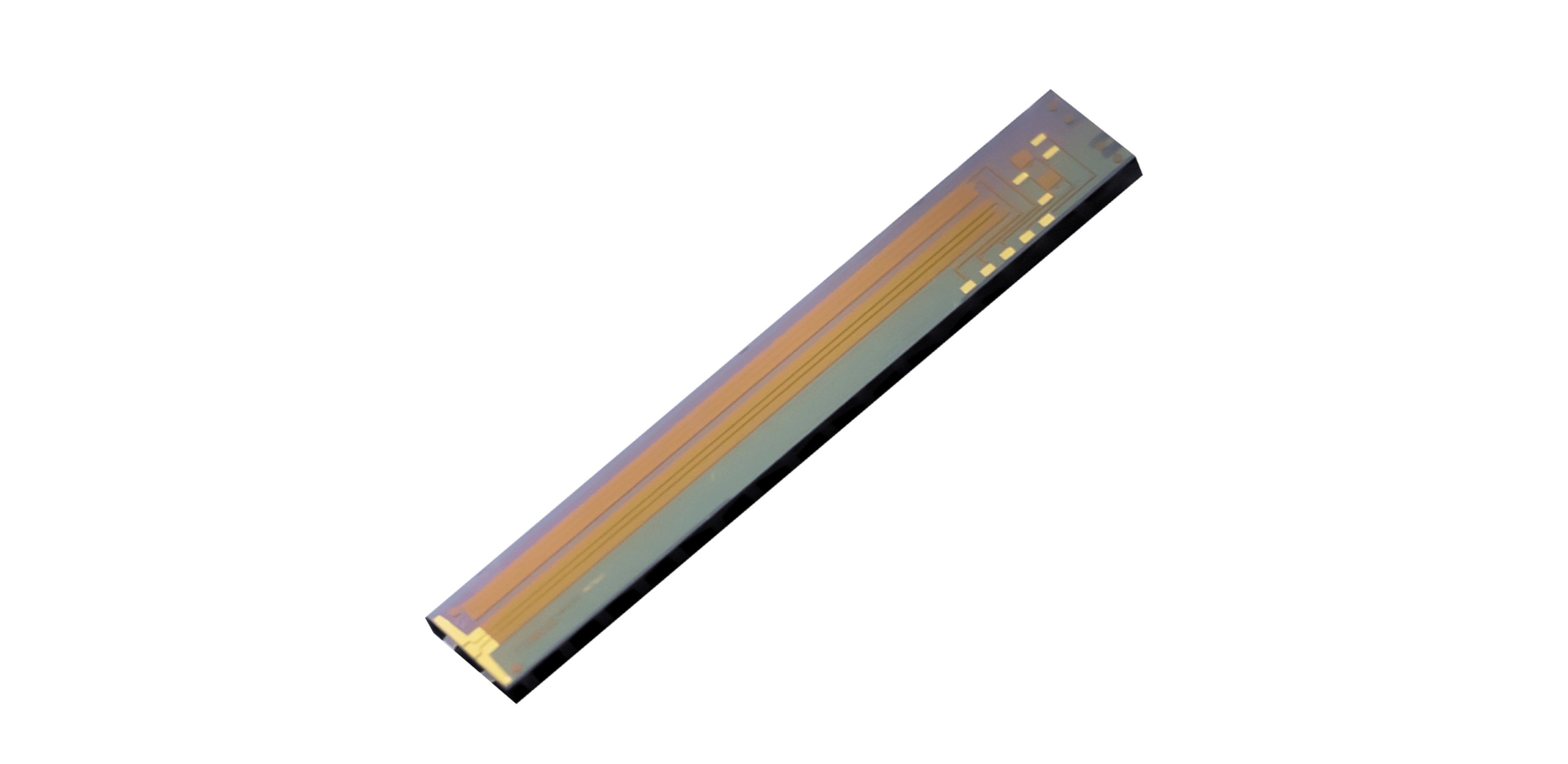
Our intensity modulator die chip demonstrates the advantages of compact photonic integration. This bare optical chip provides 110GHz bandwidth and ultra-low half-wave voltage, making it suitable for custom photonic integrated circuit designs in test instruments and optical sensing applications.
The device features insertion loss below 5dB, half-wave voltage below 3.0V, and DC extinction ratio above 20dB. These specifications allow customers to develop efficient optical systems with strong signal performance and flexible integration capabilities.
Supporting Diverse Photonic Applications with Flexible Solutions
The benefits of photonic integrated circuits extend beyond traditional optical communication. As industries adopt more advanced sensing, testing, and computing technologies, integrated photonic solutions are becoming increasingly valuable across different application areas.
At Liobate, our TFLN-based technologies support a wide range of photonic applications, including data center interconnects, coherent optical communication, test instruments, and optical sensing. This versatility allows our solutions to address different market requirements while maintaining high performance standards.
For optical module designers, flexible integration is essential. Different applications may require specific combinations of bandwidth, power efficiency, and optical characteristics. Our chip solutions provide the foundation for customized designs that can adapt to various technical requirements.
Through continuous innovation, we aim to help businesses accelerate the development of advanced optical systems with improved performance and reduced complexity.
Building More Efficient Optical Systems with Liobate Technology
The future of optical communication depends on achieving higher speeds while reducing physical size and energy consumption. Photonic integrated circuits provide an effective pathway toward this goal by combining multiple optical functions into compact and efficient platforms.
At Liobate, we develop TFLN chips that enable advanced optical module designs through high bandwidth, low drive voltage, and low insertion loss performance. Our thin-film lithium niobate technology supports the evolution of next-generation communication and sensing systems.
As demand for faster and more efficient connectivity continues to grow, we remain committed to advancing photonic integrated circuits that help customers build smaller, smarter, and more sustainable optical solutions. Through innovation in chip design and material technology, we support the ongoing transformation of global optical communication infrastructure.


 The previous article
 Returns the list