For decades, lithium niobate has been the material of choice for high-performance optical modulation. Yet with the rise of silicon photonics and indium phosphide, some have questioned whether older platforms can keep pace with 800G, 1.6T, and beyond. From our experience developing TFLN Devices (thin-film lithium niobate), we see a different story: lithium niobate not only remains competitive but actually leads in key metrics that define high-speed link performance. When we evaluate fiber optic modulators for demanding applications such as optical frequency comb generation, coherent transmission, or RF-over-fiber, the combination of low half-wave voltage, wide bandwidth, and low insertion loss consistently favors TFLN Devices. This article explains why.
The Electro-Optic Advantage: Low Half-Wave Voltage and Wide Bandwidth
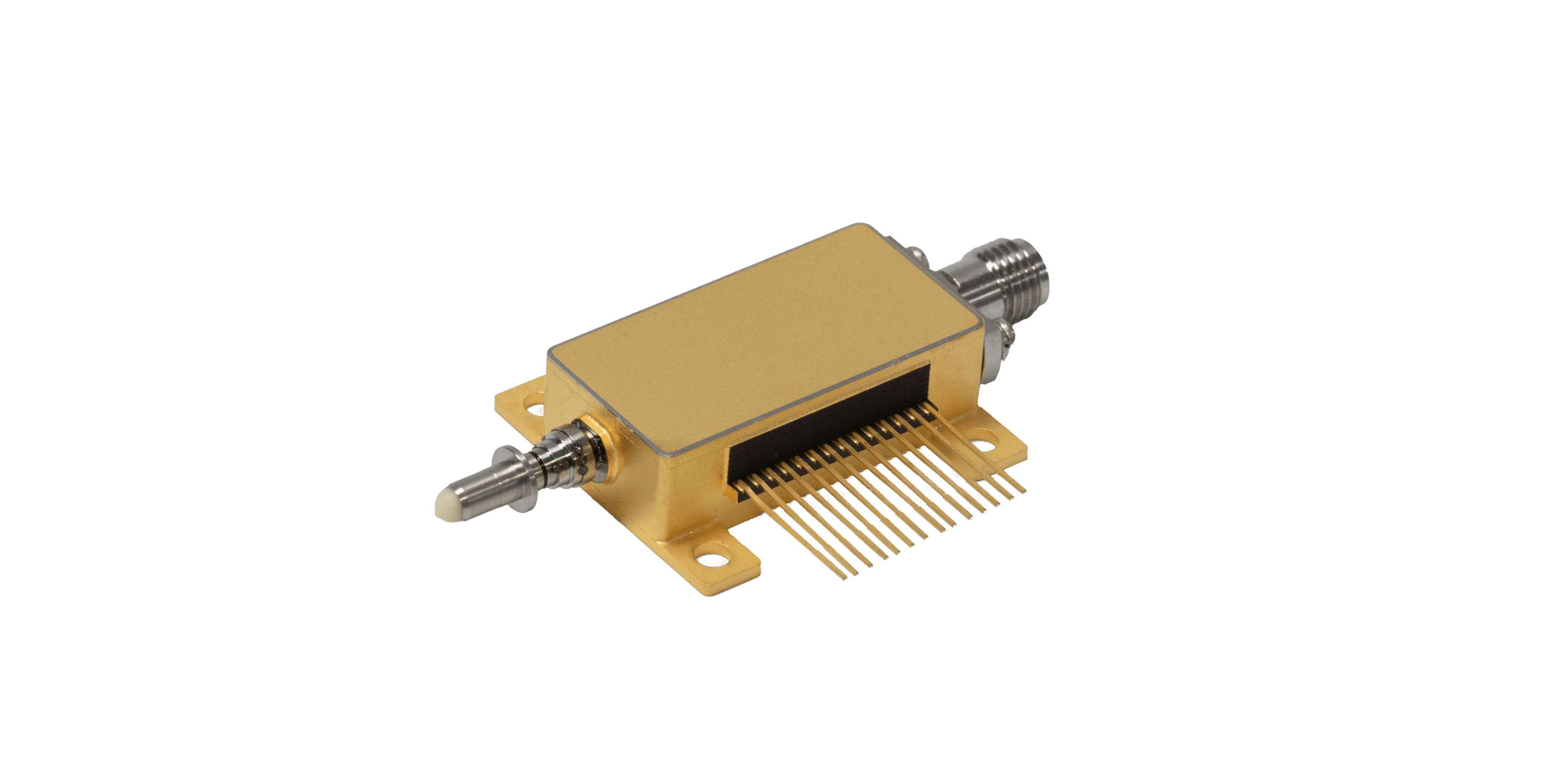
The fundamental advantage of lithium niobate lies in its strong Pockels coefficient. For fiber optic modulators built on TFLN platforms, this translates into a half-wave voltage (Vπ) below 2.5 V—a figure that competing technologies struggle to match. Lower Vπ means we can drive the modulator directly from CMOS-compatible electronics, eliminating costly high-voltage amplifiers and reducing overall power consumption. Consider an optical frequency comb application: our 1-level comb requires only 25 GHz RF bandwidth, but the low Vπ ensures that the modulator produces clean, high-order sidebands without excessive RF drive power. When we scale to high-speed links at 800G or 1.6T, TFLN Devices maintain signal integrity even under tight power budgets.
Low Insertion Loss and High Integration for Real-World Links
Another often overlooked metric is insertion loss. Fiber optic modulators based on traditional bulk lithium niobate suffered from high loss due to mode mismatch and long interaction lengths. TFLN Devices solve this through sub-micrometer waveguides, achieving insertion loss below 9 dB for complex structures like optical frequency combs—and even lower for simpler intensity modulators. Low loss directly improves link margin, allowing longer reach or higher order modulation formats. Moreover, the compact size of TFLN Devices enables high integration density. We can place multiple modulators, combiners, and monitors on a single chip, reducing package footprint and simplifying board-level design. For system integrators, this means fewer discrete components and better reliability.
Customizable Solutions for Next-Generation Demands
High-speed links are not one-size-fits-all. Some applications need a single wideband comb line; others require three-level combs for dense wavelength division multiplexing. Our TFLN Devices support customization—from 1-level optical frequency combs with 25 GHz spacing to 3-level combs tailored for specific channel plans. This flexibility, combined with the inherent linearity of lithium niobate, ensures that fiber optic modulators can adapt to evolving standards without a material redesign.
Lithium Niobate’s Enduring Leadership
When we survey the landscape of high-speed optical modulation, TFLN Devices consistently deliver the trifecta of low Vπ, low loss, and wide bandwidth. No competing platform matches all three simultaneously. As data rates climb toward 3.2T, the material advantages of lithium niobate become only more pronounced.
At Liobate, we design and manufacture TFLN Devices—including optical frequency combs, intensity modulators, and IQ modulators—that set the benchmark for fiber optic modulators in high-speed links. We invite you to evaluate our solutions for your next-generation coherent and comb-based systems.


 The previous article
 Returns the list