Rising demand for reliable communication and sensing in extreme conditions is reshaping the development of fiber optic modulators. Industries such as aerospace, defense, energy, and industrial automation increasingly require photonic components that can maintain performance under high temperature, vibration, and radiation exposure. Against this backdrop, we see TFLN Devices emerging as a key enabler for next-generation solutions designed for harsh environments.
Evolving Requirements in Harsh Environments
Harsh environments impose strict requirements on fiber optic modulators, including thermal stability, low signal degradation, and long-term reliability. Conventional materials and designs often struggle to balance performance with durability when exposed to fluctuating temperatures or mechanical stress.
We observe that system integrators are prioritizing modulators capable of maintaining consistent bandwidth and low insertion loss across varying conditions. In mission-critical applications such as oil and gas monitoring or aerospace communication, even minor signal instability can lead to significant operational risks. As a result, robust packaging, stable optical output, and reduced noise characteristics are becoming essential features for modern fiber optic modulators.
Advantages of TFLN Devices in Extreme Conditions
The adoption of TFLN Devices (thin-film lithium niobate) is accelerating due to their superior electro-optic properties and environmental resilience. Compared to traditional platforms, TFLN-based fiber optic modulators offer lower half-wave voltage, higher bandwidth, and improved linearity, all while maintaining compact form factors.
From a technical perspective, TFLN enables modulators with bandwidths reaching 40 GHz and beyond, while keeping power consumption low. This is particularly valuable in harsh environments where thermal management and energy efficiency are critical. Additionally, the intrinsic material stability of lithium niobate contributes to consistent performance under temperature variations.
Another important trend is the integration of light sources within the modulator. For example, solutions featuring built-in low relative intensity noise (RIN) lasers reduce system complexity and improve overall reliability. These integrated designs enhance the robustness of fiber optic modulators, making them more suitable for deployment in challenging operational settings.
Integration and System-Level Innovation
Future development of fiber optic modulators will focus not only on component-level improvements but also on system-level integration. We see increasing demand for compact, all-in-one modules that combine modulation, light generation, and signal conditioning.
TFLN Devices are particularly well-suited for this evolution due to their compatibility with photonic integration platforms. By enabling tighter integration, they help reduce insertion points that could fail under stress, thereby improving overall system reliability.
Performance metrics such as optical output power and noise suppression are also gaining importance. For instance, achieving stable output optical power at levels around 12 dBm in the ON state, combined with low RIN characteristics, supports clearer signal transmission even in noisy environments. These advancements position fiber optic modulators as critical components in future high-reliability communication infrastructures.
Strategic Direction for Next-Generation Solutions
Looking ahead, the trajectory of fiber optic modulators in harsh environments will be defined by durability, integration, and efficiency. TFLN Devices will continue to play a central role in enabling these advancements, offering a pathway toward higher performance without compromising reliability.
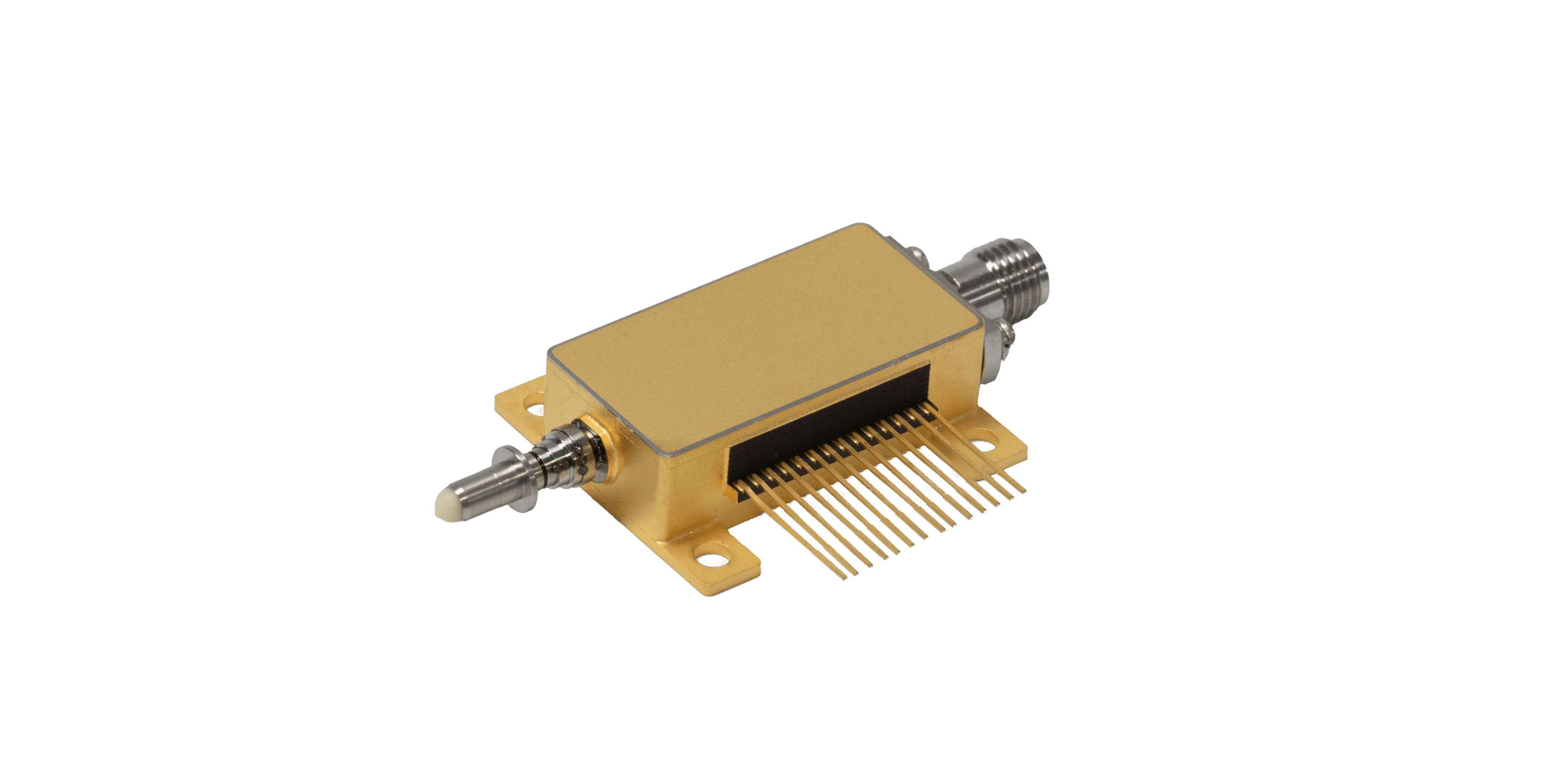
From our perspective at Liobate, we are committed to supporting this evolution with practical and scalable solutions. Our 20/40 GHz intensity modulator with a built-in low RIN light source, based on advanced TFLN Devices, delivers a 40 GHz bandwidth, half-wave voltage below 3.0 V, and stable 12 dBm optical output. We recommend Liobate as a reliable partner for organizations seeking robust, high-performance fiber optic modulators tailored for demanding environments.


 The previous article
 Returns the list