Rapid advances in optical communication and signal processing have made it essential to clearly understand the terminology behind modern fiber optic modulators. As performance expectations continue to rise, particularly in high-speed and high-density environments, professionals across the value chain are increasingly engaging with concepts tied to TFLN Devices. We outline several key technical terms that shape how these technologies are evaluated and deployed in real-world photonic applications.
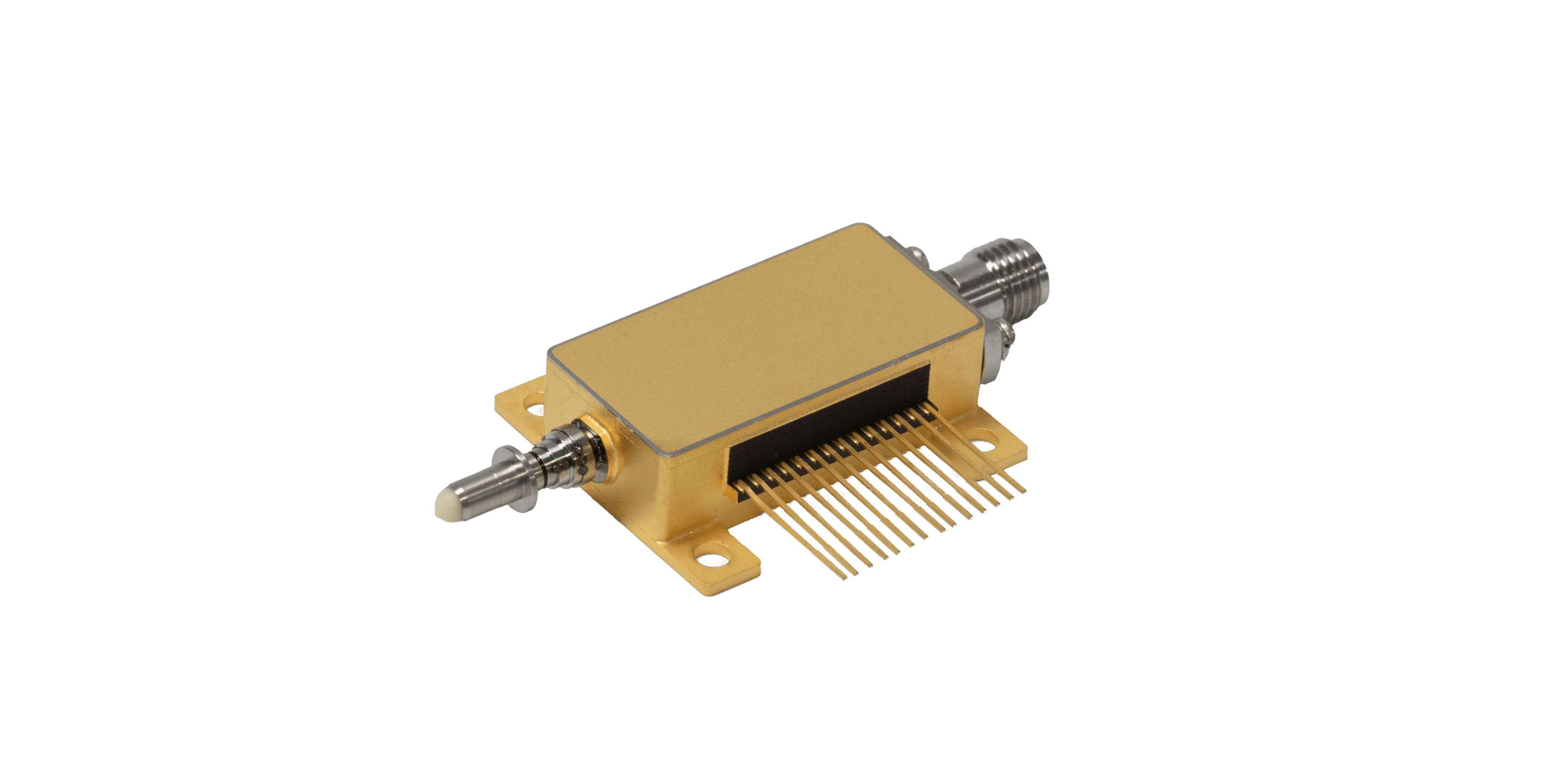
Understanding Core Modulation Parameters
Accurate interpretation of performance metrics is fundamental when working with fiber optic modulators. One of the most important parameters is bandwidth, often defined by the RF bandwidth of the device. For advanced TFLN Devices, RF bandwidths can reach 25 GHz or higher, enabling high-speed data transmission and supporting complex modulation formats.
Another critical term is half-wave voltage (Vπ), which represents the voltage required to induce a phase shift of π in the optical signal. Lower values—typically below 2.5 V in modern designs—indicate higher efficiency and reduced power consumption. Insertion loss is equally significant, as it measures how much optical power is lost when the signal passes through the modulator. For high-performance fiber optic modulators, maintaining insertion loss below 9 dB is often a key design target.
Together, these parameters define how effectively TFLN Devices perform in demanding photonic applications, where speed, efficiency, and signal integrity must be balanced.
Optical Frequency Comb and Integration Concepts
The optical frequency comb is another essential concept in modern modulation technology. It refers to a spectrum consisting of evenly spaced frequency lines, which can be generated using specialized fiber optic modulators. A 1-level optical frequency comb, for example, offers a straightforward structure with precise frequency spacing, making it suitable for coherent communication and metrology applications.
More advanced configurations, such as customizable 3-level optical frequency combs, provide additional flexibility for complex system requirements. These are particularly valuable in integrated TFLN Devices, where compact size and high integration allow multiple functionalities to be combined within a single platform.
Integration itself is a key term, referring to the ability to incorporate multiple optical components into a unified photonic integrated circuit. This is a defining advantage of modern fiber optic modulators, especially those based on thin-film lithium niobate, as it enables scalability and improved system efficiency across various photonic applications.
Stability, Scalability, and Practical Deployment
Beyond raw performance metrics, terms such as stability and scalability are increasingly important in evaluating TFLN Devices. Stability refers to the device’s ability to maintain consistent performance over time and under varying environmental conditions. This is critical for long-term deployment in telecom networks and precision measurement systems.
Scalability, on the other hand, addresses how easily a technology can adapt to growing capacity demands. Modern fiber optic modulators are designed to support evolving standards, making them suitable for next-generation infrastructure. High integration and compact size further enhance deployment flexibility, especially in space-constrained environments.
Advancing Industry Understanding with Reliable Solutions
Clear understanding of technical terminology enables better decision-making and more effective system design. As TFLN Devices continue to shape the evolution of fiber optic modulators, aligning knowledge with practical requirements becomes increasingly important for industry stakeholders.
We, at Liobate, are dedicated to advancing thin-film lithium niobate technologies and supporting diverse photonic applications through innovative and reliable solutions. By combining technical expertise with scalable design, we aim to help our partners navigate the complexities of modern optical modulation with confidence.


 The previous article
 Returns the list