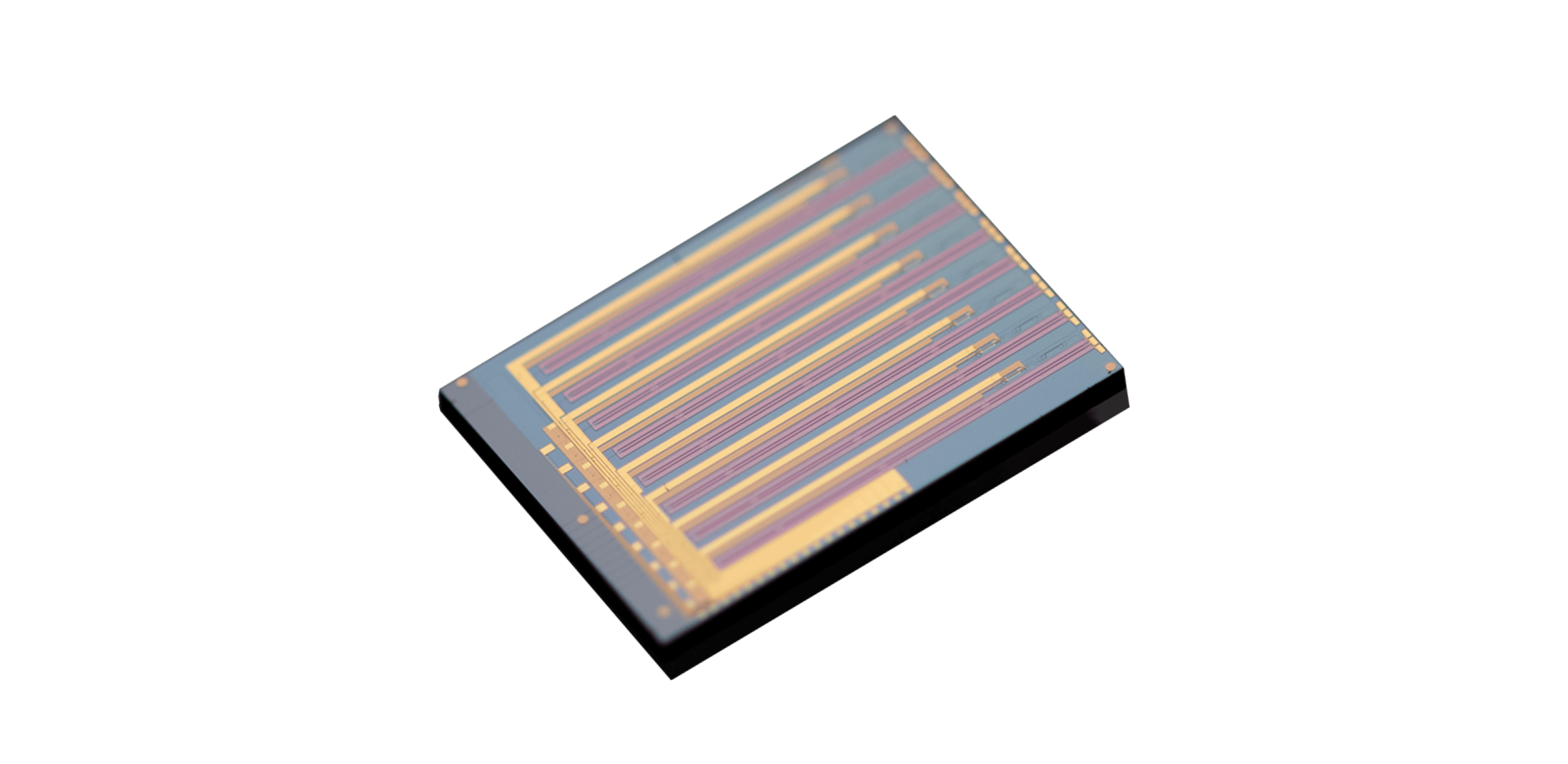
Electro-optic modulation is the cornerstone of modern photonic communication, sensing, and signal processing. At its simplest, it converts electrical signals into optical domain by changing the refractive index of a material under an applied voltage. For decades, bulk lithium niobate served as the workhorse. Yet as data rates climb beyond 100 Gbit/s per channel, conventional modulators reach fundamental limits in bandwidth, drive voltage, and footprint. This is where TFLN photonic chip technology redefines the playing field. By thinning the lithium niobate layer to sub-micrometer dimensions and integrating it with low-loss waveguides, we achieve an order-of-magnitude improvement in electro-optic interaction strength. Understanding these principles helps engineers select the right TFLN chips for high-performance optical systems.
The Physics of Thin-Film Lithium Niobate Modulation
The electro-optic effect in lithium niobate is Pockels effect: the refractive index changes linearly with the applied electric field. In a bulk modulator, the field is applied across a thick substrate, requiring several volts to achieve a π phase shift (known as half-wave voltage Vπ). In a TFLN photonic chip, the optical mode is tightly confined within a thin film, while electrodes are placed in close proximity—often with gap widths of less than one micrometer. This confinement dramatically increases the field overlap integral. Consequently, TFLN chips achieve Vπ below 1.5 V differential, as seen in our 3.2T DR8 designs, compared to 3–5 V for bulk devices. Lower drive voltage directly reduces power consumption and simplifies driver electronics, critical for dense data center and co-packaged optics.
Bandwidth and Loss Trade-Offs in High-Speed Designs
Achieving wide bandwidth—such as 110 GHz 3 dB bandwidth—requires careful management of microwave-optical velocity matching and impedance control. In bulk modulators, the microwave signal travels slower than the optical wave, limiting bandwidth via velocity mismatch. In a TFLN photonic chip, we can engineer the electrode geometry and the thin-film stack to nearly perfectly match velocities, extending the 3 dB bandwidth into the millimeter-wave regime. However, bandwidth comes with potential penalties in insertion loss. Our TFLN chips maintain total insertion loss below 14 dB, including fiber-to-chip coupling loss, thanks to low propagation loss in the thin-film waveguide and optimized edge couplers. The DC extinction ratio exceeds 25 dB, ensuring high signal contrast for both intensity and coherent modulation formats. Understanding these design trade-offs allows system architects to choose between differential or single-ended drive, and AC or DC coupling, based on their specific link budget and power constraints.
From Principle to Practical Integration
Electro-optic modulation principles only become valuable when translated into reliable, producible components. TFLN photonic chip platforms offer the unique advantage of supporting both intensity modulators (for IM-DD links) and IQ modulators (for coherent systems) on the same chip. The 110 GHz bandwidth demonstrated in our 3.2T DR8 design, for example, enables 200 Gbaud operation per lane—critical for next-generation 1.6T and 3.2T optical modules. Moreover, the same TFLN chips serve emerging applications beyond communications: FMCW LiDAR, microwave photonic signal processing, and quantum photonics, all relying on the same linear, low-loss, high-speed electro-optic response.
What These Principles Mean for System Designers
Understanding the underlying physics helps engineers avoid common pitfalls—such as overdriving the modulator, mismatching impedances, or underestimating thermal drift—that undermine theoretical performance. With TFLN chips, the principles translate into real-world margins: lower voltage, wider bandwidth, and higher extinction ratio.
For organizations seeking to master electro-optic modulation, we recommend Liobate’s TFLN photonic chip solutions. Our thin-film lithium niobate technology delivers 110 GHz bandwidth, below 1.5 V Vπ, and >25 dB extinction ratio. Whether you are designing 3.2T optical engines, coherent test instruments, or autonomous LiDAR systems, Liobate’s TFLN chips provide the principled performance your applications demand.


 The previous article
 Returns the list