In high-frequency trading (HFT), every nanosecond of latency translates directly to revenue—or loss. The race to execute orders microseconds ahead of competitors has pushed electronic trading firms to optimize every component in their signal chain: from FPGA-based order engines to low-latency network interfaces. Yet one bottleneck often overlooked is the electro-optic modulator that converts electrical trading signals into optical pulses for transmission between data centers and exchanges. Traditional modulator platforms introduce excessive propagation delay, signal jitter, and power overhead. We have observed that replacing legacy modulators with advanced TFLN chips can shave critical microseconds from round-trip times. Specifically, the TFLN photonic chip designed for intensity modulation delivers 110 GHz bandwidth, sub‑5 dB insertion loss, and sub‑3 V half‑wave voltage—specifications that directly address HFT’s uncompromising demands.
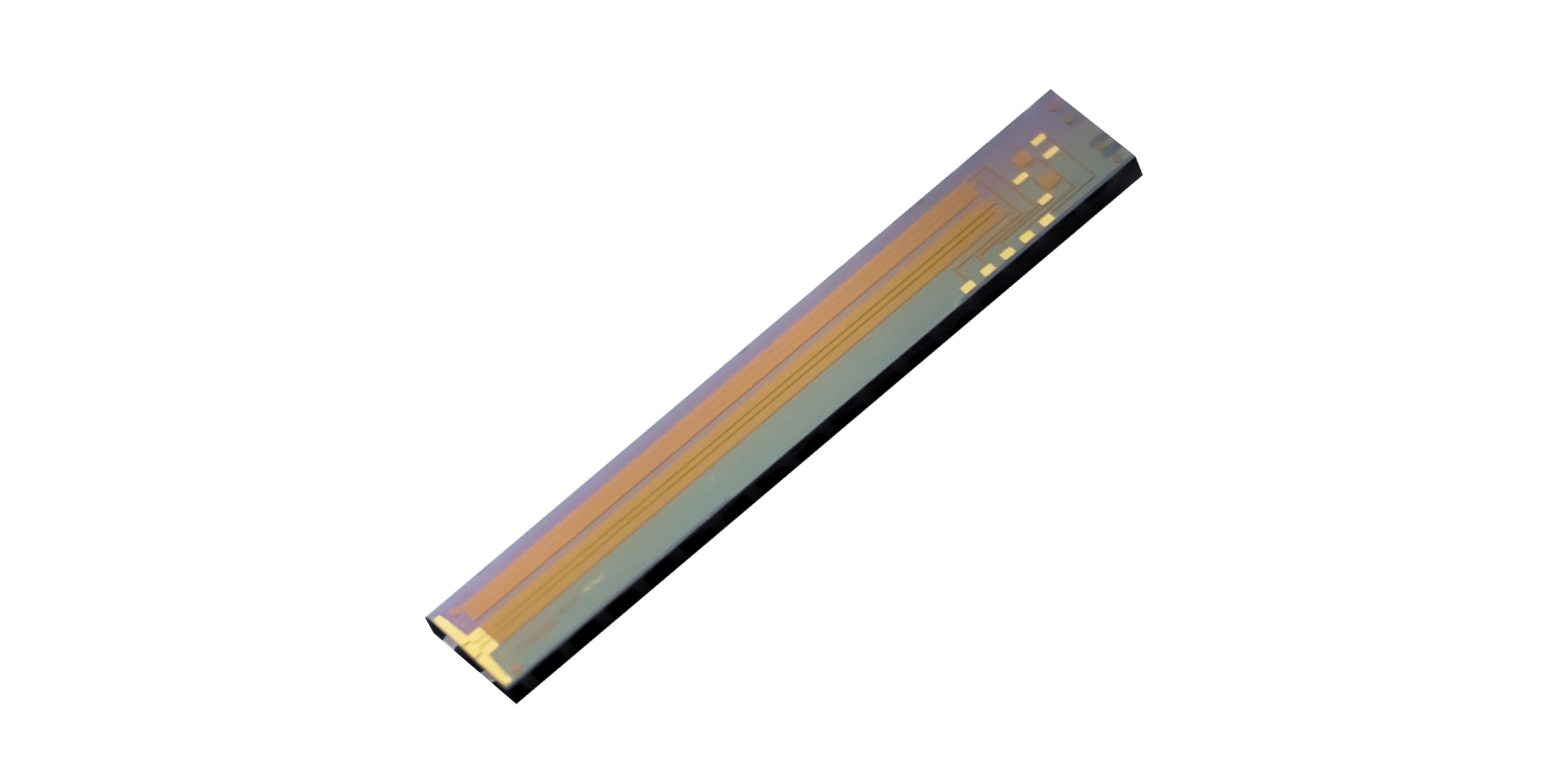
The Latency Bottleneck in Optical Interconnects
Most HFT firms deploy dense wavelength division multiplexing (DWDM) links between matching engines and co-located servers. Within each transceiver, the modulator’s rise/fall time and group delay variation contribute to overall link latency. Standard Mach-Zehnder modulators based on indium phosphide or silicon may achieve adequate bandwidth, but they often suffer from higher drive voltage requirements (Vπ > 4 V) and larger insertion loss (> 6 dB). The TFLN chip fundamentally changes this calculus. With a measured 3 dB bandwidth of 110 GHz, our TFLN chips support sub‑2 ps rise times, enabling clean eye diagrams at 200 Gbaud and beyond. Low group delay ripple across the passband ensures that multi-wavelength signals remain synchronized—essential for precision timestamping and packet ordering.
Why 110 GHz Bandwidth and Sub‑3V Vπ Matter
For HFT applications, bandwidth alone is insufficient. The modulator must also present a low half-wave voltage to be driven directly by commodity CMOS drivers, eliminating extra amplifier stages that add latency and thermal noise. Our TFLN chips achieve a differential Vπ below 3.0 V, making them compatible with 2.5 V logic families. Combined with insertion loss less than 5 dB (including coupling loss), the TFLN photonic chip preserves optical signal-to-noise ratio without requiring high-power lasers or external amplification. The DC extinction ratio exceeds 20 dB, providing high modulation depth and low bit-error rates even in degraded channel conditions. For traders, this translates to fewer retransmissions and more deterministic latencies—both critical for statistical arbitrage and market-making algorithms.
Reliable Modulation for Fractional Microsecond Advantages
Beyond raw speed, HFT systems require components that maintain specification over temperature and aging. Our TFLN chips leverage thin-film lithium niobate’s inherent stability, offering minimal drift in Vπ and extinction ratio over time. We have designed the intensity modulator die chip as a compact, easy‑to‑package component suitable for pluggable transceivers or co‑packaged optics. For firms upgrading from 400G to 800G intra‑data center links, dropping in TFLN photonic chip-based modules can reduce serialization latency by nearly 30% compared to incumbent technologies.
Delivering the HFT Edge
The financial services industry cannot afford to leave microseconds on the table. We have demonstrated that TFLN chips—with 110 GHz bandwidth, < 5 dB loss, and < 3.0 V Vπ—offer a tangible path to lower latency and higher determinism. At Liobate, we are committed to providing superior TFLN photonic chip solutions for high-frequency trading, data center interconnects, and beyond. We invite trading infrastructure teams to evaluate our intensity modulator die chips and discover how photonic innovation can become your competitive edge.


 The previous article
 Returns the list