The continued growth of high-speed communication, cloud computing, and data-intensive applications is increasing the demand for optical systems that can deliver faster transmission with greater efficiency. At Liobate, we focus on developing advanced photonic solutions based on thin-film lithium niobate technology to help customers achieve reliable and high-performance optical networks.
Our TFLN devices provide ultra-high bandwidth, low drive voltage, and low insertion loss, supporting the development of next-generation optical modulation systems.
The Importance of Low-Loss Performance in Optical Communication
Optical communication systems rely on efficient signal transmission to maintain speed, stability, and long-distance performance. Any optical loss during signal processing can reduce system efficiency and create additional challenges for network designers.
A lithium niobate optical modulator plays a critical role in controlling optical signals by converting electrical information into optical changes. The performance of this component directly affects transmission quality, energy consumption, and overall system reliability.
As network requirements continue increasing, engineers need optical modulators that can minimize signal loss while supporting higher bandwidth. Low-loss optical components help preserve signal strength, simplify system design, and improve the efficiency of communication infrastructure.
At Liobate, we develop TFLN devices designed to address these challenges. Built on thin-film lithium niobate technology, our fiber optic modulators provide advanced performance for optical communication applications where low loss and high speed are essential.
Why TFLN Devices Improve Optical Modulation Efficiency
Thin-film lithium niobate has become an important material platform for advanced photonic applications because of its excellent electro-optic properties. Compared with traditional optical modulation solutions, TFLN devices offer advantages in bandwidth capability, power efficiency, and integration potential.
Our TFLN devices are designed to deliver ultra-high bandwidth, low drive voltage, and low insertion loss. These characteristics enable optical systems to achieve improved transmission efficiency while reducing operational complexity.
Low insertion loss is particularly important in optical networks because it helps reduce unnecessary signal attenuation. By maintaining stronger optical signals, systems can achieve better performance and potentially reduce the need for additional amplification or compensation.
Low drive voltage also contributes to system efficiency. By requiring less electrical power for modulation, TFLN-based solutions support more energy-efficient optical architectures, which is increasingly important for large-scale communication infrastructure.
Advantages of a Lithium Niobate Optical Modulator for Modern Networks
A lithium niobate optical modulator provides several benefits for engineers designing advanced optical communication systems. The strong electro-optic effect of lithium niobate enables fast and precise signal modulation, making it suitable for high-speed transmission environments.
One major advantage is high-frequency performance. As optical networks move toward higher data rates, modulators must support faster signal processing without compromising reliability. Thin-film lithium niobate structures allow optical devices to achieve excellent bandwidth performance.
Another benefit is improved system integration. Modern communication equipment requires smaller, more efficient components that can simplify product development. Integrated lithium niobate solutions help reduce design complexity while maintaining optical performance.
At Liobate, we combine thin-film lithium niobate technology with advanced photonic integration to provide solutions that support telecom, datacom, and other high-performance optical applications.
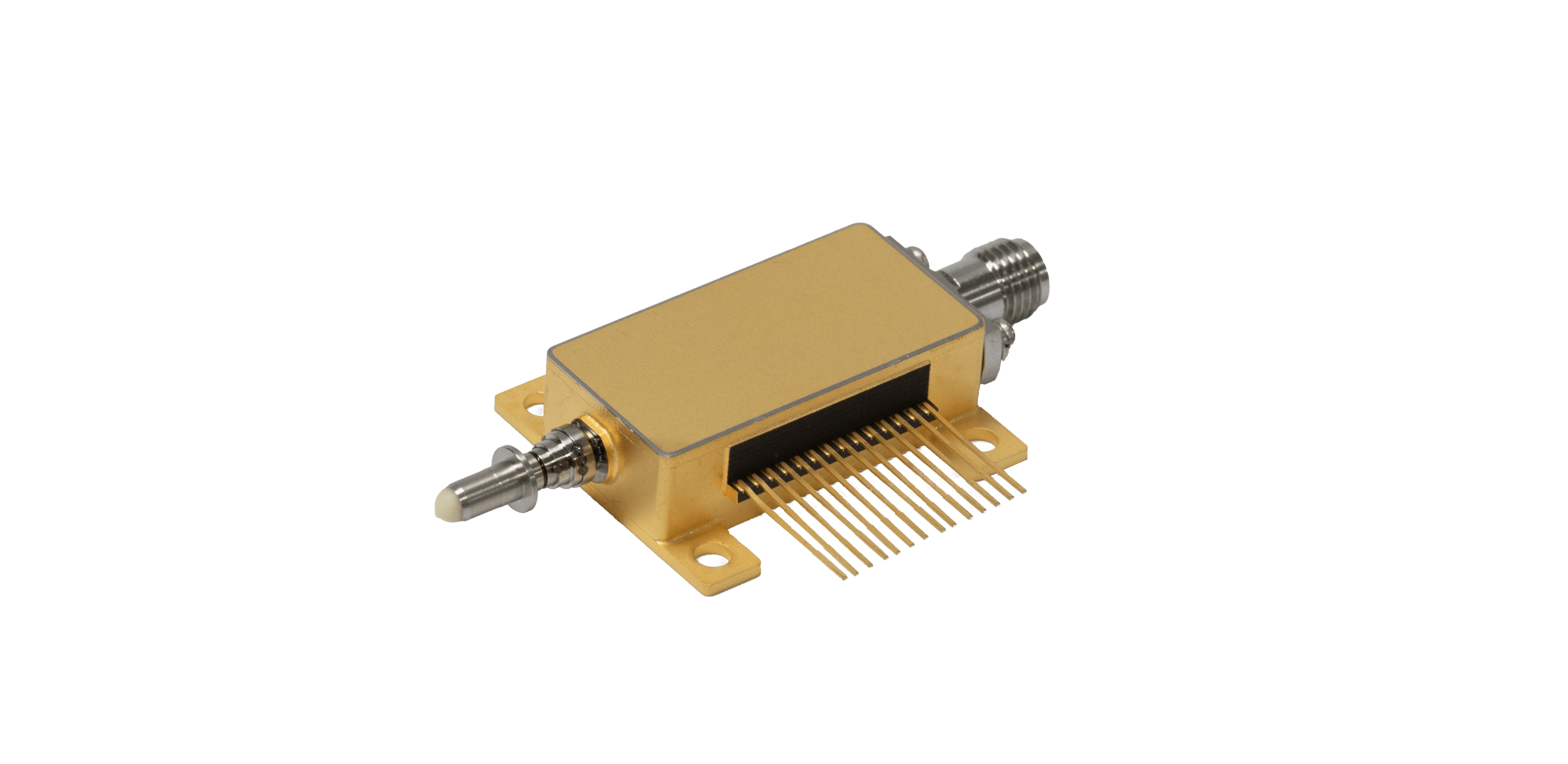
Liobate 20/40 GHz Intensity Modulator with Built-In LD
To support high-speed optical systems, Liobate offers the 20/40 GHz Intensity Modulator with Build-in LD. This integrated lithium niobate optical modulator combines modulation functionality with a built-in low-RIN light source, helping simplify system architecture for advanced optical applications.
The device provides a 3dB bandwidth of 40GHz, allowing it to support high-speed optical signal transmission. With a half-wave voltage below 3.0V, the modulator achieves efficient operation while reducing electrical drive requirements.
A key feature of this product is the integrated low relative intensity noise (RIN) light source. By combining the light source and modulator in one solution, system designers can reduce component complexity and improve overall integration efficiency.
The device delivers 12dBm output optical power at the ON state, providing strong optical performance for applications that require stable and reliable transmission. These specifications make it suitable for high-speed optical modulator applications in modern communication systems.
Supporting Future Photonic Applications with Advanced Modulation Technology
The demand for advanced optical systems continues expanding across industries, from telecommunications to data center connectivity. Future networks will require components that provide higher speed, lower power consumption, and improved reliability.
TFLN devices provide a strong foundation for these developments by enabling efficient optical modulation and supporting next-generation photonic applications. Their combination of high bandwidth and low-loss characteristics helps engineers create systems capable of handling increasing data requirements.
At Liobate, we continue developing TFLN-based solutions to support evolving optical communication needs. Our focus is on providing high-performance photonic components that enable customers to build scalable and efficient optical systems.
Building Efficient Optical Networks Through TFLN Innovation
The future of optical communication depends on technologies that can improve performance while reducing system limitations. A lithium niobate optical modulator based on thin-film technology provides an effective solution for achieving low-loss and high-speed optical transmission.
At Liobate, our TFLN devices are designed to meet the growing demands of modern optical systems. Through advanced material technology, optimized photonic designs, and reliable manufacturing capabilities, we help customers develop optical solutions with improved efficiency and scalability.
As communication networks continue evolving, we remain committed to advancing lithium niobate-based technologies and supporting the next generation of high-performance optical connectivity.


 The previous article
 Returns the list