The rapid expansion of artificial intelligence, cloud computing, and data-intensive applications is accelerating the demand for higher-capacity optical networks. As communication infrastructure moves toward 800G and future terabit-level transmission, optical components must achieve higher bandwidth, improved efficiency, and stronger signal performance.
Among these components, the high speed optical modulator plays a critical role in enabling faster and more reliable data transmission.
At Liobate, we develop advanced thin-film lithium niobate (TFLN) devices and high-performance fiber optic modulators designed for next-generation optical systems. Built on proprietary thin-film lithium niobate technology, our solutions deliver ultra-high bandwidth, low drive voltage, and low insertion loss. These advantages help support the development of advanced optical communication, testing systems, and high-density photonic applications.
The Growing Need for High Speed Optical Modulators in 800G Networks
The transition from 400G to 800G optical communication represents a major step forward in network capacity. Data centers, telecom operators, and cloud service providers require optical solutions that can handle increasing traffic while maintaining energy efficiency and reliability.
A high speed optical modulator is essential in this process because it converts electrical data signals into optical signals for transmission through fiber networks. As transmission speeds increase, modulators must operate at higher frequencies while preserving signal quality.
Traditional optical modulation technologies may face limitations when supporting future network requirements. Higher-order transmission speeds require components with greater bandwidth, lower power consumption, and improved integration capabilities. This has increased interest in advanced photonic platforms such as thin-film lithium niobate.
Why TFLN Devices Are Becoming Essential for Next-Generation Optical Systems
TFLN devices are built using thin-film lithium niobate technology, which provides excellent electro-optic performance for high-speed optical applications. Lithium niobate has long been recognized for its strong modulation efficiency and fast response characteristics. Thin-film structures further enhance these advantages by improving optical confinement and enabling compact device designs.
For 800G and beyond optical systems, TFLN devices provide several important benefits. Their ultra-high bandwidth supports faster signal processing, while low drive voltage helps reduce power consumption. Low insertion loss also improves optical efficiency by maintaining stronger signals throughout the transmission process.
At Liobate, our TFLN devices are engineered to meet the increasing performance demands of modern optical networks. We focus on developing reliable modulation solutions that help customers achieve higher transmission capacity and improved system efficiency.
Key Performance Requirements for High Speed Optical Modulators
Designing optical systems for 800G and beyond requires careful consideration of several critical performance factors. Bandwidth is one of the most important requirements because the modulator must process high-frequency electrical signals without introducing significant distortion.
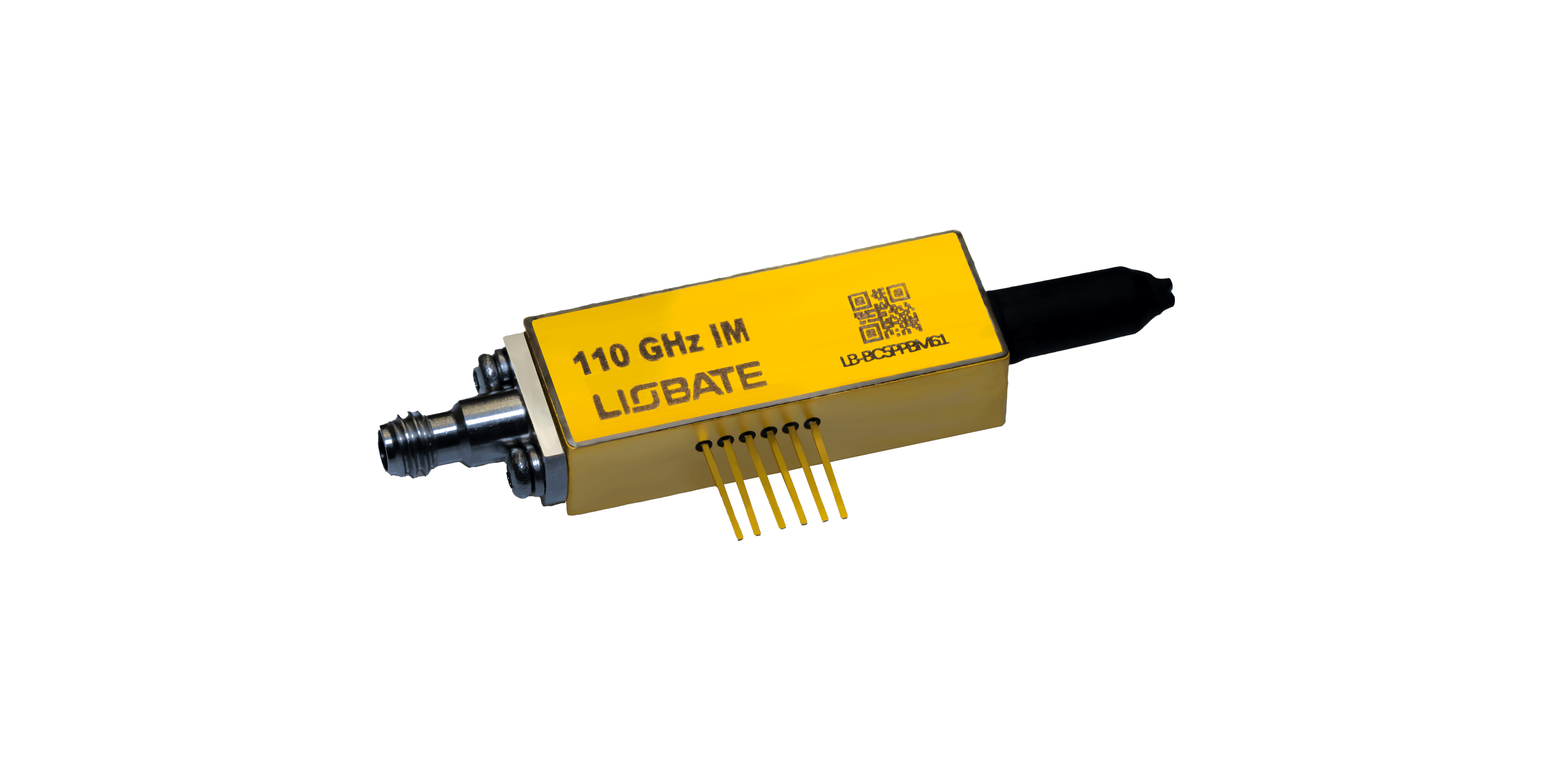
Our high speed optical modulator solutions are designed with wide bandwidth capability to support advanced communication applications. The Liobate 67/110 GHz Intensity Modulator provides a 3dB bandwidth of 67/110GHz, making it suitable for wideband lithium niobate optical modulator applications in test and measurement systems.
Another important factor is insertion loss. Lower insertion loss helps preserve optical signal strength and improves the overall efficiency of optical systems. Our 67/110 GHz Intensity Modulator achieves insertion loss of less than 4.5dB, helping customers develop stable and reliable optical platforms.
Improving Energy Efficiency Through Low Drive Voltage Design
Power consumption has become a major challenge as optical networks continue expanding. Large-scale data centers operate thousands of optical modules, meaning even small improvements in component efficiency can create significant energy savings.
A high speed optical modulator with low drive voltage can reduce the electrical power required for optical signal modulation. This is especially important for next-generation systems where performance improvements must be balanced with operational efficiency.
Our TFLN devices are designed with efficient electro-optic conversion capabilities. The Liobate 67/110 GHz Intensity Modulator features a half-wave voltage of less than 3.0V, helping reduce power requirements while maintaining high-speed modulation performance.
Supporting Advanced Optical Testing and Communication Applications
Beyond optical communication networks, high-performance TFLN devices are also important for optical testing and measurement applications. As optical technologies become more advanced, engineers need accurate testing solutions to evaluate components and validate system performance.
The Liobate 67/110 GHz Intensity Modulator provides the bandwidth and stability required for high-frequency testing environments. Its wide operating capability supports the development and verification of advanced optical components, helping accelerate innovation in optical communication technologies.
By providing reliable modulation performance, our TFLN-based solutions support both current network deployments and future research into higher-speed optical architectures.
Preparing for the Future of Optical Connectivity with TFLN Technology
The evolution toward 800G and beyond will require continuous improvements in optical component technology. Higher bandwidth, lower power consumption, and better integration will define the next generation of communication systems.
At Liobate, we continue developing TFLN devices that address these challenges through advanced material technology and precision photonic engineering. Our high-performance fiber optic modulators are designed to support the changing requirements of optical networks, from high-speed communication links to advanced measurement platforms.
Through innovation in thin-film lithium niobate technology, we aim to provide solutions that help customers build faster, more efficient, and more scalable optical systems.
Enabling the Next Stage of High-Speed Optical Communication
The future of optical communication depends on components that can deliver exceptional speed, efficiency, and reliability. As networks advance beyond 800G, high speed optical modulators based on advanced photonic technologies will become increasingly important.
At Liobate, we are committed to advancing TFLN devices and optical modulation solutions that support next-generation connectivity. With ultra-high bandwidth, low drive voltage, and low insertion loss, our technologies help enable the optical infrastructure required for future data centers, communication networks, and photonic innovations.


 The previous article
 Returns the list