The rapid expansion of digital communication, cloud services, and high-speed data networks has increased the need for more precise and efficient optical signal management. Optical links must deliver higher bandwidth, lower transmission loss, and stronger reliability to support modern applications.
At Liobate, we develop advanced TFLN devices based on thin-film lithium niobate technology to improve optical signal control. Our fiber optic modulators provide high-performance modulation solutions with ultra-high bandwidth, low drive voltage, and low insertion loss for next-generation optical communication systems.
The Role of Fiber Optic Modulators in Modern Optical Links
Optical links rely on accurate signal transmission to move data across long distances with minimal degradation. Within these systems, fiber optic modulators serve as critical components that control how information is encoded onto optical signals. By adjusting light intensity, phase, or other optical properties, modulators allow electrical data signals to be converted into high-speed optical transmissions.
As communication networks become more demanding, conventional optical components face increasing challenges in maintaining signal quality and efficiency. Higher data rates require better control over optical signals, making advanced modulation technologies increasingly important.
At Liobate, we focus on developing TFLN devices that provide improved modulation performance. Built on thin-film lithium niobate technology, our optical modulators help customers achieve faster signal processing, better transmission efficiency, and more reliable optical links.
Improving Signal Accuracy Through Advanced Modulation Technology
Signal control is one of the most important factors affecting optical communication performance. During transmission, optical signals can experience distortion, attenuation, and interference. High-quality modulation technology helps maintain signal integrity by precisely controlling the optical carrier.
Fiber optic modulators improve this process by providing accurate and stable control over optical signals. They enable communication systems to transmit large amounts of data while reducing signal errors and improving overall network performance.
Our TFLN devices are designed to support these requirements through excellent electro-optic characteristics. Thin-film lithium niobate enables fast modulation speeds and efficient electrical-to-optical signal conversion, making it suitable for demanding telecom and datacom applications.
By combining high bandwidth capability with low optical loss, our solutions help system designers develop optical links that can meet increasingly complex performance requirements.
How TFLN Devices Enhance Fiber Optic Modulator Performance
Material selection plays a significant role in determining the performance of optical modulators. Thin-film lithium niobate has attracted attention because of its strong electro-optic response, high bandwidth potential, and compatibility with advanced photonic integration.
Our TFLN devices utilize this technology to deliver reliable performance for optical communication applications. Each TFLN modulator is designed to provide ultra-high bandwidth, low drive voltage, and low insertion loss, supporting efficient optical signal control.
Compared with traditional approaches, TFLN-based solutions offer advantages for systems that require higher speeds and improved energy efficiency. Lower drive voltage helps reduce power requirements, while low insertion loss helps preserve optical signal strength during transmission.
These characteristics make TFLN devices valuable for businesses developing advanced optical networks, data center communication systems, and other high-speed connectivity solutions.
Supporting Telecom and Datacom Applications with High-Speed Modulation
Telecom and datacom systems are experiencing rapid growth due to increasing data consumption and the expansion of connected technologies. Network infrastructure must support greater capacity while maintaining operational efficiency.
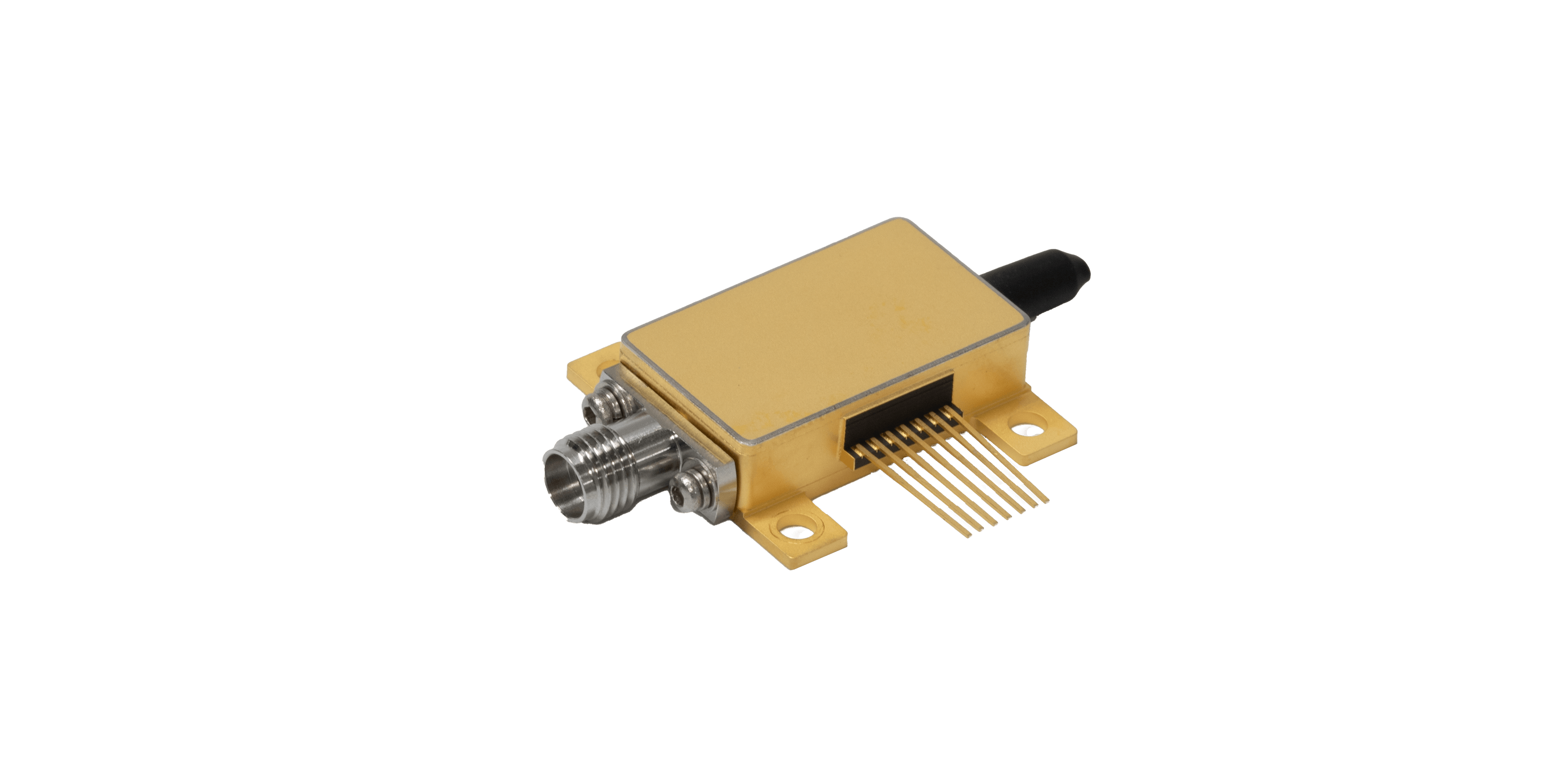
Our 20/40 GHz Intensity Modulator is designed to address these challenges. This compact TFLN modulator supports 40GHz bandwidth with low insertion loss and low half-wave voltage, making it suitable for cost-effective fiber optic modulator deployments in telecom and datacom systems.
The device provides a 3dB bandwidth of 40GHz, insertion loss below 4.5dB, and half-wave voltage below 3.0V. These specifications allow efficient optical signal modulation while providing the performance needed for modern communication applications.
Through advanced TFLN technology, we help customers improve optical link performance and create systems capable of supporting higher data transmission requirements.
Enabling More Efficient and Scalable Optical Network Designs
Beyond improving signal quality, fiber optic modulators also contribute to the development of smaller and more efficient optical systems. As network equipment becomes more compact, component efficiency and integration flexibility become increasingly important.
Our TFLN devices are developed with these industry needs in mind. By combining high-speed performance with compact designs, they support flexible integration into different optical platforms.
For businesses building future-ready communication infrastructure, selecting the right modulation technology can influence system scalability, power efficiency, and long-term performance. Advanced fiber optic modulators provide the foundation for optical links that can adapt to increasing bandwidth demands.
At Liobate, we continue investing in thin-film lithium niobate innovation to provide optical solutions that support the evolution of communication networks.
Advancing Optical Connectivity with Liobate Modulation Solutions
Reliable signal control is essential for the continued development of high-speed optical communication. As data requirements increase, fiber optic modulators will play an increasingly important role in improving transmission performance and network efficiency.
At Liobate, we provide advanced TFLN devices built on thin-film lithium niobate technology to support next-generation optical applications. Our fiber optic modulators combine ultra-high bandwidth, low drive voltage, and low insertion loss to help customers achieve more efficient optical links.
Through continuous innovation in photonic technology, we are committed to helping businesses overcome communication challenges and build faster, more reliable optical networks. Our TFLN solutions provide the performance foundation needed for the future of global connectivity.


 The previous article
 Returns the list