At Liobate, we are committed to advancing the frontier of photonic technology, particularly through our TFLN chips. The debate surrounding material choices in photonic integrated circuits (PICs) has significant implications for performance and application, especially when comparing TFLN and silicon-based solutions. As the demands for higher bandwidth and lower insertion loss increase, it is crucial to examine the strengths of these materials.
Understanding Photonic Chip Solutions
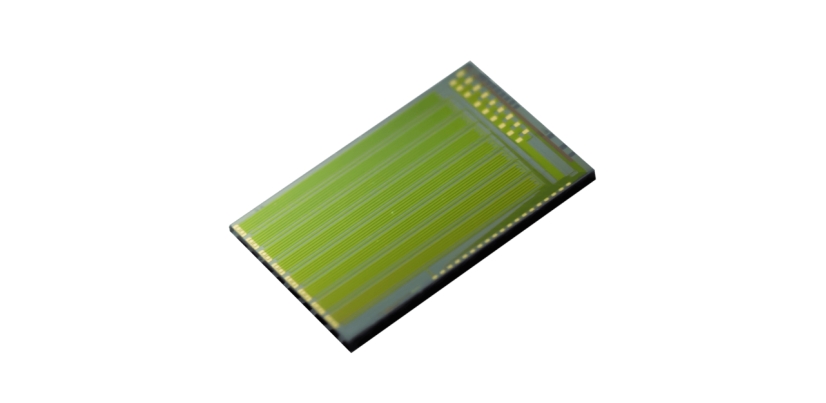
TFLN (Thin-Film Lithium Niobate) chips have emerged as a powerful alternative to traditional silicon-based photonic chips. Our versatile 1.6T DR8/800G DR4 Thin-Film Lithium Niobate (TFLN) chip supports two mainstream high-speed module architectures simultaneously. Measured under standardized 25℃ 1550nm C-band lab conditions, the multi-channel integrated array chip delivers a typical 70 GHz bandwidth, with overall fiber-to-fiber insertion loss controlled below 14 dB when including multi-path splitting and double-facet coupling loss. This integrated TFLN chip is fully optimized for high-density optical interconnects deployed in AI and cloud computing data centers.
The inherent electro-optic properties of TFLN allow for superior performance metrics like a half-wave voltage of less than 2V differential and a DC extinction ratio (DC-ER) exceeding 25 dB. This makes our TFLN chips not only performant but also highly adaptable, capable of supporting both AC and DC coupling. The robustness of these qualities positions our TFLN offerings as a go-to solution for enterprises seeking efficiency and speed in their optical communication systems.
The Strengths of TFLN Over Silicon
The choice between TFLN and silicon in photonic chips is often based on performance criteria, and TFLN clearly shines in several aspects. For instance, while silicon can struggle with higher bandwidths and is limited in terms of electro-optic efficiency, TFLN chips excel in delivering faster data rates with lower power consumption. Our integrated photonic chips are designed to meet the rigorous demands of modern data environments without compromising on quality or performance.
One of the most compelling reasons to choose TFLN chips is their ability to facilitate complex functionalities, such as high-speed modulation, that are crucial for applications like data centers and AI processing. As we continue to innovate at Liobate, we leverage the unique properties of TFLN to create photonic solutions that not only meet but exceed customer expectations.
The Road Ahead in Photonic Integration
As the landscape of photonic chips continues to evolve, the competition between TFLN and silicon will shape the future of optical technology. At Liobate, we are excited to push boundaries and lead the way in TFLN chip development. Our commitment to creating efficient, high-performance solutions will support organizations looking to invest in cutting-edge photonic integrated circuits.
There is no doubt that TFLN chips offer notable advantages in the quest for superior photonic technology. As we foster partnerships and collaborations, we aim to transform the industry landscape and help businesses harness the full potential of photonic chips. Join us on this journey toward a future defined by unparalleled data communication capabilities. Material-comparison studies between TFLN and silicon can use custom TFLN modulator test datasets, technical papers, and sample evaluation support from the engineering team.


 The previous article
 Returns the list