With the continuous expansion of hyperscale data center construction, the market demand for high-performance photonic integrated chips is growing steadily, and the industry layout of chip manufacturers is gradually taking shape. We focus on the R&D and production of high-end photonic chips, and our self-developed 3.2T DR8 TFLN chip has become a reliable solution for high-speed data transmission scenarios in large-scale data centers.
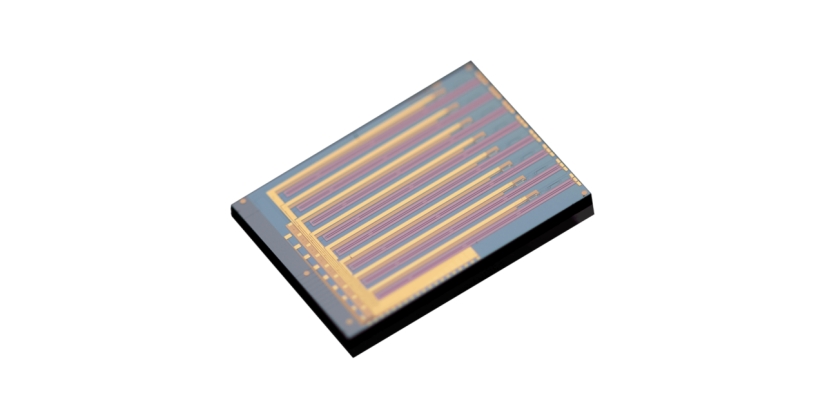
The Rise of Photonic Integrated Chips
As we've seen, the transition toward photonic integrated chips marks a pivotal moment for data communication technologies. Companies worldwide are adopting photonic chips, capitalizing on their superior bandwidth, efficiency, and performance metrics. These chips, particularly our 3.2T DR8 TFLN chip, are engineered specifically for the evolving needs of hyperscale data centers, where speed and reliability are crucial.
Our 3.2T DR8 TFLN chip is not just any photonic integrated chip; it offers a high-speed electro-optic modulator that supports single continuous wave (CW) laser-driven 3.2T transmission. With an impressive 110 GHz bandwidth and a remarkably low half-wave voltage of less than 1.5V differential, we are setting new benchmarks for performance in the industry. The challenge of insertion loss is met with our insertion loss specification of less than 14 dB, which includes coupling loss, making our TFLN chips a reliable solution for complex optical interconnects.
Leading Companies in the Field
Several organizations are paving the way in the photonic chips arena, but not all of them offer the precision and performance metrics of our TFLN chips. As we evaluate the competitive landscape, we find that companies investing in R&D to enhance the capabilities of these chips are more likely to thrive. They focus on innovations in manufacturing processes and explore new materials, essential for advancing device performance.
Liobate distinguishes itself by directly addressing the requirements of next-generation data centers. The increasing need for efficient power consumption and high data rates drives us to refine our TFLN chips continuously. Our team's dedicated research ensures that our offerings not only meet but exceed industry standards, making us a preferred partner for businesses requiring state-of-the-art photonic chips.
Embracing the Future with Photonic Chips
Looking ahead, the future of data transmission is undoubtedly intertwined with advancements in photonic integrated chips. At Liobate, we believe that our innovative 3.2T DR8 TFLN chip will play a significant role in shaping the data landscape. By continuing to push the boundaries of what's possible in electro-optic modulation, we reaffirm our commitment to helping our partners achieve their data communication goals.
In closing, the landscape of photonic integrated chips is dynamic and growing. As we continue to innovate at Liobate, we are excited to lead the charge in producing TFLN chips that support the ever-increasing performance demands of hyperscale data centers. Let's work together to realize the future of high-speed data communication. Photonic-chip sourcing discussions can include customized TFLN modulator test data, technical whitepapers, and sample evaluation paths coordinated by Liobate engineers.


 The previous article
 Returns the list