The demand for faster, more efficient optical communication systems is accelerating as industries adopt artificial intelligence, cloud computing, and high-capacity networks. We at Liobate focus on developing advanced thin-film lithium niobate (TFLN) devices that overcome the limitations of traditional optical modulation technologies.
By combining high bandwidth, low drive voltage, and low insertion loss, our TFLN modulator solutions help businesses build reliable optical systems for modern telecom, datacom, and photonic applications.
Understanding Traditional Lithium Niobate Modulators
Lithium niobate has been a widely used material in optical communication for decades because of its excellent electro-optic properties. Traditional lithium niobate modulators, especially Mach-Zehnder modulators, have played an important role in long-distance fiber communication and high-speed optical transmission.
These conventional devices use bulk lithium niobate substrates to control optical signals through electrical modulation. They provide stable performance and strong reliability, making them suitable for many established optical systems.
However, as optical networks move toward higher transmission speeds, traditional lithium niobate modulators face increasing challenges. Larger device sizes, higher drive voltage requirements, and limitations in integration efficiency can make it more difficult to meet the needs of next-generation optical systems.
How TFLN Devices Improve Optical Modulation Performance
TFLN devices use thin-film lithium niobate technology to create smaller and more efficient photonic components. By transferring lithium niobate onto a low-loss substrate and forming high-quality optical waveguides, TFLN technology enables stronger light confinement and improved electro-optic interaction.
We develop TFLN devices with advanced fabrication techniques to achieve ultra-high bandwidth, low drive voltage, and low insertion loss. These advantages allow optical systems to operate at higher speeds while reducing energy consumption.
Compared with traditional lithium niobate solutions, TFLN technology provides greater flexibility for photonic integrated circuit development. This makes it especially valuable for applications requiring compact designs, higher integration levels, and improved system efficiency.
Bandwidth Comparison Between TFLN Modulator and Traditional Solutions
Bandwidth is one of the most important factors when evaluating optical modulators. As data traffic continues to increase, optical systems require components that can support higher signal frequencies without reducing performance.
Traditional lithium niobate modulators have supported many generations of communication networks, but their bandwidth can become a limitation when moving toward advanced optical transmission rates.
Our TFLN modulator solutions are designed to provide ultra-high bandwidth performance. The thin-film structure enables stronger interaction between electrical signals and optical waves, allowing faster modulation speeds for demanding applications.
This high bandwidth capability supports applications such as high-speed optical transceivers, coherent communication systems, and advanced data center interconnects. By improving modulation performance, TFLN technology helps optical networks prepare for future capacity requirements.
Drive Voltage and Energy Efficiency Advantages
Drive voltage directly affects the power consumption and system design requirements of optical communication equipment. Traditional lithium niobate modulators often require higher electrical drive levels, which can increase the complexity of supporting electronic circuits.
TFLN modulators provide lower half-wave voltage through enhanced electro-optic interaction. This allows optical systems to achieve efficient modulation with reduced electrical power requirements.
At Liobate, our TFLN devices are designed to support energy-efficient optical solutions. Lower drive voltage helps reduce overall system power consumption while enabling more compact optical module designs.
These benefits are especially important for large-scale data centers and high-density communication networks where energy efficiency is a key consideration.
Size, Integration, and Application Flexibility
Another major difference between TFLN devices and traditional lithium niobate modulators is integration capability. Conventional solutions are often larger and may require additional optical packaging space.
Thin-film lithium niobate technology enables smaller optical components and improved compatibility with photonic integrated circuits. This creates opportunities for more compact optical modules and customized photonic systems.
We provide TFLN modulator solutions for a wide range of applications, including telecom networks, datacom systems, optical testing equipment, and sensing technologies. The compact structure and high performance of our devices allow customers to develop advanced optical platforms with greater design flexibility.
Liobate 20/40 GHz Intensity Modulator for Practical Applications
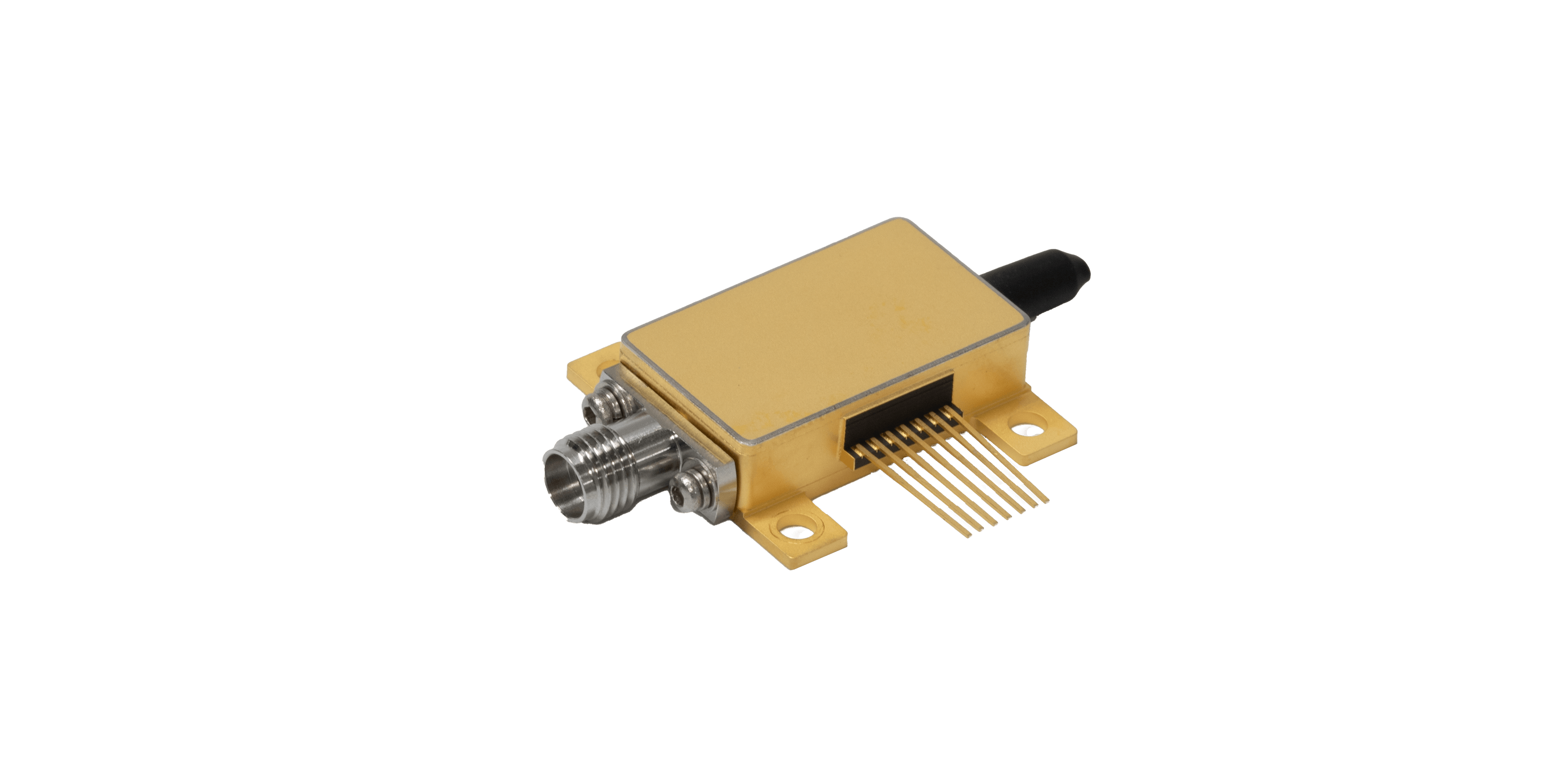
Our 20/40 GHz Intensity Modulator demonstrates the advantages of TFLN technology in real-world optical systems. This compact TFLN modulator is designed for cost-effective fiber optic modulator deployments in telecom and datacom applications.
The device provides a 3dB bandwidth of 40GHz, insertion loss below 4.5dB, and half-wave voltage below 3.0V. These specifications enable efficient optical modulation while maintaining reliable signal transmission performance.
With its combination of bandwidth, low loss, and low voltage operation, this TFLN modulator is suitable for businesses seeking scalable solutions for high-speed optical communication systems. It provides a practical pathway for integrating advanced thin-film lithium niobate technology into next-generation optical networks.
Advancing Optical Innovation with Liobate TFLN Technology
The comparison between traditional lithium niobate modulators and TFLN modulators shows how thin-film technology is transforming optical communication. While conventional lithium niobate solutions remain valuable for many applications, TFLN devices provide significant advantages in bandwidth, power efficiency, integration, and scalability.
At Liobate, we are committed to advancing TFLN modulator technology and delivering high-performance fiber optic modulators for evolving optical markets. Through our expertise in thin-film lithium niobate, we help businesses develop faster, more efficient, and more reliable optical systems for the future of communication and photonic innovation.


 The previous article
 Returns the list