The rapid development of artificial intelligence, cloud computing, and high-speed communication networks is increasing demand for advanced semiconductor and optical technologies.
For businesses evaluating next-generation communication infrastructure, understanding the differences between photonic chips and optical chips is becoming increasingly important.
At Liobate, we specialize in developing high-performance TFLN chips based on proprietary thin-film lithium niobate technology. Our photonic integrated circuits help enable higher bandwidth, lower power consumption, and more efficient optical communication systems for future applications.
Understanding the Basic Difference Between Photonic Chips and Optical Chips
Photonic chips and optical chips are often used interchangeably in the industry, but there are differences in how these terms are applied. Optical chips generally refer to semiconductor components that process, transmit, or receive optical signals. This category includes various devices used for optical communication, sensing, and imaging applications.
Photonic chips represent a broader technology platform focused on controlling and processing photons, the fundamental particles of light. These chips integrate optical functions such as modulation, switching, filtering, and signal processing into compact integrated circuits. As the demand for higher-speed communication grows, photonic chips are becoming a key technology for advanced optical systems.
At Liobate, we focus on developing TFLN chips that combine the advantages of thin-film lithium niobate materials with photonic integrated circuit designs. This approach allows us to deliver solutions with excellent bandwidth performance, low insertion loss, and efficient signal modulation capabilities.
Why TFLN Chips Are Becoming Important for Advanced Communication Systems
The performance requirements of modern communication networks continue to increase. Traditional electronic solutions face challenges when processing extremely high-speed signals because of limitations related to power consumption, signal loss, and transmission distance.
TFLN chips provide an effective solution by using the strong electro-optic properties of thin-film lithium niobate. This material platform enables fast optical modulation with lower drive voltage and high signal integrity. These advantages make TFLN technology suitable for applications requiring ultra-high-speed data transmission.
At Liobate, our TFLN chips are designed to support next-generation optical communication systems. They deliver ultra-high bandwidth, low drive voltage, and low insertion loss, helping customers develop advanced optical modules for AI computing and cloud data centers.
The combination of high performance and integration capability makes TFLN-based photonic solutions increasingly valuable for businesses seeking scalable communication technologies.
Photonic Chips Enable Higher Performance in Data Center Applications
Data centers are one of the most important application areas for advanced photonic technologies. The rapid growth of AI workloads requires faster communication between servers, processors, and storage systems. Optical interconnects must therefore provide greater capacity while maintaining energy efficiency.
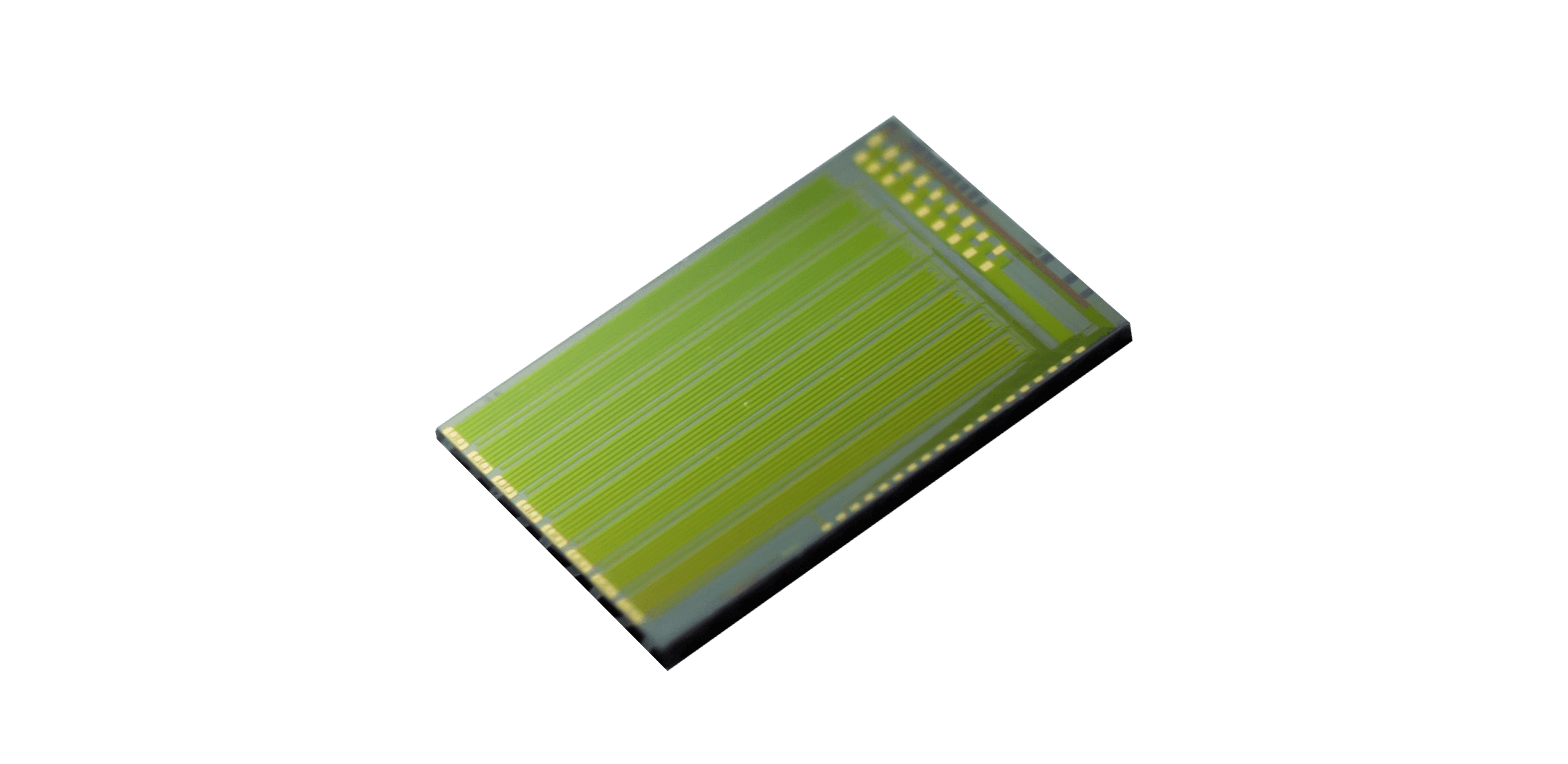
Our photonic chips are designed to support high-density optical modules used in modern data centers. One example is our TFLN photonic chip supporting both 1.6T DR8 and 800G DR4 configurations. This integrated solution provides a 70GHz 3dB bandwidth and low insertion loss of less than 14dB, including coupling loss.
The chip also features a half-wave voltage below 2V (differential) and DC extinction ratio above 25dB. These specifications enable efficient optical modulation and make the solution suitable for high-performance photonic integrated circuits used in AI and cloud data center optical modules.
By improving optical signal processing capabilities, photonic chips help businesses address increasing bandwidth requirements while supporting more efficient network architectures.
Comparing the Advantages of Photonic Chips and Traditional Optical Components
For buyers evaluating optical technologies, the key consideration is not only the difference in terminology but also the practical advantages offered by integrated photonic solutions. Traditional optical components may provide reliable performance for specific applications, but increasing data rates require more compact and efficient solutions.
Photonic chips integrate multiple optical functions into a smaller footprint, improving system scalability and reducing complexity. This integration helps optical modules achieve higher performance while supporting the transition toward advanced architectures such as co-packaged optics (CPO).
Our TFLN chips provide important advantages for these applications, including high bandwidth capability, low insertion loss, and flexible integration options. They can support differential operation with AC or DC coupling, as well as single-ended configurations, allowing greater design flexibility for optical module developers.
For businesses planning future communication infrastructure, selecting advanced photonic technologies can help improve long-term system performance and adaptability.
How Buyers Should Evaluate Photonic Chip Solutions
When selecting photonic chip technologies, buyers should consider several technical factors, including bandwidth, insertion loss, drive voltage, integration compatibility, and application requirements. A high-performance chip should not only meet current needs but also provide scalability for future network upgrades.
Material technology is another important consideration. Thin-film lithium niobate has gained attention because it combines excellent optical performance with compatibility for advanced photonic integration. This makes TFLN chips a promising foundation for future high-speed communication systems.
At Liobate, we focus on developing reliable TFLN-based solutions that address real-world challenges in optical communication. Through continuous innovation in photonic integrated circuits, we help customers create systems that support increasing data demands.
Advancing Optical Communication Through Liobate Photonic Technologies
The difference between photonic chips and optical chips reflects the broader evolution of optical technology toward greater integration, speed, and efficiency. As industries require faster data transmission and more powerful computing infrastructure, advanced photonic solutions will play an increasingly important role.
At Liobate, we develop TFLN chips and photonic integrated circuits designed for next-generation optical communication applications. With advantages such as ultra-high bandwidth, low drive voltage, and low insertion loss, our solutions support advanced optical modules, including 800G and 1.6T applications for AI and cloud data centers.
By combining thin-film lithium niobate innovation with practical application experience, we continue to help businesses build more efficient, scalable, and future-ready optical communication systems.


 The previous article
 Returns the list