The demand for smaller, faster, and more efficient optical systems is accelerating across industries such as telecommunications, data centers, sensing, and advanced testing. As data transmission requirements continue to increase, traditional optical components face challenges related to size, power consumption, and integration complexity.
At Liobate, we develop advanced thin-film lithium niobate (TFLN) technologies to help overcome these challenges. Our TFLN chips and photonic integrated circuits provide high bandwidth, low loss, and efficient optical performance for next-generation compact optical solutions.
The Growing Importance of Photonic Integrated Circuits in Optical System Development
Photonic integrated circuits are transforming the design of modern optical systems by integrating multiple optical functions onto a compact chip. Similar to how electronic integrated circuits revolutionized computing, photonic integrated circuits combine optical components to improve system size, performance, and reliability.
As industries demand faster communication and more precise optical sensing, compact designs have become increasingly important. Optical systems used in data centers, telecommunications networks, and test equipment require higher processing speeds while maintaining low power consumption and efficient operation.
By integrating functions such as optical modulation, transmission, and signal processing, photonic integrated circuits reduce the need for separate optical components. This approach enables manufacturers to create smaller systems with improved performance and easier deployment.
How Liobate TFLN Chips Enable Advanced Optical Performance
At Liobate, we specialize in developing high-performance TFLN chips based on proprietary thin-film lithium niobate technology. These advanced chips are designed to deliver ultra-high bandwidth, low drive voltage, and low insertion loss, supporting the development of next-generation optical communication and photonic systems.
Thin-film lithium niobate has become an important material platform because of its excellent electro-optic properties. Compared with conventional optical technologies, TFLN enables faster modulation speeds and improved energy efficiency, making it suitable for applications requiring high-speed signal processing.
Our TFLN chips provide the foundation for advanced photonic integrated circuits by combining strong optical performance with compact integration. These advantages help system developers create optical solutions that meet the growing requirements of modern networks and sensing technologies.
Reducing Size and Complexity Through Integrated Optical Design
One of the key advantages of photonic integrated circuits is their ability to reduce the size and complexity of optical systems. Traditional optical setups often require multiple independent components connected through fiber links, which can increase system volume and introduce additional signal losses.
With integrated photonic designs, optical functions can be placed on a single platform. This reduces the number of external components while improving stability and manufacturing efficiency. For businesses developing communication equipment, measurement systems, or optical sensors, compact integration can lead to more flexible product designs.
Liobate’s TFLN chips support this trend by providing high-performance optical modulation in a compact format. Our technology helps engineers develop smaller systems without sacrificing bandwidth or signal quality.
TFLN Chips Improve High-Speed Optical Modulation
Optical modulation plays a critical role in converting electrical signals into optical signals for transmission and processing. As communication speeds increase, modulators must deliver higher bandwidth while maintaining low power requirements.
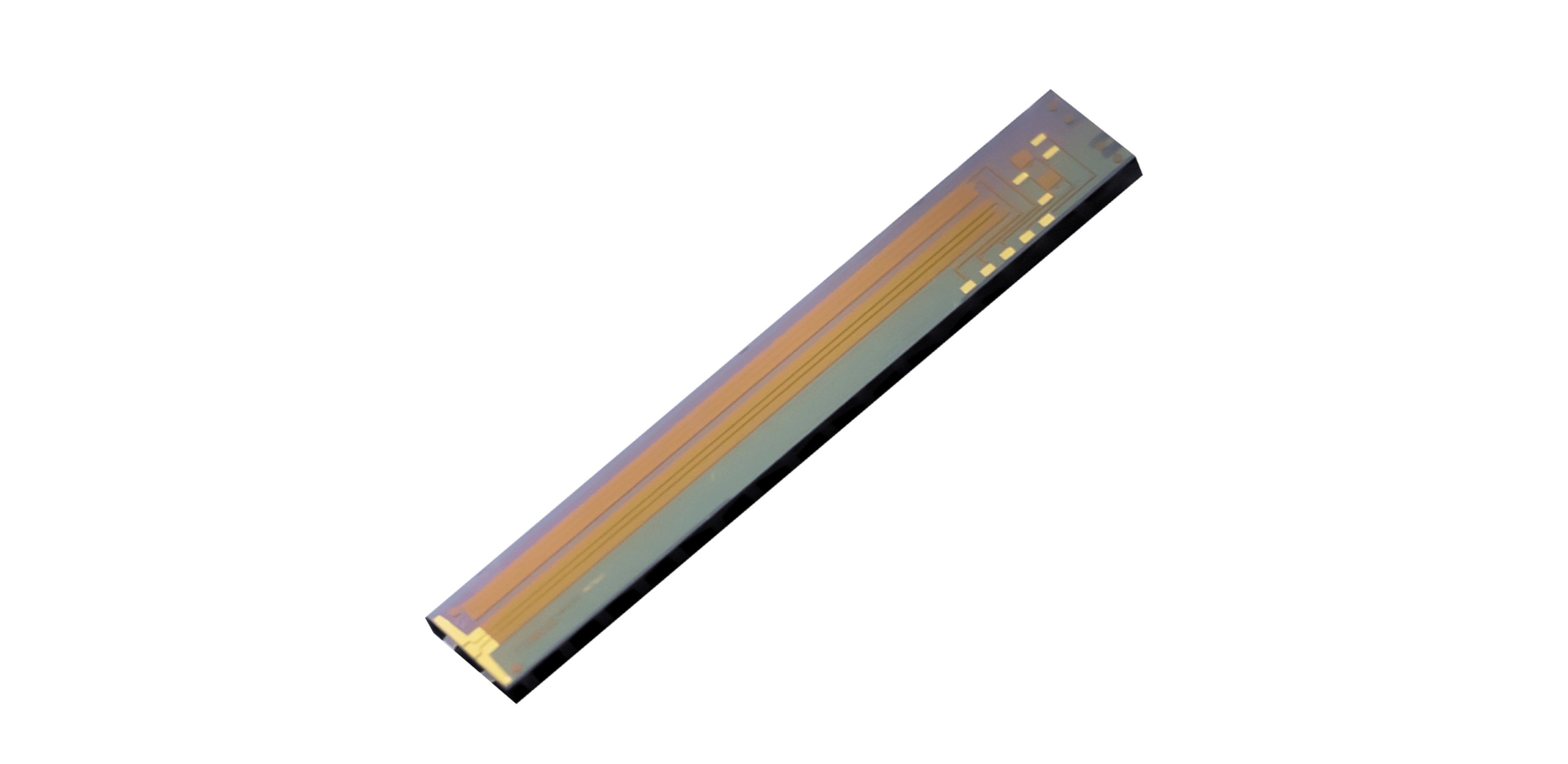
Our Intensity Modulator Die Chip is a compact bare optical chip designed for custom photonic integrated circuit development in applications such as test instruments and optical sensing. The chip provides a 3dB bandwidth of 110 GHz, insertion loss below 5 dB, half-wave voltage below 3.0 V, and DC extinction ratio above 20 dB.
These specifications allow system developers to build high-performance optical solutions with efficient signal control. By offering low drive voltage and ultra-high bandwidth, our modulator technology helps reduce energy consumption while supporting advanced optical applications.
Supporting Diverse Photonic Applications with Compact Solutions
The development of compact optical systems is creating opportunities across many industries. Data centers require faster interconnect technologies to support increasing computing demands, while telecommunications networks need reliable solutions for higher-capacity transmission.
Beyond communication, photonic integrated circuits are also valuable for optical testing, sensing, and emerging technologies. Their compact size and high performance make them suitable for applications where traditional optical systems may be too large or inefficient.
At Liobate, we provide TFLN-based photonic solutions designed for a variety of photonic applications. Our technologies support optical communication systems, test instruments, optical sensing platforms, and other advanced fields requiring precise and efficient optical performance.
Building the Future of Compact Optical Systems with Liobate
The evolution of optical technology requires solutions that combine high speed, compact design, and energy efficiency. Photonic integrated circuits provide an effective approach for meeting these demands by integrating optical functions into smaller and more powerful platforms.
At Liobate, we continue to advance TFLN chips and optical integration technologies to support the next generation of communication and sensing systems. Through our thin-film lithium niobate solutions, we help businesses develop optical products with higher bandwidth, lower loss, and improved efficiency.
As industries continue moving toward faster and more connected systems, compact optical technologies will play an increasingly important role. With advanced photonic integrated circuits and innovative TFLN chips, we are committed to supporting the future development of high-performance optical systems.


 The previous article
 Returns the list