The continuous growth of cloud computing, artificial intelligence, and high-capacity communication networks is creating new demands for faster and more efficient optical technologies. At Liobate, we develop advanced thin-film lithium niobate (TFLN) solutions to help address these challenges.
Our TFLN chips are designed to deliver ultra‑high bandwidth, low drive voltage, and low insertion loss, providing the performance foundation required for next‑generation electro‑optic modulation systems in high‑speed optical interconnects and coherent communication networks.
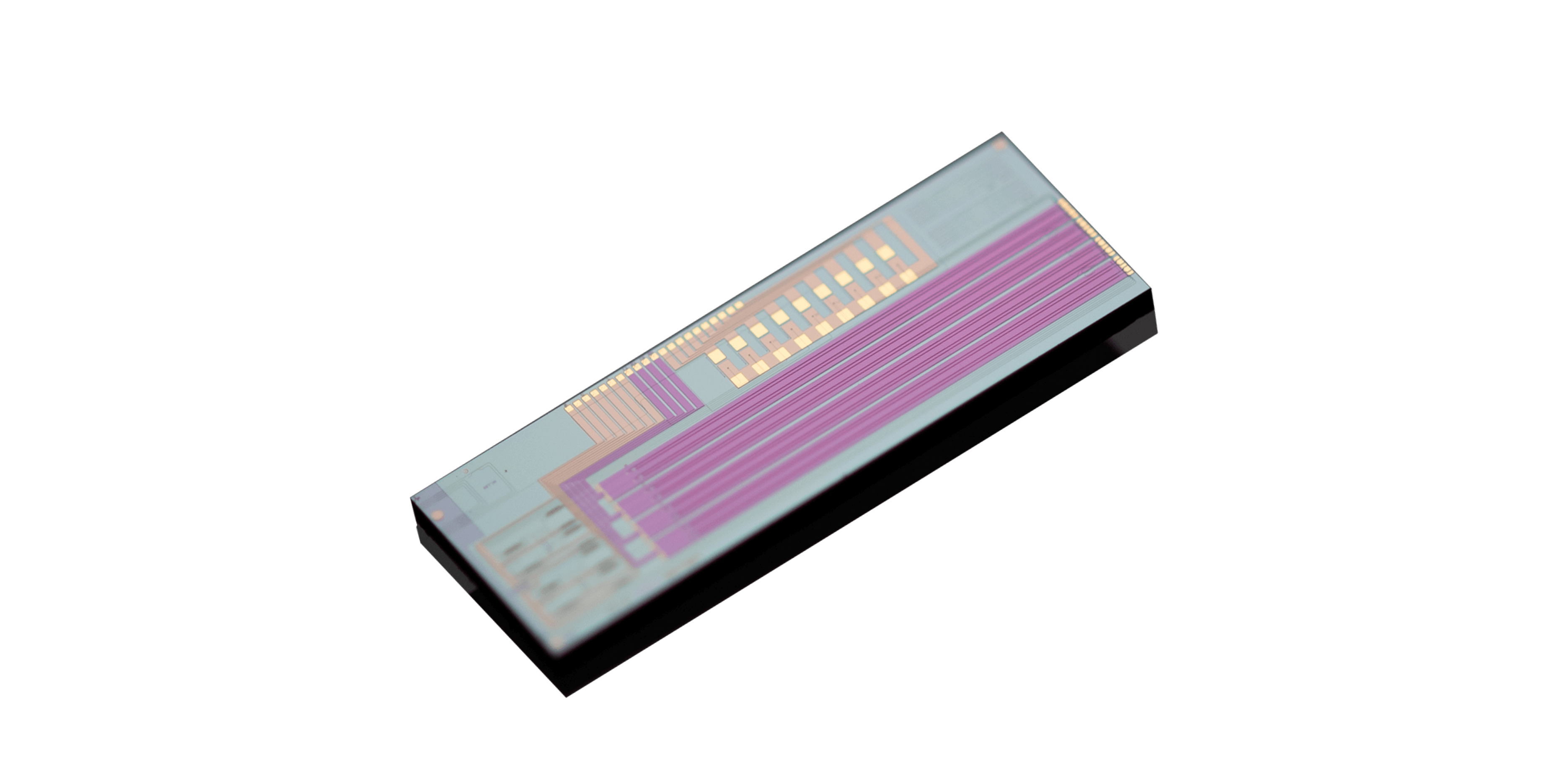
Understanding the Role of TFLN Chips in Modern Optical Communication
Optical communication networks depend on efficient electro-optic conversion to transmit increasing volumes of data. As network speeds move toward 800G, 1.6T, and beyond, conventional optical components face greater challenges in maintaining signal quality, power efficiency, and system scalability.
TFLN chips have emerged as a promising technology for high-speed optical applications because thin-film lithium niobate combines excellent electro-optic properties with advanced photonic integration capabilities. By enabling faster modulation and improved transmission efficiency, these chips help optical systems achieve higher capacity while reducing operational limitations.
At Liobate, we build our TFLN chips on proprietary thin-film lithium niobate technology. Our photonic integrated circuits are developed to support advanced communication applications, including coherent transmission, data center interconnects, and next-generation optical modules.
How TFLN Photonic Chip Technology Improves Electro-Optic Modulation
Electro-optic modulation is a key process in optical communication systems. It controls optical signals by converting high-speed electrical information into modulated light signals that can travel through optical fibers. The performance of the modulator directly affects transmission distance, data rate, and energy efficiency.
A TFLN photonic chip provides several advantages for this process. The high electro-optic coefficient of lithium niobate enables efficient signal modulation with lower drive voltage. At the same time, thin-film integration allows engineers to achieve compact designs with high bandwidth performance.
Our TFLN photonic chip solutions combine low optical loss, high-speed operation, and efficient modulation characteristics. These advantages allow communication equipment manufacturers to develop optical systems that meet the increasing requirements of modern network infrastructures.
Key Advantages of Liobate TFLN Chips for High-Speed Applications
At Liobate, we focus on creating TFLN chips that deliver practical benefits for commercial optical communication systems. Our solutions are designed around three important performance factors: bandwidth, power efficiency, and signal quality.
Ultra-high bandwidth is essential for supporting higher transmission rates. Our TFLN chips provide the speed required for advanced optical modules, enabling systems to process larger amounts of data without compromising reliability.
Low drive voltage is another important advantage. By reducing the electrical power required for modulation, our technology helps improve energy efficiency and supports the development of more sustainable communication infrastructure.
Low insertion loss also plays a critical role in maintaining optical signal strength. Our TFLN photonic chip designs minimize transmission losses, helping optical systems achieve better overall performance and longer operational stability.
Supporting 800G and 1.6T ZR Coherent Transmission
The transition toward higher-capacity networks requires optical components capable of supporting long-distance, high-speed communication. Coherent optical modules are widely used in these applications because they can transmit large amounts of data over extended fiber links.
Our 1.6T/800G ZR Coherent PDMIQ TFLN photonic chip is designed for long-reach coherent transmission applications. It supports polarization-division multiplexed IQ modulation for 800G and 1.6T ZR coherent modules, helping enable advanced optical networking solutions.
This TFLN photonic chip features a 70GHz 3dB bandwidth, insertion loss of less than 7dB, half-wave voltage below 4.5V (differential), and DC extinction ratio greater than 25dB. These specifications demonstrate the capability of our technology to support high-speed coherent communication systems with demanding performance requirements.
Expanding Photonic Applications Across Future Networks
The development of advanced TFLN technology is creating opportunities across multiple industries. Beyond coherent communication, TFLN chips can support a wide range of photonic applications where high-speed modulation and efficient optical processing are required.
At Liobate, our TFLN-based solutions are designed for optical communication, data center interconnects, test instruments, and other emerging technologies. As AI workloads and digital services continue expanding, the demand for reliable and efficient optical infrastructure will continue to grow.
By combining innovative chip design with thin-film lithium niobate technology, we help customers develop optical systems that are prepared for future bandwidth requirements. Our goal is to provide photonic solutions that improve network performance while supporting scalable deployment.
Advancing Optical Connectivity Through TFLN Innovation
The future of communication depends on technologies that can deliver higher speed, lower energy consumption, and improved reliability. TFLN chips provide an effective solution for overcoming the challenges of high-speed electro-optic modulation by combining excellent material properties with advanced photonic integration.
At Liobate, we continue investing in TFLN technology to support the evolution of optical communication systems. Through our high-performance TFLN photonic chip solutions, we help enable 800G, 1.6T, and future-generation optical networks with enhanced bandwidth and efficiency.
As global connectivity requirements continue increasing, we remain committed to developing innovative photonic applications that support faster, smarter, and more sustainable communication infrastructure.


 The previous article
 Returns the list