Designing systems around integrated photonic chips offers immense potential for high-speed communication and sensing, but it also introduces unique risks—from impedance mismatches to thermal crosstalk. Many engineering teams underestimate the complexity of packaging, RF routing, and optical alignment, leading to costly respins or performance degradation. From our experience developing TFLN chips (thin-film lithium niobate) for coherent applications, we have learned that proactive risk mitigation at the architectural stage pays dividends in yield and reliability. This article outlines practical strategies to avoid common pitfalls when deploying integrated photonic chips in demanding environments like data center interconnects or telecom coherent modules.
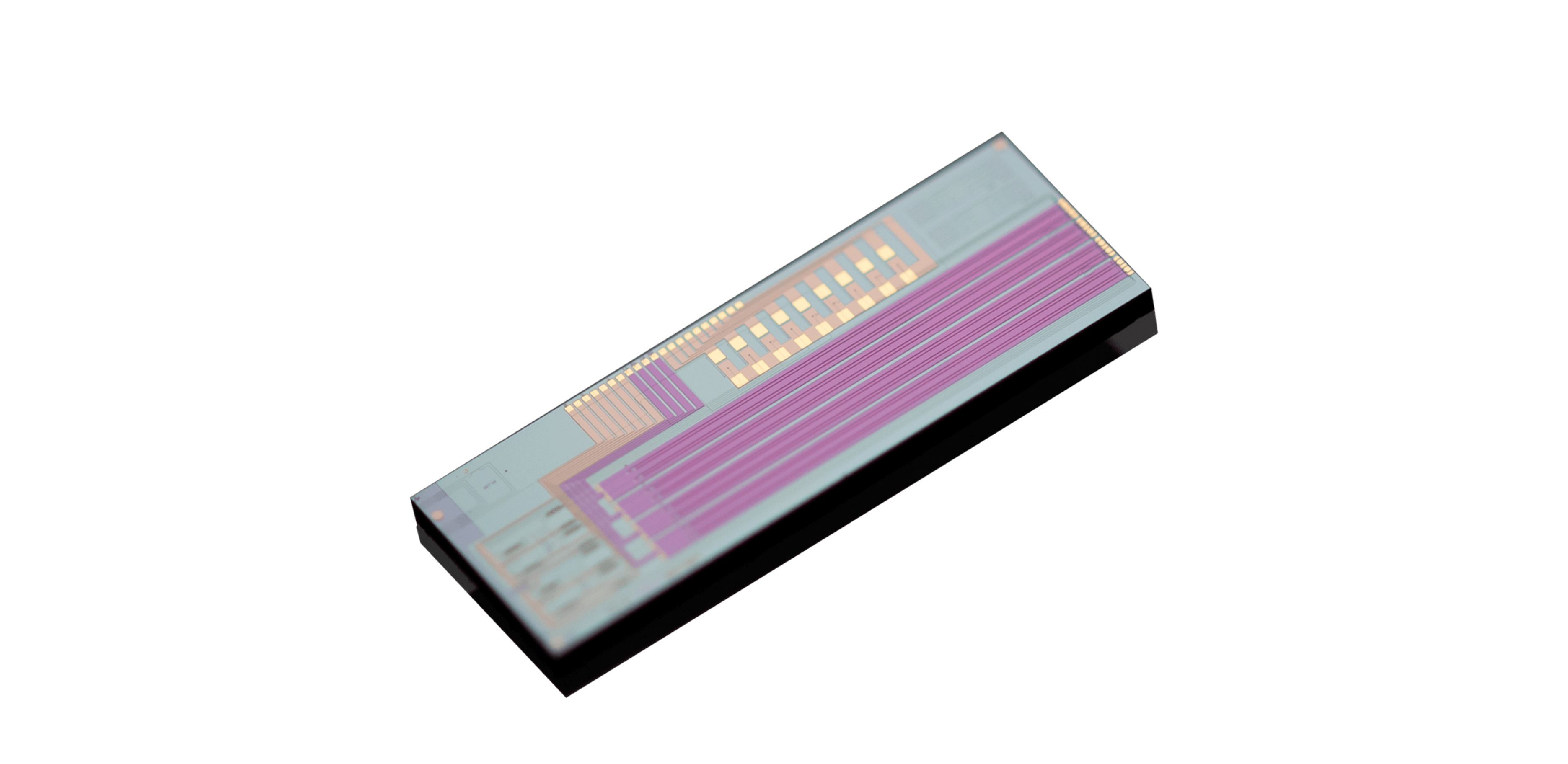
Understanding the Performance Trade-Offs Early
One of the first risks we encounter is assuming that standalone chip specifications translate directly into system-level performance. For TFLN chips, key parameters such as 3dB bandwidth (70 GHz), insertion loss (<7 dB), and differential half-wave voltage (<4.5 V) are measured under ideal conditions. In a real module, bond wires, PCB traces, and connector interfaces can degrade bandwidth by 15–20%. We mitigate this by co-designing the RF launch and using electromagnetic simulation to match impedance across the entire path. Additionally, the DC extinction ratio (>25 dB) of integrated photonic chips can suffer if the bias control loop is not properly dither-compensated. Our rule: always budget margin—design for 60 GHz effective bandwidth if the chip promises 70 GHz.
Managing Thermal and RF Interference
Integrated photonic chips often sit alongside high-power drivers and digital logic. Thermal gradients shift the optical phase in TFLN chips, causing quadrature drift in coherent modulators like the PDMIQ design. We have seen designs fail because the modulator’s half-wave voltage crept beyond specification as the temperature rose. The solution is a thermally aware layout: separate heat sources with copper planes, use thermoelectric coolers for the chip, and simulate steady-state gradients. RF crosstalk is another hidden risk. With these chips supporting 1.6T/800G ZR coherent formats, adjacent RF lines can induce spurious sidebands. We recommend grounded coplanar waveguides and at least 5× trace-width spacing between I and Q channels.
Validating Specifications Through Characterization
A third risk is trusting datasheets without application-specific verification. We always perform on-board characterization of integrated photonic chips—measuring insertion loss, half-wave voltage, and extinction ratio at operating temperature and bias conditions. For TFLN chips, the DC-ER >25 dB is achievable only with proper polarization maintenance; a 1° fiber alignment error can drop it to 18 dB. Designing test points and breakaway coupons into the PCB allows early detection before full assembly.
Toward Reliable Photonic Integration
Mitigating design risks requires a systems mindset—moving from "chip works" to "module works in field conditions." By focusing on RF integrity, thermal management, and thorough validation, we turn integrated photonic chips into dependable building blocks for 800G/1.6T coherent links.
At Liobate, we design our TFLN chips with real-world integration in mind, providing detailed application notes and support for PDMIQ coherent modulators. We recommend that your team adopt these mitigation strategies and consider our proven platforms for your next-generation photonic systems.


 The previous article
 Returns the list