Achieving high-fidelity transmission in optical networks requires rigorous control over every parameter of the signal path. At Liobate, we focus on how the extinction ratio of intensity modulators impacts the overall performance of high-speed systems. By refining the design of our TFLN devices, we help engineers solve common hurdles related to signal contrast and noise, ensuring that data integrity remains high even as speeds scale toward 800G and beyond.
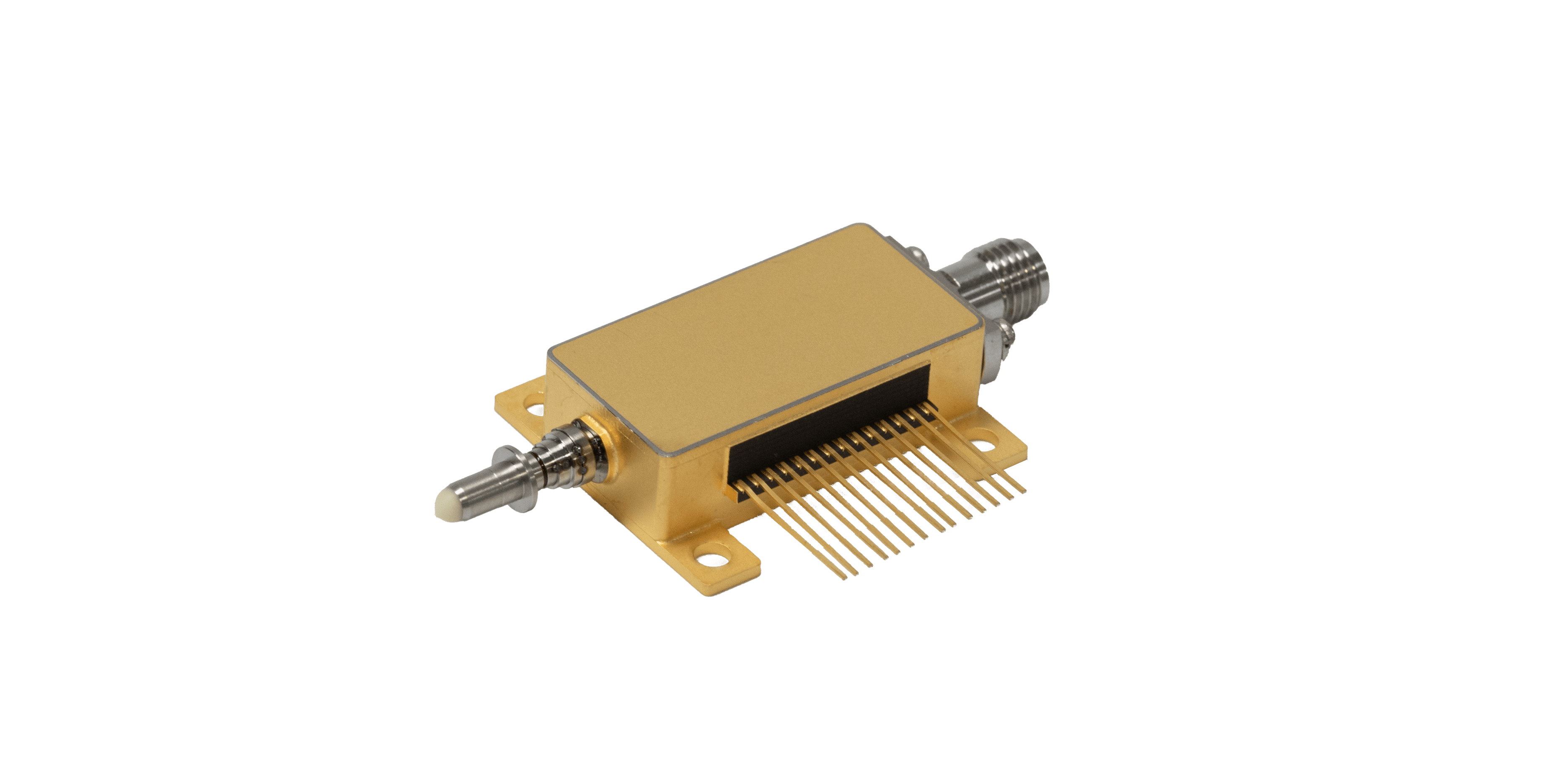
Addressing the Extinction Ratio Challenge
The extinction ratio, which measures the difference between the 'on' and 'off' states of a light signal, serves as a fundamental metric for communication quality. When this ratio is low, it introduces noise that complicates signal recovery at the receiving end, especially in advanced modulation formats like PAM-4. Our approach involves leveraging the precise electro-optic properties of thin-film lithium niobate to create modulators that maintain a high extinction ratio across broad bandwidths. By reducing the physical size of our TFLN devices, we decrease the half-wave voltage requirements, which not only lowers power consumption but also allows for tighter control over the bias point, preventing the drift that often degrades signal contrast during operation.
Integrating Advanced Light Sources
In addition to modulator performance, the stability of the light source itself dictates the success of complex optical assemblies. Many of our partners working in high-precision sensing and coherent communications utilize an optical frequency comb to generate hundreds of precisely spaced spectral lines from a single laser source. At Liobate, we incorporate these comb generators into our photonic integrated circuits to support multi-wavelength systems without the need for multiple discrete lasers. This integration simplifies the system architecture and ensures that the light source remains stable, providing a consistent foundation that complements the performance of our high-speed modulators.
Practical Applications in Demanding Environments
Real-world deployments, such as those in autonomous driving and long-haul data centers, present harsh conditions that can destabilize sensitive optical hardware. Our TFLN devices are engineered with structural features that minimize susceptibility to environmental changes, such as temperature fluctuations. By providing modulators that offer high linearity and robust performance, we enable our customers to build sensing systems that deliver accurate data even under challenging conditions. Furthermore, our ability to pair these modulators with an efficient optical frequency comb allows for the development of compact, high-performance units that meet the strict space and power constraints of modern aerospace and automotive platforms.
Consistent Performance for Future Networks
Providing reliable hardware foundations is our primary objective as we support the evolution of high-speed infrastructure. By focusing on the interplay between the extinction ratio, device stability, and the precision of an optical frequency comb, we deliver components that address the specific technical barriers faced by engineers. We continue to prioritize research and fabrication excellence to ensure that our modules meet the rigorous demands of next-generation communication and sensing applications. Through consistent quality and a focus on repeatable performance, we remain committed to enabling the next phase of innovation in high-speed photonics.


 The previous article
 Returns the list