Growth in data transmission requirements continues to challenge the limits of existing hardware infrastructure. As we look toward the requirements for 1.6T and 3.2T throughput, the industry faces a critical transition point where traditional discrete components struggle to keep pace. At Liobate, we focus on addressing these bottlenecks by developing advanced platforms that enable higher speed and better energy efficiency. Our work involves simplifying complex signal paths to ensure that network architectures can meet the rising demand for real-time, high-capacity data movement.
Advancing Performance with Material Innovation
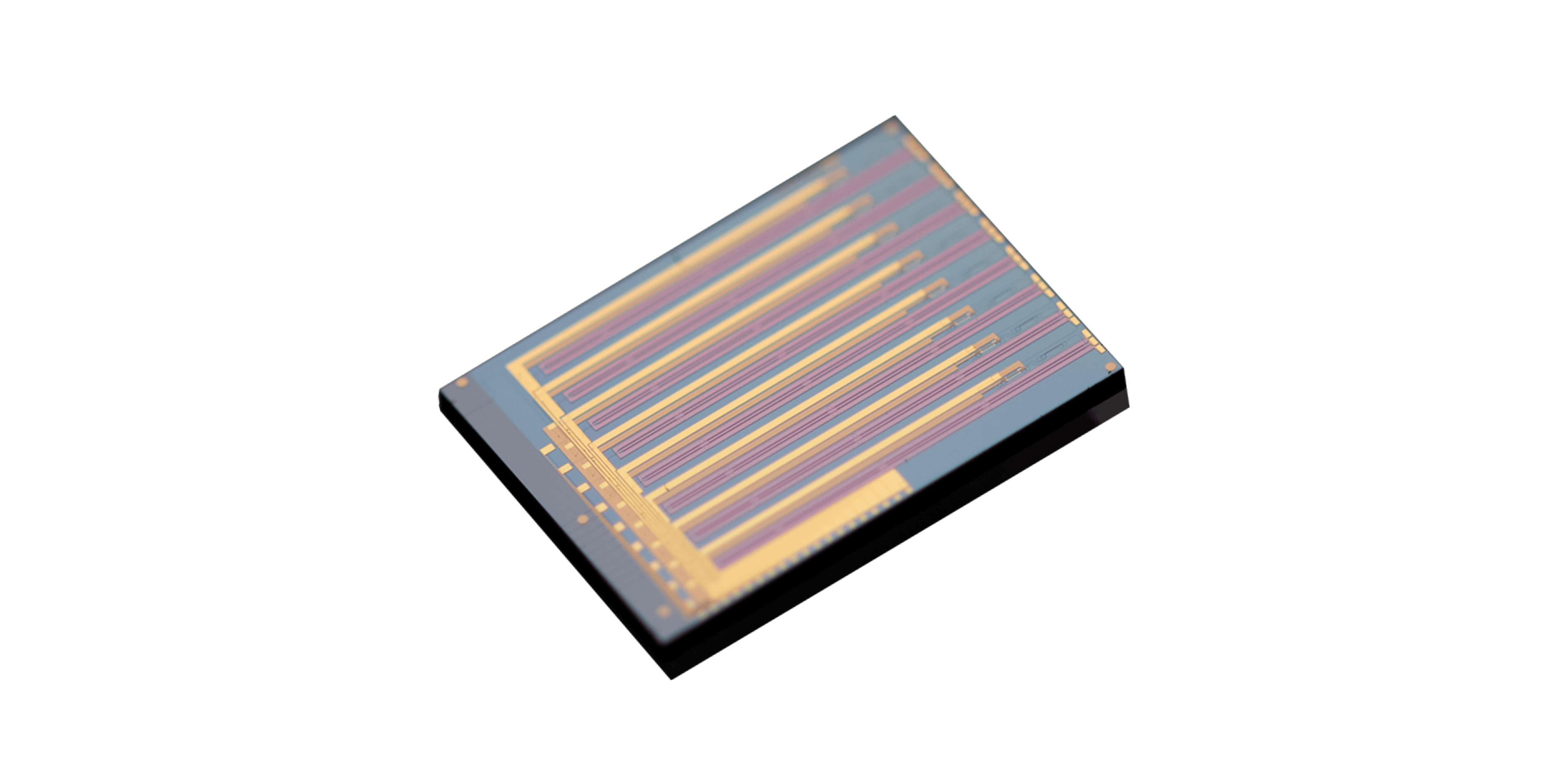
One of the core areas where we provide technical solutions is in the development of tfln chips. These components utilize the electro-optic properties of lithium niobate to manipulate light with high precision. By leveraging a thin-film structure, we achieve excellent modal overlap and a high Pockels coefficient, which allows our modulators to operate at half-wave voltages below 1.5V. This low-voltage operation is important for modern systems because it enables direct drive by standard CMOS electronics, effectively removing the need for power-intensive external RF amplifiers.
Furthermore, our devices provide an electro-optic bandwidth reaching 110 GHz. This capability ensures that as data processing units require more information, the optical pathways remain stable and capable of handling the load without signal degradation. We focus on these technical metrics because they directly impact the performance of data centers and autonomous driving sensors, where low latency and high accuracy are essential operational requirements.
Integration Strategies for Reliable Systems
A key part of our strategy is ensuring that our technology integrates smoothly into existing manufacturing workflows. To support this, each TFLN photonic chip is designed for compatibility with silicon photonics platforms. Through wafer-level bonding and advanced packaging techniques, we can incorporate these high-performance modules into systems that already utilize established routing and laser integration methods. This hybrid approach enables designers to combine the specific benefits of different materials, creating versatile circuits that meet the needs of large-scale computing environments.
Additionally, the transition to 8-inch wafer processing has provided a scalable path for these components. By aligning our production with traditional semiconductor manufacturing standards, we provide a consistent supply of high-fidelity modules. This scalability is vital for our partners who require reliable hardware to support the deployment of complex, high-throughput networks and sophisticated machine vision systems in autonomous vehicles.
Real-World Data and Operational Impact
Our commitment to solving technical challenges is reflected in the actual performance of our components. We have observed that the implementation of tfln chips consistently reduces insertion loss while maintaining signal integrity across long-reach and short-reach links. By optimizing waveguide design and utilizing proprietary fabrication techniques, we minimize the distortion that often plagues high-speed signal transmission.
In our ongoing development of the TFLN photonic chip, we prioritize durability and consistent bias points to ensure that once a module is installed, it continues to function predictably under continuous operational stress. This reliability is a key factor for our customers who manage mission-critical infrastructure where even minor signal instability can impact the performance of their broader communication systems. Through our work on each TFLN photonic chip, we provide the hardware foundation for stable, future-proof networks.
Our work centers on providing hardware that solves practical engineering hurdles. Whether we are improving the efficiency of data center interconnects or enabling faster response times for autonomous driving systems, the choice of material platform is vital. By leveraging the specific electro-optic strengths of our platforms, we enable our partners to push the boundaries of current transmission capabilities. We remain dedicated to delivering consistent, high-performance components that meet the evolving needs of the industry.


 The previous article
 Returns the list