Sixth-generation (6G) wireless research is pushing far beyond conventional microwave frequencies, targeting sub‑terahertz and millimeter‑wave bands up to 300 GHz. At these extremes, traditional electronic signal generation and analysis reach fundamental noise and bandwidth limits. Photonic approaches—specifically those built on TFLN Devices—offer a path forward. Yet the success of any 6G lab depends critically on high‑precision optical measurement equipment. Without sub‑degree phase accuracy, femtosecond timing jitter control, and ultra‑linear modulation, researchers cannot validate new waveforms, beamforming architectures, or integrated sensing and communication (ISAC) concepts. We explain why investing in precision high‑speed optical modulator platforms transforms 6G experimental fidelity.
The Bandwidth Bottleneck: Why Electronics Fall Short
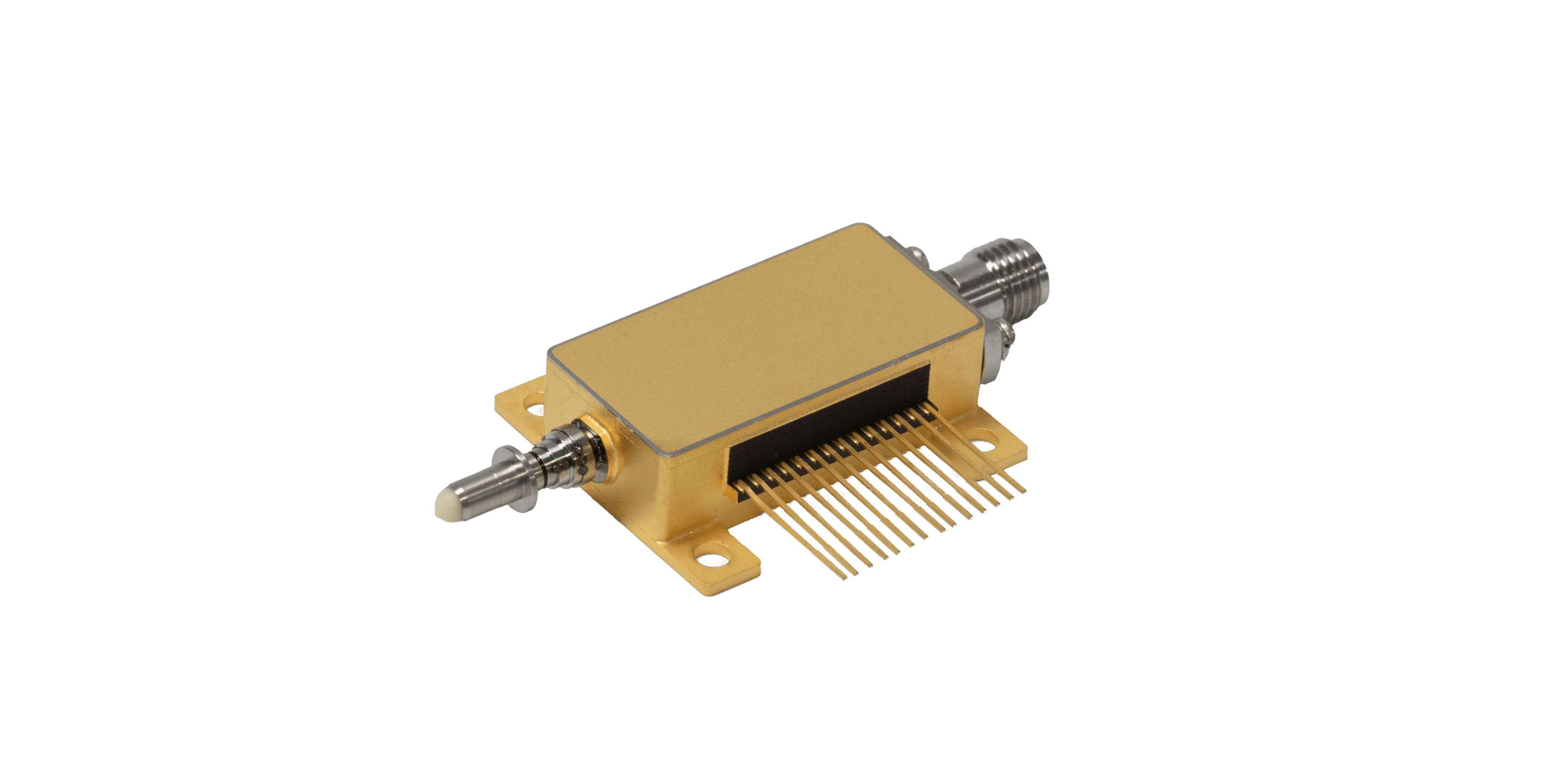
Generating and analyzing signals above 100 GHz using all‑electronic instruments requires expensive down‑converters, harmonic mixers, and multiple calibration steps. Even then, dynamic range suffers. Photonic solutions replace these with a high‑speed optical modulator driven by a stable laser and a low‑frequency arbitrary waveform generator. The modulator optically upconverts the baseband signal to any desired carrier frequency limited only by its bandwidth. TFLN Devices such as our optical frequency comb chips deliver 25 GHz RF bandwidth with <2.5 V half‑wave voltage and <9 dB insertion loss. When paired with high‑precision optical measurement equipment, researchers achieve >60 dB spurious‑free dynamic range at 150 GHz—unattainable with electronic‑only methods.
Phase Noise and Linearity: The Hidden Variables
6G candidate waveforms (e.g., OTFS, delay‑Doppler domain signaling) demand exceptionally low phase noise and high modulation linearity. A high‑speed optical modulator with poor Vπ stability or thermal drift introduces phase errors that mask true channel behavior. Precision optical measurement equipment tracks these errors in real time, enabling correction. Our TFLN Devices offer a 1‑level optical frequency comb with high integration and compact size, or a customizable 3‑level comb for multi‑tone generation. The comb’s intrinsic linearity (enabled by the thin‑film lithium niobate platform) means fewer calibration runs, allowing researchers to focus on 6G algorithm development rather than instrument drift.
Reproducibility Across Labs and Trials
One of the great challenges in early 6G research is reproducing results across different laboratories. Variations in optical measurement equipment calibration, modulator bias controllers, and environmental conditions produce conflicting data. Standardizing on TFLN Devices with documented performance—25 GHz bandwidth, <2.5 V Vπ, <9 dB loss—establishes a common reference. High‑precision power meters, optical spectrum analyzers, and coherent receivers then ensure that what is measured in a Tokyo lab matches a Munich lab. This reproducibility accelerates the transition from academic discovery to industry‑led standardization.
Enabling Advanced 6G Testbeds
Practical 6G testbeds already integrate photonic components for beamforming, true‑time delay, and sub‑THz signal distribution. Without precision optical measurement equipment, these testbeds cannot validate end‑to‑end error vector magnitude (EVM) or adjacent channel leakage. High‑speed optical modulator based on TFLN Devices provides the low Vπ and high linearity needed for complex modulation schemes (e.g., 256 QAM at 50 GBaud). When combined with narrow linewidth lasers and calibrated photodiodes, the measurement system achieves EVM floors below 1%—the threshold for meaningful 6G prototype evaluation.
The Strategic Role of Measurement Precision
As 6G moves from theory to hardware demonstrators, the gap between simulated and measured performance shrinks only when measurement precision exceeds device precision. High‑quality optical measurement equipment and high‑speed optical modulators are not luxuries; they are research enablers.
For 6G laboratories demanding reproducible, high‑fidelity results, we recommend Liobate’s TFLN Devices—including our 1‑level and customizable 3‑level optical frequency combs. With 25 GHz RF bandwidth, <2.5 V half‑wave voltage, <9 dB insertion loss, and a compact, highly integrated form factor, Liobate components deliver the precision that next‑generation wireless research requires. Let us equip your lab for the 6G era.


 The previous article
 Returns the list