Phase modulation includes multiple technical variants adapted for communication, sensing and microwave photonic systems, each featuring unique noise resistance and bandwidth characteristics. Distinguishing the applicable boundaries of BPSK, QPSK and CPM helps designers optimize system modulation strategies for specific scenarios. Liobate's high-bandwidth phase modulator hardware provides a reliable physical platform for implementing and verifying various phase modulation formats.
Understanding Phase Modulation Techniques
Phase modulation (PM) is a technique where the phase of a carrier signal is varied in accordance with the information signal. There are several forms of phase modulation, each with unique characteristics suited for different applications:
Binary Phase Shift Keying (BPSK): BPSK is one of the simplest forms of phase modulation, using two distinct phase shifts to represent binary data. It is robust against noise and interference, making it ideal for applications where signal integrity is paramount.
Quadrature Phase Shift Keying (QPSK): QPSK enhances BPSK by allowing four distinct phase shifts, effectively doubling the data rate without requiring additional bandwidth. This modulation is widely used in satellite communications and digital television.
Continuous Phase Modulation (CPM): CPM uses continuous phase changes to encode information, which can result in highly efficient bandwidth use. It is particularly well-suited for mobile communications, where it helps maintain signal quality in varying conditions.
Understanding these forms of phase modulation helps businesses leveraging TFLN devices fully unlock the performance potential of TFLN devices and choose the most suitable method for their applications.
Liobate's 20/40 GHz Phase Modulator
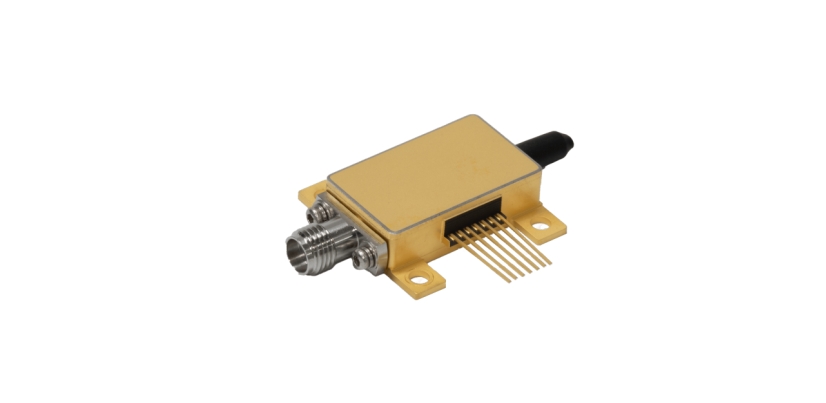
Our 20/40 GHz phase modulator represents the cutting edge in phase modulation technology. With a bandwidth of 40 GHz and a maximum RF input power of 33 dBm, this thin-film lithium niobate modulator delivers exceptional performance for microwave photonic and sensing applications.
Additionally, with an insertion loss of less than 3.5 dB and a half-wave voltage under 3.5 V, our intensity modulator is designed to optimize signal integrity and minimize distortions, making it an ideal choice for applications requiring precise phase modulation. The versatility of our phase modulator allows businesses to explore the various forms of phase modulation, ensuring that systems are optimized for specific operational requirements.
Partnering for Advanced Communication Solutions
As we continue to innovate in the field of phase modulation, choosing the right technology can greatly impact your system's performance. At Liobate, we are committed to providing high-quality intensity modulators that support various phase modulation techniques, allowing businesses to enhance their communications capabilities. By leveraging the strengths of our 20/40 GHz phase modulator, organizations can effectively implement different modulation strategies, adapting to the demands of modern telecommunications and sensing applications.
Advancing Together in Phase Modulation
The exploration of different forms of phase modulation is crucial for keeping pace with technological advancements. At Liobate, we invite you to collaborate with us as we push the boundaries of what's possible in communication technologies. Together, we can harness the power of phase modulation to develop innovative solutions that elevate industry standards and meet the challenges of tomorrow. Projects weighing different phase-modulation formats can request customized TFLN modulator evidence, related technical whitepapers, and sample evaluation assistance from the engineers.


 The previous article
 Returns the list