Quantum communication is rapidly moving from laboratory research to real-world deployment, requiring extremely precise signal control and verification at the photonic level. As systems become more complex, we find that advanced optical measurement systems—supported by fiber optic test equipment—are essential for ensuring stability, accuracy, and reproducibility. Within this ecosystem, the optical intensity modulator plays a central role in generating and shaping quantum-compatible optical signals.
Precision Control in Quantum Signal Generation
Quantum communication depends heavily on accurate photon-level encoding, where even minor signal distortions can compromise security and fidelity. High-performance fiber optic test equipment enables us to validate modulation depth, phase stability, and spectral purity in real time, ensuring that quantum states are transmitted with minimal deviation.
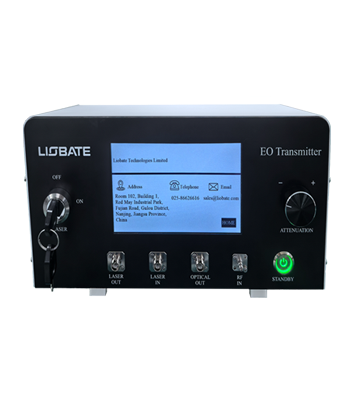
In this context, the optical intensity modulator is a key component for preparing quantum-ready optical pulses. By precisely controlling light intensity, it allows us to generate the temporal and amplitude patterns required for quantum key distribution and other quantum protocols. The integration of EO transmitter platforms with bandwidths ranging from 40 GHz to 110 GHz further enhances flexibility for different experimental and deployment scenarios.
System Stability Through Integrated Optical Monitoring
One of the major benefits of modern optical measurement systems is their ability to maintain long-term stability through built-in feedback and monitoring mechanisms. Advanced fiber optic test equipment now includes integrated optical monitors and automated bias control systems that continuously adjust operating conditions.
We see this as particularly important when working with optical intensity modulators, where drift in bias voltage or temperature fluctuations can significantly affect performance. Integrated DFB lasers and attenuation control further improve signal consistency, allowing systems to maintain optimal operating points without frequent manual calibration.
These features not only improve measurement accuracy but also reduce system downtime, which is critical in quantum communication networks that require continuous operation.
Scalability and High-Bandwidth Performance
Quantum communication systems are increasingly being tested at higher bandwidths to support more complex encoding schemes and longer transmission distances. Modern EO transmitter-based architectures, supported by fiber optic test equipment, now offer customizable bandwidth options such as 40 GHz, 70 GHz, and 110 GHz.
This scalability is essential for evaluating next-generation optical intensity modulator designs under realistic operating conditions. High-bandwidth measurement capability ensures that signal integrity can be maintained even as system demands increase. It also allows researchers and engineers to simulate real-world deployment environments more effectively, accelerating the transition from experimental setups to commercial systems.
Advancing Quantum Measurement Reliability
As quantum communication moves toward wider adoption, measurement reliability becomes a defining factor in system success. The combination of integrated EO transmitters, automated control systems, and high-performance fiber optic test equipment provides a strong foundation for reproducible and scalable quantum experiments.
The optical intensity modulator remains central to this ecosystem, enabling controlled photon generation and precise signal shaping across diverse applications, from quantum key distribution to photonic computing research.
From our perspective at Liobate, we continue to focus on supporting the advancement of quantum optical systems through reliable and high-performance solutions. Our EO transmitter-based platforms with integrated DFB lasers, optical monitoring, and automated bias control are designed to work seamlessly with fiber optic test equipment and optical intensity modulator systems. We believe Liobate can serve as a dependable technology partner in the continued evolution of quantum communication infrastructure.


 The previous article
 Returns the list