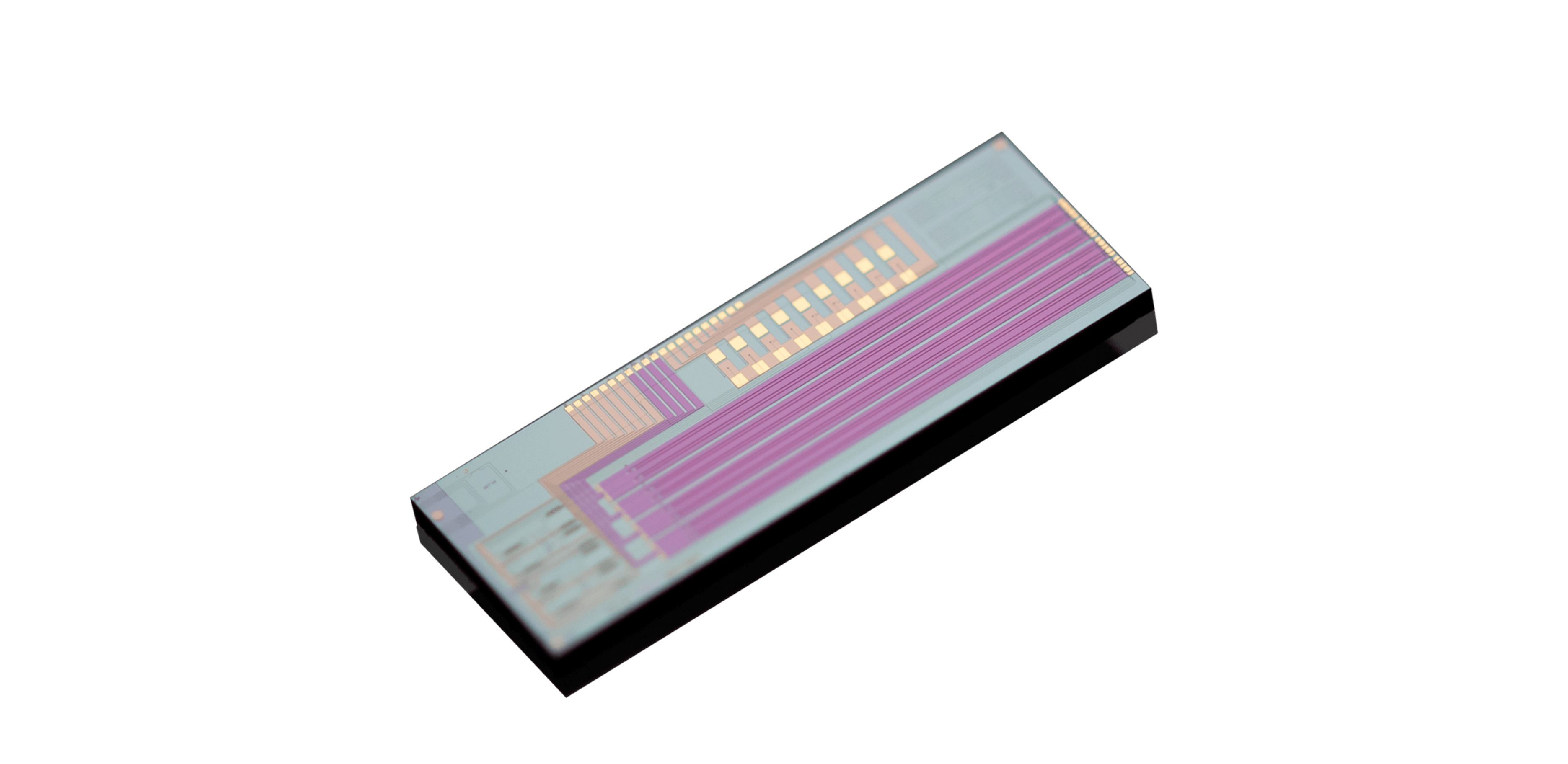
Optical test instrumentation has entered a new era. Demands for higher bandwidth, lower noise, and greater measurement accuracy push traditional modulator technologies to their limits. For engineers designing or operating test equipment—from coherent transceiver analyzers to LiDAR simulation benches—the electro optic modulator serves as a fundamental building block. With the advent of thin-film lithium niobate, TFLN chips now deliver 70 GHz bandwidth, insertion loss below 7 dB, half-wave voltage under 4.5 V differential, and extinction ratio exceeding 25 dB. These specifications enable five distinct applications where an electro optic modulator transforms what test instruments can achieve. Drawing on our experience integrating TFLN chips into measurement systems, we outline these key use cases.
Coherent Transceiver Test and Manufacturing Validation
The first application addresses the need to validate 1.6T and 800G ZR coherent pluggables. These modules use polarization-division multiplexing and advanced modulation formats such as DP-16QAM. A test instrument must generate clean, high-order optical signals to measure transmitter compliance and receiver sensitivity. An electro optic modulator configured as a PDMIQ (polarization-division multiplexing in-phase/quadrature) device becomes the core of a coherent bit-error-rate tester. Our TFLN chips provide the necessary 70 GHz bandwidth to support 64 Gbaud to 128 Gbaud symbol rates without introducing tester-induced penalties. The low insertion loss (<7 dB) ensures sufficient optical power reaches the device under test, while the >25 dB extinction ratio preserves modulation fidelity. For high-volume manufacturing, the low drive voltage (<4.5 V) simplifies electronic driver design and reduces calibration overhead.
Optical Component and Filter Characterization
Second, characterizing passive components—fiber Bragg gratings, arrayed waveguide gratings, isolators, and polarization-maintaining fibers—requires swept-frequency or modulated optical probes. A network analyzer paired with an electro optic modulator converts a continuous-wave laser into a frequency-modulated or amplitude-modulated test signal. Wide-bandwidth TFLN chips enable characterization beyond 50 GHz, essential for components destined for 1.6T coherent systems. Additionally, the flat frequency response of our electro optic modulator from DC to 70 GHz simplifies de-embedding, allowing instrument designers to achieve higher dynamic range. The low half-wave voltage reduces the need for high-power RF amplifiers, lowering system noise floor and improving measurement repeatability.
FMCW LiDAR Sensor Test and Emulation
Third, frequency-modulated continuous-wave (FMCW) LiDAR sensors for autonomous vehicles require benchtop test systems that emulate target range, velocity, and reflectivity. The core challenge is generating highly linear optical frequency chirps. An electro optic modulator driven by an arbitrary waveform generator produces these chirps with minimal residual nonlinearity. Our TFLN chips offer the phase stability and low Vπ (<4.5 V) needed for centimeter-level range resolution. Test instruments built around this electro optic modulator can simulate multiple virtual targets, perform production-line calibration, and validate LiDAR receiver sensitivity—all with the wide bandwidth required for 70 GHz operation.
Microwave Photonic Signal Processing Testbeds
Fourth, advanced test instruments increasingly incorporate photonic analog-to-digital conversion, optical comb generation, and true-time delay beamforming. In these architectures, the electro optic modulator acts as the analog optical front end. With 70 GHz bandwidth and low insertion loss, TFLN chips directly modulate optical carriers at millimeter-wave frequencies (5G/6G bands up to 70 GHz). This allows test instruments to perform down-conversion, filtering, and sampling without traditional electronic bottlenecks. For research laboratories and defense test applications, a modulator based on thin-film lithium niobate provides the linearity and bandwidth to characterize high-speed photodetectors, modulators, and integrated photonic circuits.
Polarization Measurement and Control Instruments
Fifth, characterizing polarization-dependent loss (PDL) and polarization-mode dispersion (PMD) requires high-speed polarization state generation. A modulator can be configured as a polarization controller by combining two modulators operating on orthogonal axes. Our TFLN chips achieve microsecond-scale polarization switching with >25 dB extinction ratio, enabling instruments to scramble polarization states faster than the device-under-test’s response time. Low insertion loss (<7 dB) ensures that even low-power signals from passive components can be accurately measured. This application is critical for coherent transceiver test sets and fiber sensor interrogation units.
Expanding the Horizons of Optical Test
These five applications demonstrate that the electro optic modulator is no longer a passive accessory but an active determinant of instrument capability. As data rates climb toward 3.2 Tbit/s and sensing systems demand sub-millimeter resolution, only TFLN chips offer the bandwidth, low loss, and high extinction ratio required.
For test and measurement manufacturers seeking to differentiate their platforms, we recommend Liobate’s TFLN chips and electro optic modulator solutions. Our PDMIQ devices deliver 70 GHz bandwidth, <7 dB insertion loss, <4.5 V half-wave voltage, and >25 dB extinction ratio—engineered specifically for 1.6T/800G ZR coherent test applications. Let Liobate’s modulator technology empower your next-generation optical instruments.


 The previous article
 Returns the list