When designing phase modulation stages for coherent transmitters, optical test instruments, or quantum communication systems, engineers face a fundamental choice between traditional bulk crystal phase modulators and emerging thin‑film lithium niobate (TFLN) devices. For decades, bulk lithium niobate phase modulators served as the industry standard, offering reliable performance at moderate speeds. However, as symbol rates push beyond 67 GHz and integration density demands shrink footprints, the limitations of bulk crystals become apparent. Through extensive characterization and real‑world deployment, we have compared both platforms side by side. This strategic analysis highlights why TFLN Devices now outperform bulk crystals in bandwidth, drive voltage, insertion loss, and scalability—without sacrificing optical phase linearity.
Bandwidth and High‑Speed Performance
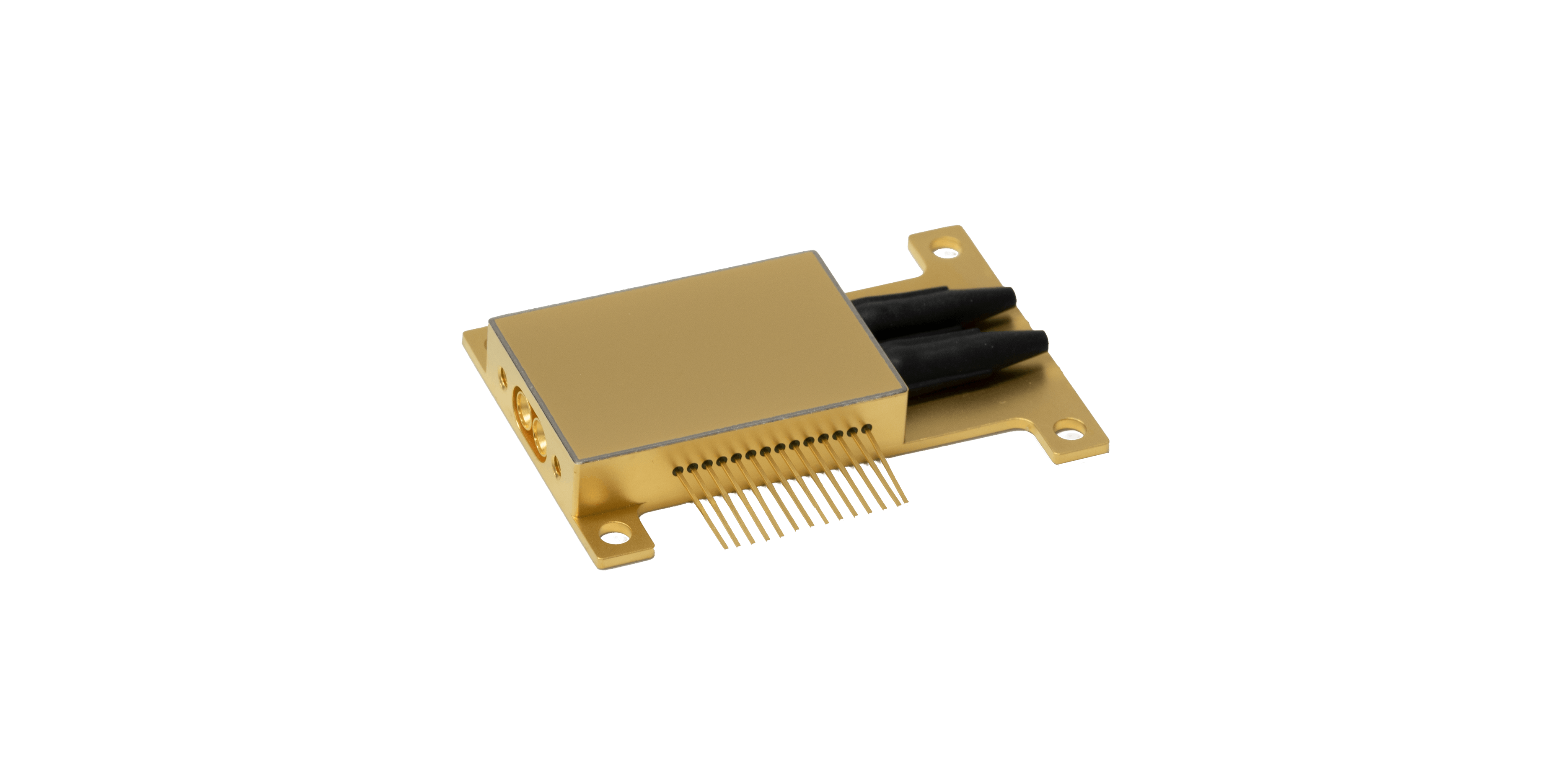
Bulk crystal phase modulators typically achieve 3 dB bandwidths of 10–40 GHz, limited by the velocity mismatch between the RF drive signal and the optical wave, as well as electrode capacitance. For 800G and 1.6T coherent systems requiring > 50 GHz modulation bandwidth, bulk designs hit a practical ceiling. In contrast, TFLN Devices leverage sub‑micron thin‑film waveguides and optimized traveling‑wave electrodes to reach 67 GHz or 110 GHz bandwidth. Our intensity modulator platform, which shares the same phase modulation core, demonstrates < 4.5 dB insertion loss and < 3.0 V half‑wave voltage across that bandwidth. For pure phase modulator applications, the same TFLN structure provides flat phase response with negligible group delay ripple, enabling precise phase shifts for QPSK, 16QAM, or coherent beam combining.
Drive Voltage and Power Efficiency
A critical parameter for any phase modulator is Vπ (the voltage required to induce a π phase shift). Bulk lithium niobate modulators typically require 5–8 V at low frequency, and Vπ rises further at higher speeds due to RF losses. High Vπ forces designers to use power‑hungry driver amplifiers, increasing thermal load and board space. Our TFLN Devices achieve < 3.0 V differential Vπ at both 67 GHz and 110 GHz specifications. This low drive voltage is enabled by the strong overlap between the RF field and the optical mode in a thin‑film waveguide—something bulk crystals cannot replicate. Lower Vπ translates directly to CMOS‑compatible drive levels, reduced power consumption (often below 1 W per modulator), and simpler thermal management in dense coherent arrays.
Insertion Loss and Integration Density
Bulk crystal phase modulators suffer from high insertion loss, typically 4–6 dB excluding coupling losses, due to longer interaction lengths and Fresnel reflections at polished facets. When cascading multiple modulators (e.g., for IQ modulation or frequency combs), these losses compound quickly. TFLN Devices deliver < 4.5 dB total insertion loss including coupling, thanks to low‑propagation‑loss waveguides and mode‑matched edge couplers. Moreover, TFLN phase modulator sections can be monolithically integrated with splitters, heaters, and photodetectors on a single chip—a level of integration impossible with bulk crystals. For space‑constrained optical engines, this integration advantage alone justifies migrating from bulk to TFLN.
Making the Strategic Switch
Choosing between bulk crystal and TFLN phase modulators is increasingly a question of future‑proofing. Legacy bulk devices cannot support 110 GHz operation, low single‑digit Vπ, or wafer‑scale manufacturing. TFLN Devices from Liobate offer a clear path forward: higher bandwidth, lower power, and scalable photonic integration. We have designed our 67/110 GHz intensity and phase modulators as drop‑in upgrades for existing coherent and instrument platforms. At Liobate, we are committed to providing superior TFLN Devices that redefine what a modulator can achieve. Whether you are upgrading a coherent transmitter, building a high‑speed test system, or developing next‑generation quantum optics, we invite you to compare our specifications against bulk alternatives. Let’s phase‑shift into the terabit era together.


 The previous article
 Returns the list