In the high-precision world of photonics, the optical frequency comb stands as one of the most sophisticated tools available. Often described as an "optical ruler," these devices provide a series of equally spaced spectral lines that are vital for high-capacity coherent communications, spectroscopy, and atomic clocks. Traditionally, these combs required large, expensive mode-locked lasers. However, the emergence of integrated TFLN Devices has revolutionized the field, allowing for the creation of micro-combs on a chip.
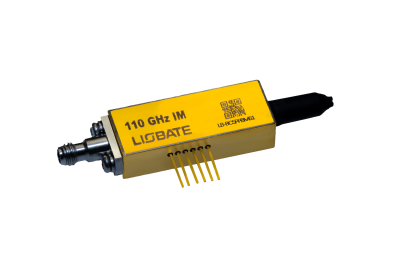
At Liobate, we are at the forefront of commercializing this technology. For B2B decision-makers and system integrators, understanding the cost drivers behind these components is essential for long-term project planning. In this article, we break down the primary factors influencing the manufacturing costs of a high-performance optical frequency comb based on Thin-Film Lithium Niobate (TFLN) technology.
1. Substrate Quality and Wafer Scale
The foundation of any high-quality integrated photonic system is the substrate. For an optical frequency comb, the purity and uniformity of the Thin-Film Lithium Niobate layer are paramount. Because the comb generation process—often via the Kerr effect—relies on high-Q (quality factor) resonators, even microscopic defects in the crystal lattice can lead to scattering losses that prevent the comb from forming.
Manufacturing costs are heavily influenced by the wafer size and the "LNOI" (Lithium Niobate on Insulator) bonding process. At Liobate, we utilize large-scale wafer bonding techniques to improve yield. While 4-inch and 6-inch wafers offer better economies of scale compared to smaller R&D samples, the initial investment in high-uniformity TFLN wafers remains a significant portion of the BOM (Bill of Materials). As the industry matures and moves toward 8-inch production, we expect the per-die cost of TFLN Devices to decrease, making integrated combs more accessible for mass-market telecommunications.
2. Nanofabrication Precision and Etching Yields
The heart of an integrated optical frequency comb is the micro-ring resonator. To achieve the high-Q factors necessary for soliton generation, the waveguides must have extremely smooth sidewalls to minimize optical loss. Achieving this level of precision requires advanced deep-ultraviolet (DUV) lithography or high-throughput electron-beam lithography (EBL).
The cost of manufacturing is directly tied to the "etching yield." Lithium Niobate is notoriously difficult to etch compared to silicon. At Liobate, we employ proprietary dry-etching techniques that achieve vertical sidewalls with sub-nanometer roughness. The maintenance of these high-vacuum etching systems and the cleanroom overhead required to prevent particle contamination are significant cost drivers. However, these investments are necessary to ensure that every TFLN photonic chip we produce meets the strict spectral flatness and line-spacing requirements of a professional-grade optical frequency comb.
3. Dispersion Engineering and Design Complexity
An optical frequency comb does not function by accident; it requires precise "dispersion engineering." To support the formation of dissipative Kerr solitons—the pulses that create the comb—the micro-resonator must exhibit anomalous group velocity dispersion (GVD).
This requires complex cross-sectional designs of the TFLN waveguides, often involving multi-layer claddings or specific geometric tapers. The engineering hours spent on finite-difference time-domain (FDTD) simulations and the subsequent masks required for multi-step lithography add to the development cost. B2B clients who require custom line spacing (e.g., 25 GHz for DWDM grids versus 100 GHz for sensing) will find that these design-specific modifications influence the initial NRE (Non-Recurring Engineering) costs of TFLN Devices.
4. Integration and Packaging Challenges
Perhaps the most underestimated cost in photonics is packaging. An integrated optical frequency comb is useless if it cannot be efficiently coupled to a fiber-optic network. Because TFLN waveguides have very small mode field diameters, the alignment tolerances for fiber-to-chip coupling are often in the sub-micron range.
Furthermore, Kerr combs generate heat during operation. Effective thermal management—using thermo-optic heaters for frequency tuning and high-thermal-conductivity sub-mounts—is essential for frequency stability. The cost of specialized adhesives, gold-plated carriers, and automated alignment stations contributes significantly to the final price. At Liobate, we focus on "automated packaging" solutions to drive down these costs, ensuring that our TFLN Devices remain competitive for large-scale B2B deployments.
5. Testing and Spectral Characterization
Unlike standard modulators, an optical frequency comb requires exhaustive spectral characterization. Every device must be tested for its threshold power, comb bandwidth, and phase noise characteristics. This requires expensive lab equipment, including high-resolution optical spectrum analyzers (OSA) and frequency-domain noise measurement systems.
The time required for these tests adds to the labor cost of each unit. However, for B2B applications like coherent optical networking, this level of verification is non-negotiable. We ensure that every Liobate comb is characterized across its entire operational range to guarantee performance in the field.
Conclusion: Balancing Performance and Value
The manufacturing of an integrated optical frequency comb is a feat of modern engineering that balances material science, nanolithography, and precision packaging. While the initial costs of TFLN Devices may be higher than legacy bulk-laser solutions, the long-term benefits of reduced footprint, lower power consumption, and high scalability provide a superior return on investment for infrastructure providers.
As Liobate continues to refine our TFLN fabrication processes and expand our production capacity, we are committed to making these advanced photonic tools more cost-effective for the global market. Whether you are building the next generation of 1.6T transceivers or high-resolution LIDAR systems, our TFLN-based combs offer the precision you need at a commercial scale. Explore our full range of TFLN Devices and technical specifications to see how we can support your high-speed roadmap.


 The previous article
 Returns the list