In the rapidly evolving landscape of precision measurement, the transition from laboratory-grade prototypes to scalable industrial solutions is a critical hurdle for B2B enterprises. As we navigate the demands of next-generation sensing, quantum timing, and high-resolution spectroscopy, the underlying hardware platform becomes the decisive factor in system performance. At Liobate, we recognize that the future of optical metrology is inextricably linked to the maturation of Thin-Film Lithium Niobate (TFLN) technology. By leveraging our specialized TFLN Devices, we are empowering partners to deploy an optical frequency comb with unprecedented stability, efficiency, and integration density.
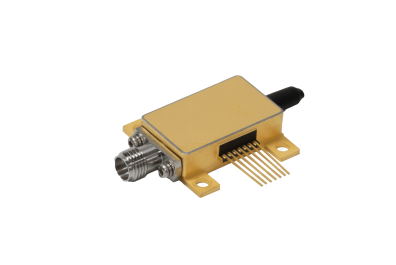
The Evolution of Optical Rulers in Industrial Metrology
The optical frequency comb is often described as the "optical ruler" of the modern era. By providing a broad spectrum of phase-locked, equally spaced frequency lines, it allows for the direct link between microwave and optical frequencies. However, traditional fiber-based or bulk-crystal combs often suffer from high power consumption, large physical footprints, and sensitivity to environmental fluctuations—limitations that hinder their deployment in field-ready metrology instruments.
Our approach at Liobate addresses these challenges head-on. By utilizing the unique electro-optic and nonlinear characteristics of lithium niobate in a thin-film format, we facilitate the creation of chip-scale frequency combs that do not sacrifice precision for portability. For B2B clients in sectors ranging from aerospace to semiconductor manufacturing, this shift represents more than just a reduction in size; it is a strategic shift toward "metrology-on-a-chip" capabilities.
Technical Superiority of TFLN Devices in Comb Generation
When we discuss the integration of an optical frequency comb into a metrology system, the efficiency of the modulation process is paramount. Traditional lithium niobate modulators were often bulky and required high driving voltages, which generated significant heat—a deterrent for high-precision thermal-sensitive measurements.
Our TFLN Devices utilize a sub-micron LiNbO3 layer bonded to a low-index substrate, typically silicon dioxide. This architecture provides several key advantages:
Low Half-Wave Voltage: Our modulators achieve record-low driving voltages (often sub-1V), which significantly reduces the RF power requirement for generating sidebands in electro-optic (EO) combs.
Ultra-Broad Bandwidth: With the ability to handle frequencies exceeding 100 GHz, our platform supports the generation of combs with wider line spacings, essential for high-speed optical sampling and data-heavy sensing applications.
High Optical Confinement: The high index contrast of TFLN allows for tightly confined optical modes. This increases the local intensity of light, enhancing the nonlinear interactions required for Kerr-microcomb generation or supercontinuum broadening.
Strategic Reliability and Stability in Field Operations
One of the most significant concerns for B2B procurement in the photonics industry is long-term reliability, particularly regarding the "bias drift" commonly associated with legacy lithium niobate. In metrology, where a fractional frequency uncertainty might be the goal, any instability in the optical hardware is unacceptable.
We have developed proprietary packaging and fabrication techniques at Liobate that successfully eliminate the adverse effects of DC bias drift. This ensures that the optical frequency comb remains stable over thousands of hours of operation. For our clients, this translates to reduced maintenance cycles and higher confidence in data integrity during long-term monitoring of structural vibrations, atmospheric gases, or high-end clock synchronization.
Applications: From Laboratory Standards to Industrial Reality
The deployment of an optical frequency comb powered by TFLN Devices opens new horizons in several high-stakes B2B verticals:
Distance and Surface Metrology: Dual-comb ranging systems allow for non-contact, nanometer-scale distance measurements at kilohertz update rates. By integrating these systems onto a TFLN chip, we enable portable 3D imaging tools that can be used directly on the factory floor for semiconductor wafer inspection.
Optical Atomic Clocks: The next generation of Global Navigation Satellite Systems (GNSS) will require space-ready frequency combs. The compact form factor and radiation hardness of our lithium niobate chips make them ideal candidates for satellite-based timing.
Spectroscopy and Gas Sensing: The wide transparency window of lithium niobate (350 nm to 5200 nm) allows us to support comb generation from the visible to the mid-infrared. This is a strategic advantage for chemical plants requiring real-time, multi-species gas detection with high sensitivity.
Why Partner with Liobate for Next-Generation Metrology?
At Liobate, we do not just provide components; we provide the foundational platform for photonic innovation. Our facility in Nanjing is equipped for the full lifecycle of TFLN development—from initial PIC design and DUV lithography to high-performance packaging and RF testing. We understand that in the B2B world, precision must be matched by manufacturability.
By choosing our TFLN Devices, you are investing in a platform that is optimized for mass production. Our 6-inch wafer processing capability ensures that as your demand for high-precision metrology tools grows, our supply chain can scale alongside you. We are committed to maintaining the highest specifications, such as ultra-low propagation loss (often below 0.1 dB/cm in optimized waveguides) and high-power handling capabilities that exceed those of silicon-based alternatives.
Conclusion: Investing in the Future of Frequency Measurement
The strategic advantages of deploying an optical frequency comb in metrology are clear: higher precision, faster acquisition times, and traceable accuracy. By migrating these systems to the TFLN platform, we remove the final barriers to wide-scale industrial adoption. Whether you are developing ultra-stable lasers or advanced LiDAR systems, the synergy between Liobate technology and frequency comb architecture provides a competitive edge that is measured in both nanometers and market share.
We invite you to explore our detailed product specifications for TFLN Devices and consult with our technical team to see how our Photonic Integrated Circuits can be tailored to your specific metrology requirements. Together, we can redefine the boundaries of what is measurable.


 The previous article
 Returns the list