In the rapidly evolving landscape of high-speed data communications, we are constantly pushing the boundaries of bandwidth and latency. As data rates climb toward 800G and 1.6T, the margin for error in signal timing becomes incredibly slim. At these speeds, even a few picoseconds of deviation can lead to catastrophic bit errors. This phenomenon, known as jitter, is the silent enemy of network reliability. At Liobate, we recognize that traditional material platforms are reaching their physical limits. To combat these challenges, we have pioneered the use of Thin-Film Lithium Niobate (TFLN) to create a new generation of fiber optic modulators that redefine what is possible in jitter management.
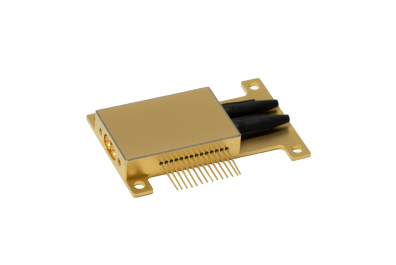
Understanding the Jitter Bottleneck in Modern Networks
Jitter is essentially the short-term phase variation of a digital signal from its ideal position in time. In high-frequency systems, this "timing noise" can originate from various sources, including thermal noise, crosstalk, and the inherent limitations of the modulation hardware. When we evaluate the performance of a high-speed link, the "eye diagram" is our primary diagnostic tool. Excessive jitter causes the eye to close, making it nearly impossible for the receiver to distinguish between a '1' and a '0' correctly.
For B2B providers and network architects, high Bit Error Rates (BER) translate directly into increased latency and reduced operational reach. While digital signal processing (DSP) and clock and data recovery (CDR) circuits can filter out some of person-to-person timing errors, the most effective strategy is to minimize jitter at the source: the electro-optic modulator.
The Superior Architecture of TFLN Devices for Jitter Reduction
Traditional bulk lithium niobate modulators have been the industry standard for decades, but they suffer from high driving voltages and bulky form factors that introduce parasitic capacitance and signal degradation. By transitioning to TFLN Devices, we have fundamentally altered the electro-optic interaction.
Our TFLN platform utilizes a sub-micron layer of lithium niobate bonded to a lower-index substrate, typically silicon dioxide. This allows for:
Strong Light Confinement: The high index contrast enables ultra-compact waveguides that keep the optical mode tightly bound.
Reduced Electrode Gap: Because the waveguides are so small, we can place electrodes much closer together. This results in a record-low half-wave voltage, often dropping below 1V.
Minimized Microwave Loss: By using low-loss substrates like quartz, we suppress microwave absorption at high frequencies, which is crucial for maintaining signal crispness.
When the driving voltage is lower and the electrical path is shorter, the "rise time" of the optical pulse becomes much faster and more consistent. This directly reduces deterministic jitter, providing a cleaner, more stable "heartbeat" for the entire optical system.
Measuring the Impact: Fiber Optic Modulators and Signal Purity
To quantify the impact of fiber optic modulators on jitter, we look at the interaction between the RF (radio frequency) driving signal and the optical carrier. In a standard Mach-Zehnder Interferometer (MZI) configuration, the stability of the bias point is paramount. One of the greatest challenges with conventional LN devices is "bias drift," where the operating point shifts over time due to thermal or electrical stress, causing phase instability and jitter.
At Liobate, we have developed proprietary technologies that successfully eliminate this adverse effect. Our TFLN modulators demonstrate highly stable and repeatable bias points. When we measure these devices in a high-speed testbed, we observe:
Lower Phase Noise: The excellent electro-optic coefficient of TFLN ensures that the conversion from the electrical to the optical domain is incredibly linear.
Extended Bandwidth: With bandwidths readily exceeding 110 GHz, our modulators handle the high-frequency components of a digital signal without rounding the edges of the pulses, preserving timing integrity.
Improved Extinction Ratio: High extinction ratios (often exceeding 38 dB in specialized designs) ensure a clear distinction between states, which reduces the uncertainty during signal sampling.
Why Liobate is the Partner of Choice for Next-Gen Interconnects
As a high-tech enterprise dedicated to the design, fabrication, and packaging of next-generation photonic integrated circuits (PICs), Liobate is uniquely positioned to solve the jitter challenges of the AI and 1.6T era. We are not just a component supplier; we are an IDM (Integrated Device Manufacturer) with a complete ecosystem for TFLN production.
Our product portfolio includes specialized intensity modulators, phase modulators, and DP-IQ modulators designed for complex coherent modulation formats. These devices are optimized for:
Data Centers: Reducing power consumption while maintaining ultra-low jitter for intra-DC links.
Communication Networks: Supporting long-haul and metro links with superior signal-to-noise ratios.
Test Instruments: Providing the precision required for high-fidelity laboratory measurements.
By integrating passive devices—such as ultra-low loss waveguides and high-quality micro-resonators—with multi-channel high-speed EO modulators on a single TFLN chip, we reduce the number of discrete interfaces. Each interface in an optical system is a potential source of reflection and timing distortion. Through monolithic integration, we eliminate these "points of failure," resulting in a significantly more robust signal chain.
Conclusion: Engineering a Jitter-Free Future
The transition to TFLN is no longer a luxury; it is a necessity for B2B enterprises that demand the highest levels of performance and energy efficiency. By focusing on the precise electro-optic characteristics of the lithium niobate crystal and leveraging modern nanofabrication techniques, we have created a platform that effectively "tames" signal jitter.
As we look toward the future of 1.6T/3.2T DR8 and coherent PDMIQ systems, the role of high-performance modulation will only grow. At Liobate, we remain committed to delivering the precision, bandwidth, and stability required to keep your data moving at the speed of light—without the timing errors of the past. If you are ready to upgrade your network's signal integrity, our team is ready to provide the TFLN solutions that make it possible.


 The previous article
 Returns the list