The rapid growth of artificial intelligence, cloud computing, autonomous systems, and high-speed networks is creating new demands for faster and more efficient technologies. We at Liobate develop advanced thin-film lithium niobate (TFLN) chips and photonic integrated circuits (PICs) to support these emerging applications.
By combining high bandwidth, low power consumption, and excellent optical performance, our optical chips help businesses build next-generation communication, sensing, and computing solutions.
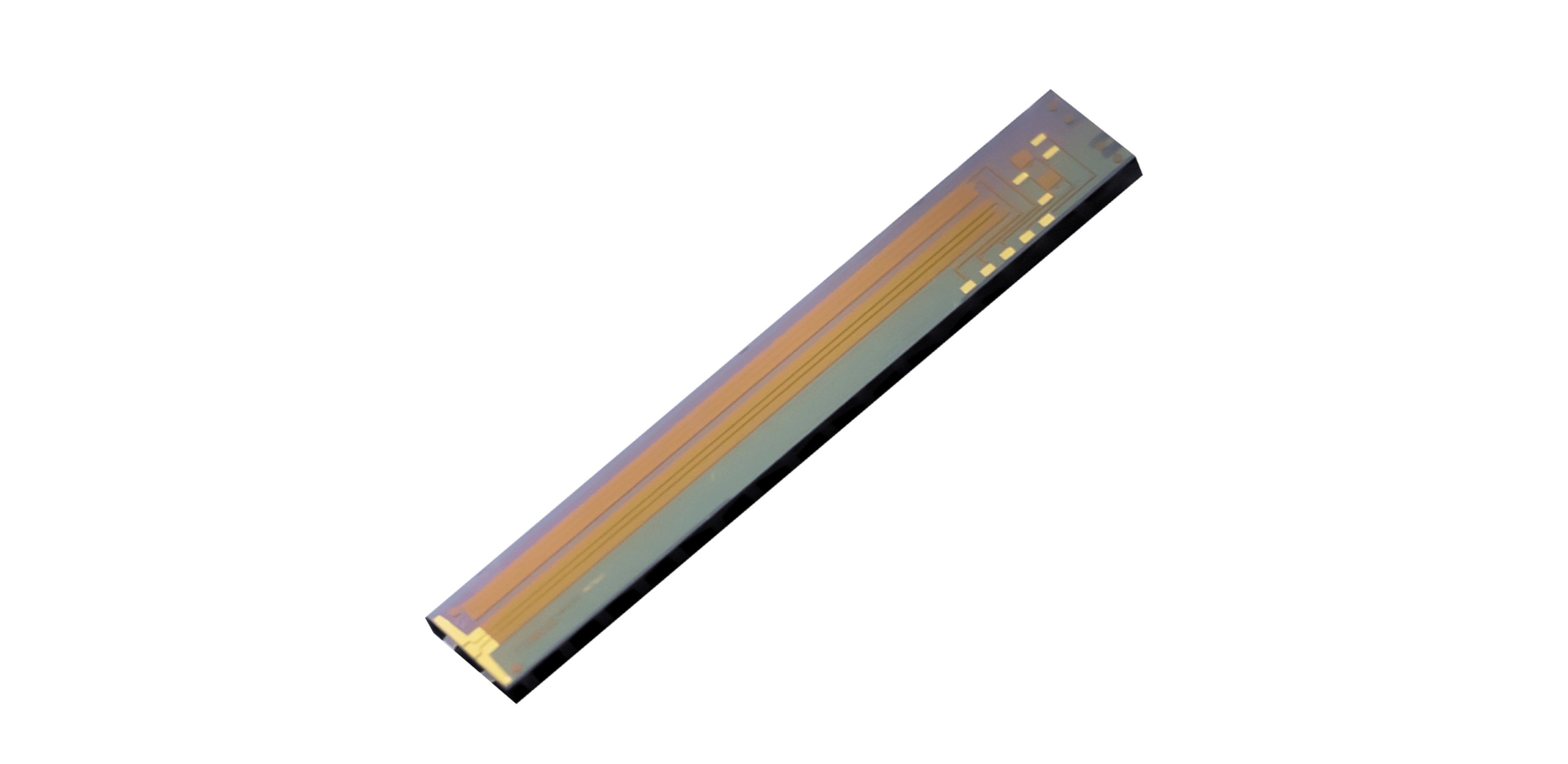
Understanding the Role of Optical Chips in Modern Technology
Optical chips are semiconductor-like photonic devices that use light instead of only electrical signals to process, transmit, or control information. Unlike traditional electronic components, optical chips can provide higher transmission speeds, lower signal loss, and improved energy efficiency, making them increasingly important for advanced technology infrastructure.
We design optical chips based on thin-film lithium niobate technology, which offers strong electro-optic performance and excellent integration capabilities. These chips enable precise control of optical signals, allowing them to be applied across multiple industries, including telecommunications, data centers, optical sensing, and computing platforms.
As global data volumes continue to increase, optical chips provide a critical foundation for improving system performance while addressing challenges related to bandwidth limitations and power consumption.
TFLN Chips Enable High-Speed Optical Communication
High-speed optical communication networks require components that can handle increasing data rates while maintaining reliable signal quality. Traditional solutions face challenges when supporting higher bandwidth requirements, especially for applications such as 400G, 800G, and future terabit optical systems.
Our TFLN chips are developed to meet these challenges by delivering ultra-high bandwidth, low drive voltage, and low insertion loss. These advantages allow optical communication systems to transmit large amounts of data with improved efficiency and stability.
At Liobate, our TFLN-based photonic integrated circuits support applications such as data center interconnects, coherent optical communication, and advanced optical transceiver modules. By improving optical signal processing capabilities, our solutions help communication networks achieve greater capacity and scalability.
Optical Chips Support Next-Generation Data Centers
The expansion of AI computing and cloud services has significantly increased the demand for high-performance data center infrastructure. Data centers require optical technologies that can provide faster connections between servers while reducing energy consumption.
We provide TFLN chips designed for optical interconnect applications, supporting multi-channel transmission with high bandwidth and low optical loss. These characteristics make them suitable for advanced solutions such as 800G, 1.6T, and 3.2T optical transceiver systems.
Our optical chips also contribute to co-packaged optics (CPO) development, where optical components are integrated closer to computing processors. This approach helps reduce electrical transmission limitations and improves overall system efficiency for AI and cloud computing environments.
Applying Optical Chips to Advanced Sensing Systems
Beyond communication, optical chips are increasingly used in sensing applications that require high precision and fast response. By controlling and measuring optical signals, photonic devices can support applications ranging from industrial testing to autonomous technologies.
Our TFLN chips provide the performance required for advanced sensing systems. The high electro-optic efficiency and low signal loss of our technology allow precise optical modulation and measurement.
For example, our solutions support photonic sensing applications such as FMCW LiDAR for autonomous driving. These systems require reliable optical components capable of delivering accurate detection and stable operation in complex environments. Through TFLN technology, we help enable more efficient and precise sensing solutions.
Optical Chips Bring New Possibilities to Computing
Computing systems are facing increasing challenges as electronic processing approaches physical limitations in speed and energy efficiency. Optical computing technologies offer new opportunities by using light-based signal transmission and processing methods.
Optical chips can support faster data movement and reduce the energy consumption associated with high-speed computing architectures. Their ability to handle large amounts of information with minimal delay makes them valuable for future computing platforms.
We continue developing TFLN-based photonic solutions to support evolving computing requirements. By combining advanced materials, integrated photonics, and high-performance optical components, we aim to provide technologies that contribute to more efficient computing systems.
Liobate TFLN Chips Deliver High-Performance Modulation
Our TFLN chips are built on proprietary thin-film lithium niobate technology and are designed to provide excellent optical performance for customized photonic systems. These chips deliver ultra-high bandwidth, low drive voltage, and low insertion loss for demanding applications.
One example is our Intensity Modulator Die Chip, a compact bare optical chip designed for custom photonic integrated circuit development in test instruments and optical sensing systems. This chip offers a 3dB bandwidth of 110GHz, insertion loss below 5dB, half-wave voltage below 3.0V, and DC extinction ratio above 20dB.
With these specifications, the Intensity Modulator Die Chip provides designers with a flexible solution for building high-speed optical systems that require precise modulation control and reliable performance.
Creating the Future of Photonic Innovation with Liobate
Optical chips are becoming essential building blocks for modern communication, sensing, and computing technologies. As industries continue to demand higher speeds, lower energy consumption, and improved system reliability, advanced photonic solutions will play an increasingly important role.
At Liobate, we focus on developing innovative TFLN chips and photonic integrated circuits that address these changing market needs. Through our expertise in thin-film lithium niobate technology, we provide high-performance optical solutions for data centers, communication networks, testing systems, and intelligent sensing applications. Our goal is to help businesses accelerate the transition toward a faster and more connected photonic future.


 The previous article
 Returns the list