The rapid growth of artificial intelligence, cloud computing, and large-scale data processing is accelerating the demand for faster and more efficient communication networks.
As data traffic continues increasing, traditional optical solutions must evolve to support higher bandwidth, lower energy consumption, and more compact system architectures. Integrated photonic chips are becoming a critical technology for addressing these challenges by combining multiple optical functions into highly efficient platforms.
At Liobate, we focus on developing advanced thin-film lithium niobate (TFLN) modulator photonic integrated circuits (PICs) and related optical communication solutions. Our TFLN chips are designed to provide ultra-high bandwidth, low drive voltage, and low insertion loss, supporting the development of next-generation optical modules and high-speed network infrastructure.
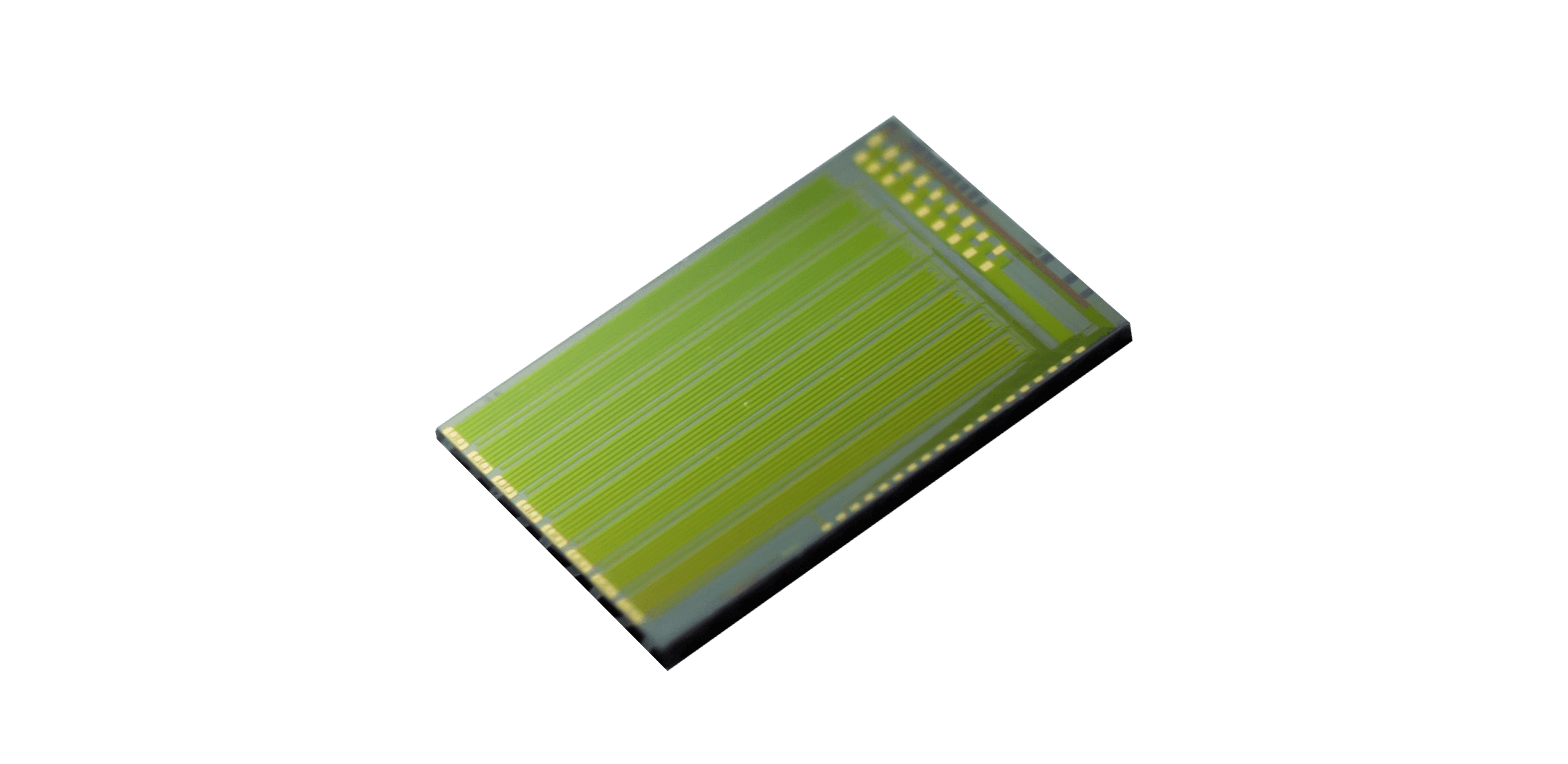
Understanding the Importance of Integrated Photonic Chips in High-Speed Networks
Integrated photonic chips combine optical components such as modulators, waveguides, and signal processing elements onto a compact chip platform. Similar to electronic integrated circuits, these photonic solutions improve system integration while enhancing performance and scalability.
High-speed networks require optical components that can process increasingly complex signals while maintaining reliability. Integrated photonic chips help meet these requirements by reducing component size, improving energy efficiency, and enabling higher transmission capacity.
As network architectures move toward 800G, 1.6T, and beyond, the design of photonic chips becomes increasingly important. Engineers must consider factors such as bandwidth, optical loss, power consumption, and compatibility with existing optical systems to ensure reliable performance.
Bandwidth Performance Is Critical for Next-Generation Connectivity
One of the most important design factors for integrated photonic chips is bandwidth capability. Higher bandwidth allows optical systems to transmit more data within the same time period, which is essential for modern data centers and communication networks.
TFLN chips provide significant advantages in high-speed modulation because thin-film lithium niobate offers excellent electro-optic properties. These characteristics enable faster signal processing and support advanced optical transmission standards.
At Liobate, our TFLN chips are developed to meet the requirements of high-performance optical communication systems. For example, our 1.6T DR8/800G DR4 TFLN photonic chip supports both 1.6T DR8 and 800G DR4 configurations. It delivers a 70GHz 3dB bandwidth, making it suitable for high-density photonic integrated circuits in AI and cloud data center optical modules.
Managing Insertion Loss for Better Optical Efficiency
Insertion loss is another essential consideration when designing integrated photonic chips. Excessive optical loss can weaken signal quality and reduce system efficiency, especially in high-speed networks where signal integrity is critical.
Low insertion loss allows optical systems to maintain stronger signals while reducing the need for additional amplification or compensation. This helps improve overall system reliability and energy efficiency.
Our TFLN chips are designed with low-loss performance to support demanding optical applications. The Liobate 1.6T DR8/800G DR4 TFLN chip achieves insertion loss of less than 14dB, including coupling loss. This low-loss design helps optical module developers create efficient solutions for AI-driven and cloud-based data center environments.
Reducing Drive Voltage to Improve Power Efficiency
Power consumption has become a major concern for high-speed networks. Large-scale data centers operate thousands of optical modules, making energy efficiency a key factor in reducing operational costs and improving sustainability.
The drive voltage of a photonic chip directly affects the power required to control optical signals. Lower drive voltage enables more efficient operation while maintaining high-speed performance.
Our TFLN chips are designed to provide low drive voltage without compromising modulation capability. The 1.6T DR8/800G DR4 TFLN photonic chip features a half-wave voltage of less than 2V (differential), helping support energy-efficient optical communication systems.
Ensuring Flexible Integration for Different Optical Architectures
Modern optical networks require flexible solutions that can adapt to different module designs and system architectures. Integrated photonic chips must support various configurations to meet the needs of different applications.
Compatibility with different electrical and optical interfaces is an important design consideration. Flexible operation allows system developers to optimize their designs while maintaining performance and reliability.
Liobate’s TFLN chips support differential operation with AC or DC coupling, as well as single-ended configurations. This flexibility allows our integrated photonic chips to be incorporated into diverse optical module designs, including high-density solutions for AI and cloud computing applications.
Building Reliable Photonic Systems with Advanced TFLN Technology
Beyond individual specifications, the overall reliability of integrated photonic chips depends on material technology, manufacturing processes, and system-level optimization. Advanced photonic solutions must deliver consistent performance under demanding operating conditions.
At Liobate, we develop TFLN-based photonic integrated circuits using proprietary thin-film lithium niobate technology. Our goal is to provide optical communication solutions that combine high bandwidth, efficient modulation, and reliable integration.
Through continuous innovation, we support customers developing next-generation optical transceivers, data center interconnects, and advanced communication infrastructure. Our TFLN chips provide the performance foundation required for future high-speed networks.
Advancing High-Speed Networks Through Photonic Innovation
The design of integrated photonic chips requires careful consideration of multiple factors, including bandwidth, insertion loss, power efficiency, and system compatibility. As network demands continue growing, advanced technologies such as TFLN chips will play an increasingly important role in enabling higher-capacity communication.
At Liobate, we are committed to advancing thin-film lithium niobate solutions and developing high-performance photonic integrated circuits. With ultra-high bandwidth, low drive voltage, and low insertion loss, our TFLN chips help businesses build more efficient and scalable optical networks for the future.


 The previous article
 Returns the list