Projecting the trajectory of data infrastructure toward 2030 reveals a clear shift toward higher bandwidth densities and increased energy efficiency. As we look at the requirements for next-generation systems, we see that the reliance on traditional bulk components is decreasing in favor of more compact, high-performance solutions. At Liobate, we focus on developing tfln chips that address these emerging demands, providing the speed and stability necessary for future communication networks and high-capacity data centers. By refining our fabrication processes, we ensure that these components meet the rigorous standards expected by the industry as we approach the next decade of technological growth.
Solving Technical Challenges in High-Speed Connectivity
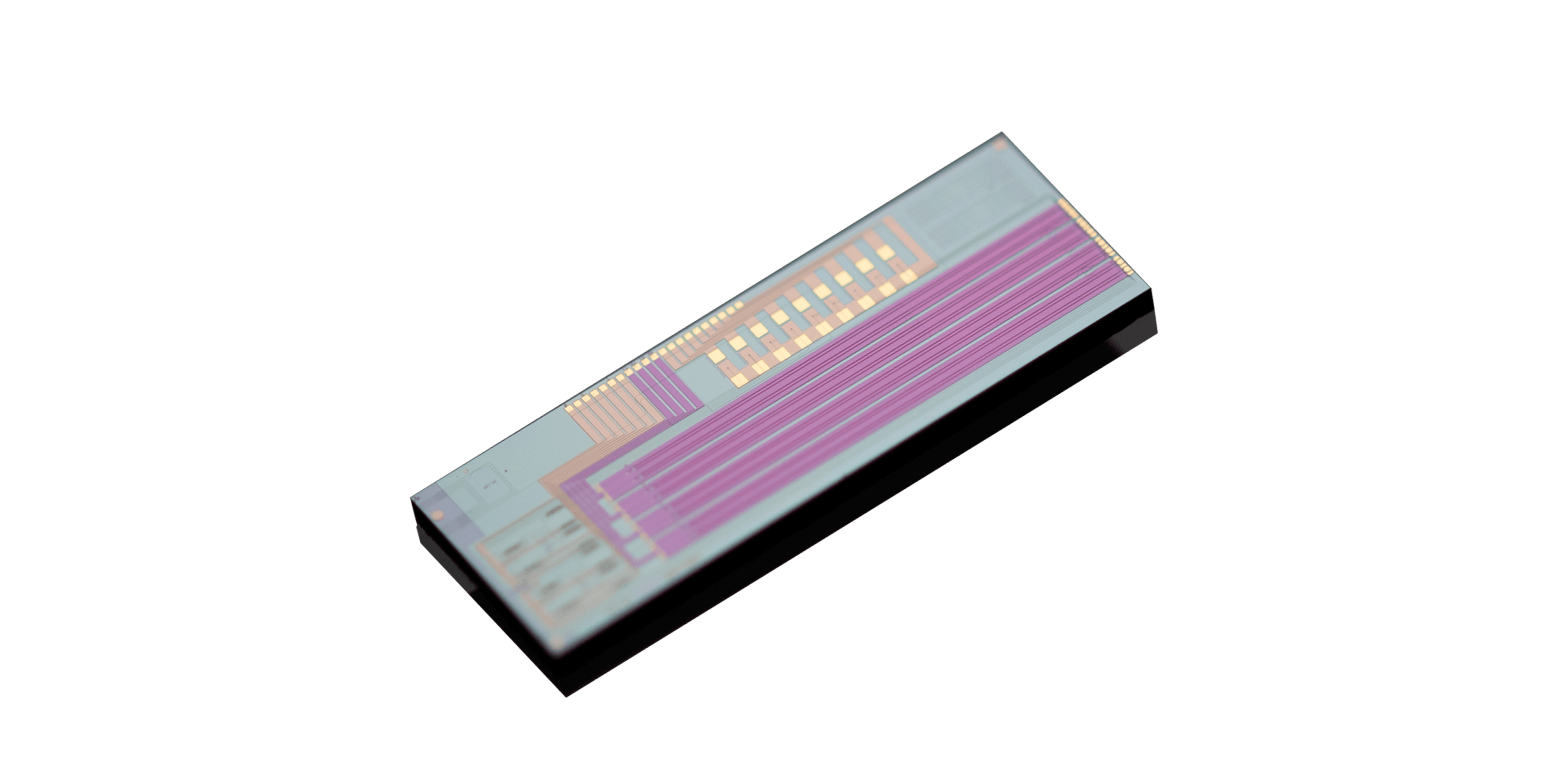
One primary obstacle in modern optical communication is the physical limit of signal conversion at high data rates. As networks transition toward 1.6T and 3.2T speeds, maintaining signal integrity without excessive power consumption becomes difficult. We address this challenge by leveraging the material properties of Thin-Film Lithium Niobate (TFLN). Our internal testing shows that by achieving a half-wave voltage below 1.5 V and bandwidths exceeding 110 GHz, our hardware facilitates clean signal transmission that can be driven directly by CMOS electronics. This capability helps engineers solve the power-related bottlenecks that often occur when scaling up autonomous driving sensors or hyperscale data interconnects.
Advancing Design with Integrated Photonic Chips
The transition to more dense system architectures requires a departure from discrete component designs. The shift toward integrated photonic chips allows for the consolidation of multiple functions—such as modulators, couplers, and splitters—onto a single, scalable platform. This integration is vital for applications where space and thermal management are strictly constrained. Our development team has successfully implemented wafer-level fabrication processes that allow for consistent performance across high-volume production runs. By ensuring that our integrated photonic chips exhibit low insertion loss and high extinction ratios, we provide a reliable foundation for partners working on complex tasks like high-resolution LiDAR and real-time quantum data processing.
Data-Driven Performance and Reliability
Validation remains a core aspect of our approach. In our laboratories, we utilize standardized characterization protocols to ensure every batch of tfln chips adheres to the performance metrics required for mission-critical infrastructure. For instance, our bias-drift-suppressed modulator designs have demonstrated stable operation over long periods, reducing the need for constant recalibration in the field. This consistency is not merely a design goal; it is a measurable result of our proprietary manufacturing techniques. When our clients integrate these modulators into their own systems, they gain the benefit of verified signal fidelity, which is essential for maintaining operational uptime in environments ranging from autonomous vehicle navigation systems to long-haul telecom links.
Future Perspectives on System Integration
Looking forward, the evolution of photonic technology will depend on the synergy between material science and scalable manufacturing. Our ongoing commitment at Liobate is to provide hardware that empowers the next wave of high-speed innovation. By continuing to push the boundaries of bandwidth, power efficiency, and integration density, we prepare the infrastructure of tomorrow. We invite you to view our full collection of specialized components on our official website, where we detail how our technical breakthroughs support the long-term objectives of the optical communication and autonomous driving industries. We remain ready to work alongside your engineering teams to solve the specific integration hurdles you encounter during your design and deployment phases.


 The previous article
 Returns the list