When assembling fiber optic test equipment or optical measurement systems, engineers face a fundamental architectural choice: should the electro‑optic modulator be an all‑fiber device or a chip‑based integrated solution? All‑fiber modulators maintain the optical signal entirely within fiber, offering low insertion loss and polarization stability. Chip‑based modulators—particularly those leveraging thin‑film lithium niobate (TFLN)—provide higher bandwidth, smaller footprint, and greater functionality integration. For modern test and measurement applications ranging from component characterization to system validation, understanding this trade‑off is critical. Drawing from our development of TFLN specialized equipment, we compare both approaches and highlight why chip‑based designs increasingly dominate advanced optical measurement systems.
All‑Fiber Modulators: Strengths and Limitations
All‑fiber modulators typically use a fiber‑wrapped piezoelectric cylinder or bulk crystal embedded in a fiber housing. Their primary advantage is seamless integration into existing fiber plants—no coupling loss, no mode‑field mismatch. They also exhibit very low back reflection and excellent polarization maintenance when using polarization‑maintaining fiber. However, all‑fiber designs face inherent bandwidth limitations, usually below 10 GHz, due to the travel time of acoustic or electric fields across the fiber diameter. For high‑speed fiber optic test equipment targeting 40 GHz and beyond, all‑fiber modulators simply cannot keep pace. They also lack the ability to integrate monitoring photodiodes or attenuators on the same substrate, forcing test engineers to add discrete components that increase complexity and calibration drift.
Chip‑Based TFLN Modulators: Integration and Performance
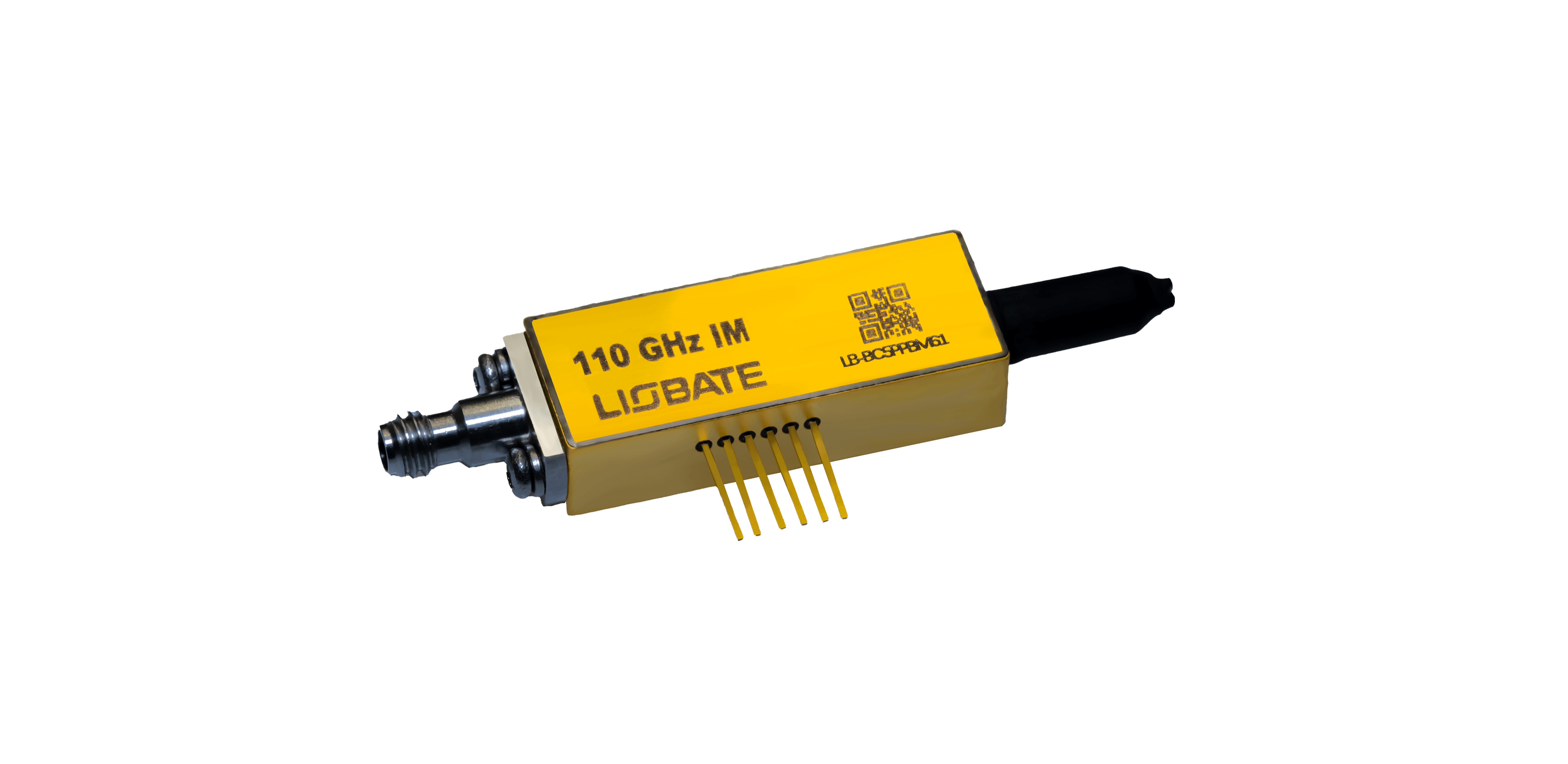
Chip‑based modulators, by contrast, achieve 40 GHz, 70 GHz, and even 110 GHz bandwidths with low half‑wave voltage. Our TFLN EO Transmitter exemplifies the chip‑based advantage: it integrates a DFB laser, optical monitors, a variable attenuator, and automated bias control into a single compact module. For optical measurement systems, this means one device replaces a tunable laser, an external modulator, a power meter, and a VOA. The chip‑based approach also enables automated bias control—a feature nearly impossible to implement in all‑fiber designs because fiber‑based phase shifters have slow response and hysteresis. In production test environments where repeatability matters, automated control reduces operator error and accelerates measurement throughput.
Practical Implications for Test Equipment Design
Choosing between all‑fiber and chip‑based modulators depends on the application. For low‑frequency (≤10 GHz) field deployable fiber optic test equipment where ruggedness and connectorized simplicity are paramount, all‑fiber remains viable. But for laboratory characterization, manufacturing test, and R&D of 800G/1.6T transceivers, chip‑based TFLN modulators are essential. Our EO Transmitter offers customized bandwidth options (40/70/110 GHz) and is easy to operate—operators simply connect fiber and RF input, and the system self‑biases. The integrated DFB laser eliminates external light sources, while on‑chip monitors and attenuator enable closed‑loop power control. These features directly address the pain points of modern optical measurement systems: speed, automation, and repeatability.
Making the Right Choice for Your Test Bench
The importance of understanding all‑fiber versus chip‑based fiber optic modulators lies in aligning your test architecture with your bandwidth, integration, and automation requirements. As data rates climb beyond 100 GHz, chip‑based TFLN solutions become not just advantageous but necessary. At Liobate, we are committed to delivering superior fiber optic test equipment and optical measurement systems built on our TFLN specialized equipment platform. Our EO Transmitter—featuring integrated DFB laser, optical monitors, attenuator, automated bias control, and bandwidth customization from 40 to 110 GHz—offers a practical, high‑performance alternative to all‑fiber legacy designs. We invite test engineers to experience the chip‑based advantage with Liobate.


 The previous article
 Returns the list