As we navigate the high-speed world of telecommunications, understanding the technology that drives our networks becomes imperative. At Liobate, we are at the forefront of innovation, particularly with our TFLN photonic chips designed for long-reach coherent transmission. This article delves into the workings of photonic integrated circuits and highlights the capabilities of our advanced TFLN chips.
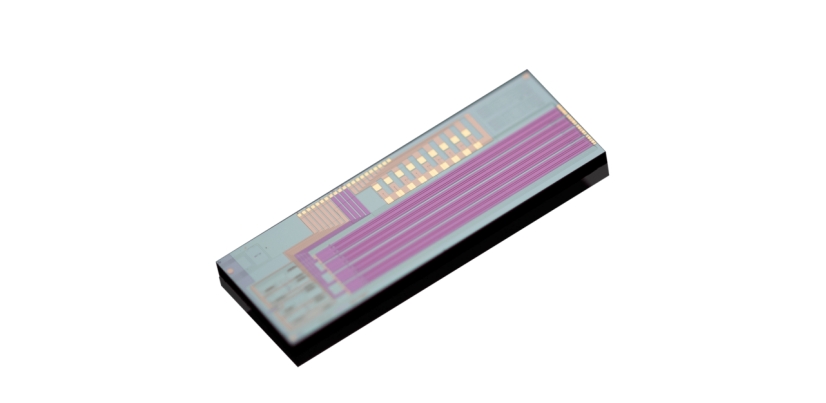
The Foundation of Photonic Integrated Circuits
Photonic integrated circuits (PICs) leverage light for data transmission, offering a significant advantage over traditional electronic circuits. These circuits utilize photons instead of electrons, resulting in faster data rates and lower power consumption. Our TFLN photonic chips exemplify this technology, operationalizing complex functions in a compact design. With a 3 dB bandwidth of 70 GHz, our chips excel at polarization-division multiplexed IQ modulation, which is crucial for efficiently transmitting data over long distances.
As networks evolve, the demand for higher bandwidth increases. The ability of our TFLN chips to handle both 800G and 1.6T ZR coherent modules makes them indispensable for service providers seeking to enhance their infrastructure. The intrinsic properties of light allow these circuits to process vast amounts of data simultaneously, a critical component in today's data-driven landscape.
Key Features of Our TFLN Photonic Chip
For our integrated DP-IQ TFLN photonic chip, the overall fiber-to-fiber insertion loss is controlled below 7 dB after dual polarization waveguide integration. This characteristic means that data transmission remains robust and reliable, minimizing signal degradation. Our chip also boasts a half-wave voltage of less than 4.5 V (differential), illustrating its efficiency and effectiveness in managing power consumption during operation.
The DC-ER (Direct Current Extinction Ratio) of over 25 dB ensures high-quality signal integrity. This feature is paramount for enterprises that rely on consistent performance in mission-critical environments. With the combination of these specifications, our TFLN chips are engineered to meet the stringent demands of modern telecommunications, opening the door to faster and more efficient data transfer.
The Future of Telecommunications
As we look ahead, the role of TFLN photonic chips will only grow more significant. With the continuous expansion of data centers and the increasing need for high-capacity transmissions, our technology positions Liobate as a leader in photonic integration. We are committed to pushing the boundaries of what's possible, ensuring that our TFLN chips meet current and future network demands.
In a landscape where speed and efficiency are vital, understanding how photonic integrated circuits function empowers businesses to make informed decisions. By adopting TFLN photonic chips from Liobate, organizations can enhance their telecommunications infrastructure, paving the way for a more connected future. For photonic integrated circuit fundamentals, the engineering team can provide tailored TFLN modulator data, explanatory whitepapers, and sample evaluation opportunities.


 The previous article
 Returns the list