Rapid growth in data center interconnects, coherent optics, and AI-driven infrastructure has pushed the demand for high-baud rate transmission to unprecedented levels. Within this context, the evolution of the IQ modulator has become central to enabling higher spectral efficiency and faster data throughput. We observe that manufacturers worldwide are accelerating innovation, particularly through advanced material platforms such as TFLN Devices, to meet the requirements of 100+ GBaud and even 200+ GBaud systems.
Market Evolution and Key Global Players
The global ecosystem of IQ modulator manufacturers spans semiconductor leaders, photonics specialists, and integrated system providers. Companies such as Analog Devices, Broadcom, and Qorvo contribute to RF and mixed-signal integration, while optical communication leaders and test equipment providers drive innovation in coherent modulation technologies.
At the same time, traditional measurement and telecom companies continue to play a role in shaping the modulation landscape. Their focus on precision signal generation and high-speed validation ensures that IQ modulator technologies can meet evolving telecom standards.
We also see a diverse supply chain, with dozens of manufacturers globally contributing to the development of modulators across frequency ranges and application scenarios. This diversity reflects the increasing importance of modulation technologies across telecommunications, aerospace, and emerging quantum and AI systems.
Technology Shifts Toward TFLN Devices
A defining trend in the industry is the transition toward TFLN Devices (thin-film lithium niobate), which offer superior electro-optic performance compared to traditional silicon or indium phosphide platforms. Recent breakthroughs demonstrate that TFLN-based IQ modulator solutions can exceed 100 GHz bandwidth and support 240 GBaud-class transmission.
These advancements are not incremental—they represent a structural shift. TFLN enables lower half-wave voltage, improved linearity, and reduced insertion loss, all critical for scaling high-speed coherent communication systems. Compared to legacy technologies, TFLN Devices provide a more favorable balance between power efficiency and bandwidth, which is increasingly essential for hyperscale data environments.
Meanwhile, silicon photonics continues to evolve, with demonstrated performance reaching 100 GBaud and beyond, though it still faces challenges in bandwidth limitations and efficiency trade-offs. This ongoing competition between platforms is driving rapid innovation across the industry.
Performance Benchmarks and Application Demands
High-baud rate IQ modulator performance is typically evaluated based on bandwidth, insertion loss, power consumption, and modulation efficiency. For example, commercial solutions today commonly operate in the 40–110 GHz bandwidth range and support advanced modulation formats such as 64QAM for 400G to 800G transmission.
Applications are equally demanding. From long-haul coherent transmission to data center interconnects, modern systems require modulators that can deliver both stability and scalability. This is where TFLN Devices are gaining traction, as they provide the consistency and high-frequency response needed for next-generation photonic integration.
Strategic Outlook for High-Speed Modulation
Looking ahead, the competitive landscape of IQ modulator manufacturers will likely be defined by integration capability, material innovation, and system-level optimization. As baud rates continue to climb, the role of TFLN Devices will become even more prominent in enabling efficient and scalable solutions.
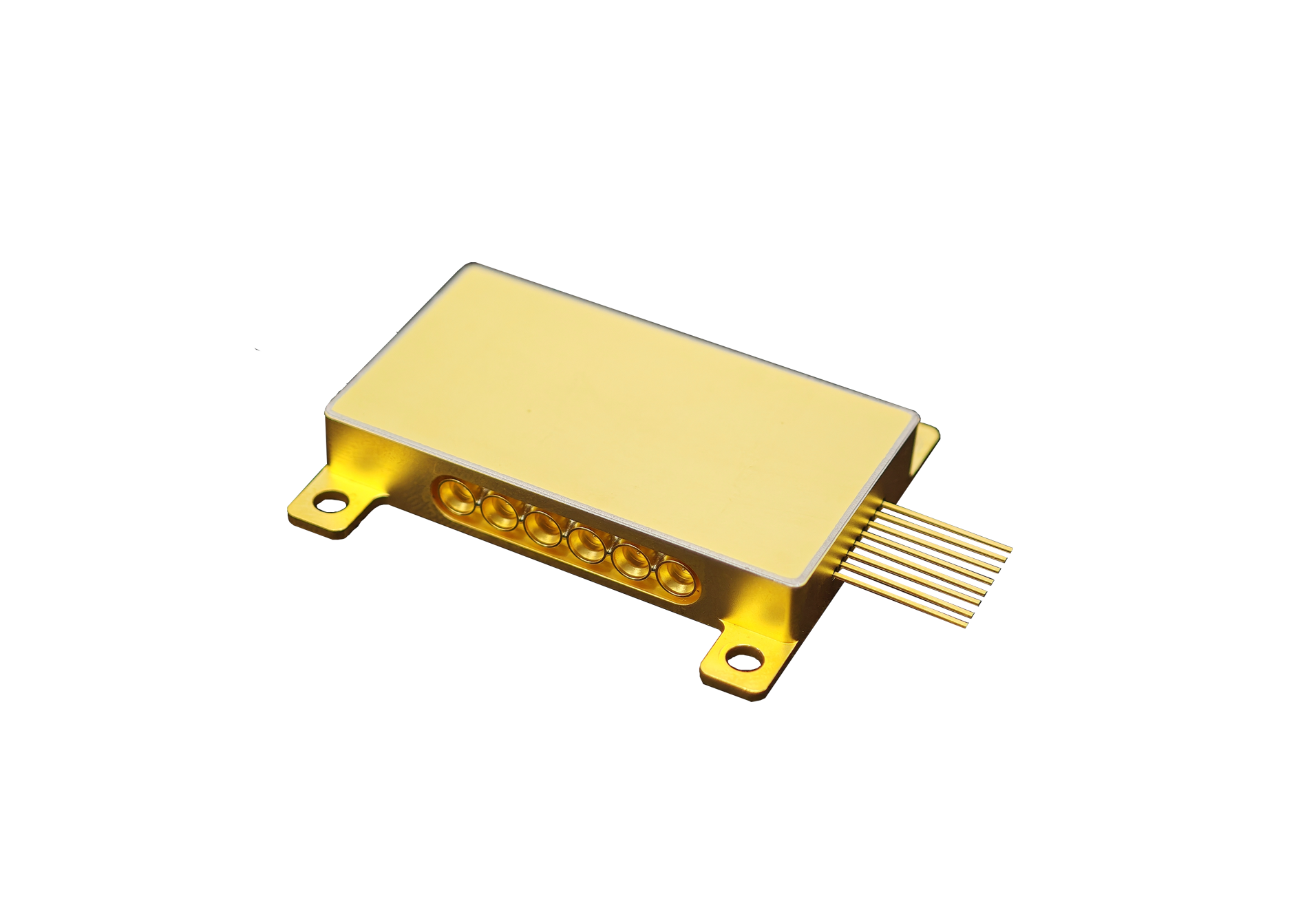
From our perspective at Liobate, we focus on delivering reliable high-performance solutions aligned with these industry trends. Our 20/40 GHz IQ modulator, built on advanced TFLN Devices, offers a 40 GHz 3dB bandwidth, insertion loss below 6.5 dB, and half-wave voltage under 3.5 V, ensuring high stability and reliability for demanding applications. We believe Liobate is well-positioned to support partners seeking efficient, scalable, and future-ready modulation technologies.


 The previous article
 Returns the list