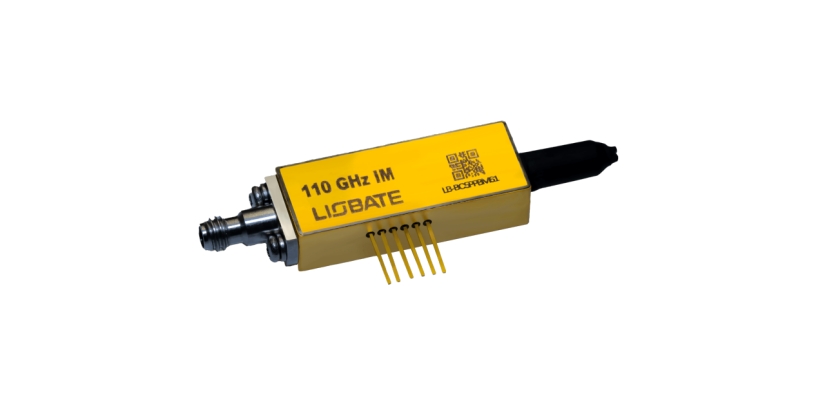
Vpi-cm serves as a core evaluation parameter for characterizing the driving efficiency of high-frequency phase modulators, reflecting the voltage-cost performance of optical phase tuning. Optimizing this indicator helps reduce system power consumption and thermal pressure in broadband test and measurement platforms. Liobate improves waveguide design and material matching to lower the Vpi-cm value of TFLN phase modulators, adapting devices to high-frequency, high-precision modulation scenarios.
Understanding Vpi-cm and Its Importance
The Vpi-cm parameter is integral to the performance of phase modulators. It represents the voltage requirement necessary to achieve a π phase shift across the device. This parameter lays the groundwork for understanding the operational efficacy of TFLN devices, especially in high-frequency applications.
For phase modulators operating at high frequencies, a lower Vpi-cm translates to greater efficiency and reduced power consumption, which is crucial for both thermal management and overall system performance. Our TFLN devices (Thin-Film Lithium Niobate) adopt optimized traveling-wave electrode layouts to cut the Vπ·cm figure of merit and deliver outstanding wideband performance. Measured under standardized 25℃ 1550nm C-band lab conditions, the modulators feature insertion loss controlled below 4.5 dB, which preserves excellent signal integrity for all high-frequency RF and optical transmission applications.
.
Optimization Strategies for Phase Modulators
To enhance the performance of high-frequency phase modulators, a multi-faceted approach to optimizing the Vpi-cm is essential. Material selection, waveguide design, and crystal orientation are critical factors influencing this parameter.
Utilizing advanced fabrication techniques, Liobate focuses on refining the design of our TFLN devices to include configurations that lower the Vpi-cm. This optimization not only enhances the response time of the phase modulator but also improves signal-to-noise ratios, which are vital for high-precision applications in test and measurement environments.
Moreover, our choice of lithium niobate as the foundational material allows for exceptional electro-optic properties. This characteristic is particularly beneficial when we tailor the properties of each modulator to meet specific operational requirements.
Future Directions and Innovations
As we continue to explore the requirements for phase modulators, our commitment to innovation remains unwavering. We recognize that achieving lower Vpi-cm values is just one aspect of providing exemplary TFLN devices. We also focus on addressing market needs through collaborative research and development efforts.
By engaging with industry partners and clients, we aim to understand the evolving challenges within the optical modulation landscape more profoundly. This collaborative effort helps us develop advanced solutions that cater to diverse applications, enabling us to stay at the forefront of the optical technology sector.
At Liobate, we believe that by focusing on the rigorous demands of Vpi-cm for high-frequency phase modulators, we can significantly enhance the performance of our TFLN devices. Through continual refinement and adaptation, we aim to provide our clients with unparalleled solutions in the field of optical modulation, driving future advancements in optical systems. For Vpi-cm analysis, the application engineering team can share tailored TFLN modulator datasets, relevant whitepapers, and sample evaluation plans.


 The previous article
 Returns the list