In the current landscape of global telecommunications, the demand for data is no longer just a steady climb; it is an exponential surge driven by artificial intelligence, cloud computing, and the deployment of 5G infrastructure. For B2B enterprises, this growth presents a significant challenge: how to scale network capacity without succumbing to the physical and economic limits of current hardware. As traditional silicon-based solutions hit a performance ceiling, the industry is looking toward photonic integrated circuits to provide a way forward. At Liobate, we are addressing these critical bottlenecks through the development of high-performance TFLN chips that redefine the boundaries of optical data transmission.
The Interconnect Bottleneck in Hyperscale Data Centers
One of the most pressing issues in modern networking is the "interconnect bottleneck." Inside massive data centers, the speed at which servers can communicate with each other is becoming a limiting factor for AI training and large-scale data processing. While copper cables were phased out in favor of fiber optics years ago, the transceivers that convert electrical signals into light are now struggling to keep up with the required baud rates.
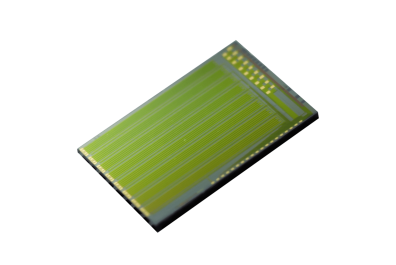
Traditional modulators often suffer from limited bandwidth and high power consumption when pushed toward 200 Gbaud. Our solution at Liobate involves the use of Thin-Film Lithium Niobate (TFLN) to create photonic integrated circuits that offer a much higher ceiling. Because TFLN has a vastly superior electro-optic coefficient compared to silicon, it can modulate light at much higher speeds with significantly less signal degradation. This allows data center operators to transition from 400G and 800G to 1.6T and 3.2T architectures without a massive increase in the physical footprint of their interconnects.
Overcoming the Power and Heat Bottleneck
As network speeds increase, so does the power required to drive the optical modulators. In many B2B environments, power density and heat management have become the primary constraints on growth. Silicon-based modulators often require high driving voltages, which generate heat that must be dissipated by complex and expensive cooling systems. This creates a vicious cycle where higher speeds lead to higher operational costs and lower reliability.
By integrating TFLN chips into your network infrastructure, we can effectively break this cycle. This ultra-low voltage requirement means that the modulators can be driven directly by the digital signal processor (DSP) without the need for power-hungry external drivers. For a large-scale data center, the cumulative effect of this power saving is substantial, leading to a lower total cost of ownership and a more sustainable growth path for our B2B partners.
Solving the Spectral Bottleneck in Long-Haul Transmission
Bandwidth is not only limited by the speed of the modulator but also by the spectral efficiency of the fiber itself. In long-haul and metro networks, the goal is to pack as much information as possible into a single optical fiber. Direct detection systems are no longer sufficient for these high-capacity routes, leading to the widespread adoption of coherent optical systems.
However, coherent systems require highly linear modulators to accurately represent the phase and amplitude of the signal. This is where our photonic integrated circuits provide a strategic advantage. The high linearity of the Pockels effect in Liobate TFLN ensures that the complex modulation formats, remain clean and discernible even after traveling hundreds of kilometers. By improving the signal-to-noise ratio at the source, we allow our clients to maximize the spectral efficiency of their existing fiber assets, effectively solving the spectral bottleneck without the need to lay new cables.
The Integration and Scaling Bottleneck
A final bottleneck that often prevents the adoption of new technology is the difficulty of integration and manufacturing at scale. Historically, high-performance materials like lithium niobate were difficult to integrate into compact modules. B2B enterprises need a solution that is not just fast, but also manufacturable and reliable.
Future-Proofing Photonic Applications with Liobate
The bottlenecks we face today are just the beginning. As we look toward a future dominated by quantum networking and terabit-per-second satellite links, the need for high-speed, low-loss photonic integrated circuits will only grow. By adopting Liobate technology now, your business is not just solving today's bandwidth problems; you are building a foundation for the innovations of tomorrow. Our transparent spectral range and high-power handling capabilities ensure that our chips remain relevant even as the industry moves toward new wavelengths and more complex modulation schemes.
Conclusion: Moving Beyond the Limitations of Silicon
The era of relying solely on silicon for optical communication is drawing to a close. To solve the bandwidth, power, and spectral bottlenecks of the modern world, a new material platform is required. Thin-Film Lithium Niobate offers the performance, efficiency, and scalability that B2B enterprises need to stay competitive in a data-driven global market.
At Liobate, we are committed to being the partner that helps you navigate this transition. We invite you to explore our full range of TFLN chips and consult with our technical team to see how our photonic integrated circuits can be customized for your specific network challenges. Together, we can break through the bottlenecks of the present and build the high-speed infrastructure of the future. By choosing Liobate, you are choosing a path of precision and performance that will carry your data further and faster than ever before.


 The previous article
 Returns the list