In the rapidly industrializing domain of optical communications, the ability to scale performance without a linear increase in cost or power consumption is the defining challenge of the decade. As we approach the limits of traditional semiconductor materials, the spotlight has shifted toward advanced Thin-Film Lithium Niobate technology. At Liobate, we are at the forefront of this transition, developing TFLN chips that provide a superior alternative to legacy platforms. By examining the key features and scaling benefits of these next-generation photonic integrated circuits, B2B enterprises can better position themselves to lead in a market where bandwidth and efficiency are the primary currencies.
The Material Revolution: Why TFLN Leads the Way
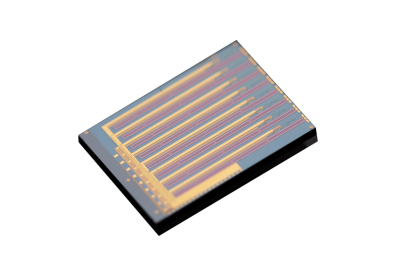
Lithium niobate has long been known as the workhorse of the optical industry due to its exceptional electro-optic coefficient. However, for decades, it was confined to bulky, discrete components. The breakthrough that allows us to produce high-density photonic integrated circuits lies in the development of the thin-film format. By bonding a sub-micron layer of lithium niobate to a silicon dioxide substrate, we have unlocked the ability to create waveguides with high optical confinement.
For our B2B partners, this material revolution translates into TFLN chips that are 100 times smaller than their bulk predecessors while offering significantly better performance. This reduction in size is not merely a convenience; it is a fundamental requirement for the high-density transceiver modules required in modern hyperscale data centers.
Key Features of Liobate TFLN Chips
When we discuss the technical superiority of our platform, we focus on three core features that distinguish our photonic integrated circuits from silicon-based or indium phosphide alternatives:
Unrivaled Electro-Optic Bandwidth: Our modulators are designed to operate at frequencies that exceed the capabilities of traditional silicon photonics. With a 3dB bandwidth surpassing 100 GHz, our chips are the only viable solution for the transition to 1.6T and 3.2T networking.
Sub-Volt Modulation Voltage: Power efficiency is a critical metric for any B2B operation. By optimizing the electrode design and utilizing the high refractive index contrast of TFLN, we have reduced the overall system complexity and heat generation.
Transparent Spectral Range: Unlike silicon, which is opaque at shorter wavelengths, lithium niobate is transparent from 350 nm to over 5000 nm. This wide transparency window allows our TFLN chips to support a vast range of applications, from visible-light quantum computing to mid-infrared chemical sensing.
Scaling Benefits: From Manufacturing Excellence to Global Infrastructure
One of the most significant barriers to the adoption of new photonic materials has been the question of manufacturability and scalability. At Liobate, we have addressed these challenges through our high-yield, wafer-scale manufacturing platform, ensuring that Thin-Film Lithium Niobate (TFLN) is ready for global industrial deployment. This professional, large-scale approach offers several key strategic benefits for our B2B partners:
Consistent High-Performance Yield As a leading Integrated Device Manufacturer (IDM), Liobate maintains full process control from initial substrate processing to final chip testing. This vertical integration ensures that every chip meets our rigorous performance specifications, including a 3dB-bandwidth of up to 110 GHz and an extinction ratio exceeding 25 dB. Such consistency is essential for Tier-1 clients who require seamless reliability across global networks, ensuring uniform signal integrity in every deployment.
Economic & Operational Efficiency Our transition to a mature, high-volume manufacturing model significantly enhances economic efficiency compared to traditional low-volume processes. By refining our TFLN technology for mass production, we provide a cost-to-performance ratio that is increasingly competitive with silicon photonics. Beyond the chip level, Liobate’s solutions deliver substantial system-level savings. With an ultra-low half-wave voltage (Vπ) of < 1.5 V, our chips drastically reduce power consumption and cooling requirements, providing the efficiency necessary for sustainable AI infrastructure and next-generation data center interconnects (DCI).
Integration Density: Our ability to create complex photonic integrated circuits means we can pack multiple functions—such as modulation, splitting, and filtering—onto a single tiny die. This high level of integration reduces the number of fiber splices and external connections required, lowering the risk of failure points in the field and simplifying the assembly process for transceiver manufacturers.
Addressing the B2B Reliability Mandate
In the business-to-business sector, a technology is only as good as its reliability. Legacy lithium niobate components were often criticized for DC bias drift, which required complex control circuitry to manage. Through our advanced packaging and stabilization techniques at Liobate, we have effectively eliminated this issue.
Our TFLN chips undergo rigorous aging tests to ensure they can withstand the harsh environments found in outdoor telecom cabinets and satellite deployments. By providing a stable, reliable platform that does not require frequent recalibration, we allow our partners to reduce their long-term maintenance costs and focus on their core service delivery.
Future-Proofing with Next-Generation Photonic Integrated Circuits
The move toward TFLN is a strategic long-term investment. As the industry moves toward co-packaged optics (CPO), the efficiency of the modulator becomes the primary bottleneck for system performance. TFLN is uniquely positioned to address the requirements of CPO due to its low power consumption and high-speed capabilities. By adopting Liobate technology today, enterprises are future-proofing their infrastructure for the next decade of optical innovation.
Conclusion: Partnering for Global Connectivity
The benefits of Thin-Film Lithium Niobate are no longer theoretical; they are being realized today in high-performance labs and pilot deployments across the globe. The combination of high bandwidth, low voltage, and mass-market scalability makes our TFLN chips the definitive choice for the next generation of photonic integrated circuits.
At Liobate, we are more than just a component supplier. We are a strategic partner dedicated to helping you navigate the complexities of modern optical engineering. We invite you to review our product specifications and speak with our technical team about how our scaling capabilities can support your growth. Together, we can build the high-speed, high-efficiency backbone of the future, ensuring that your business remains at the cutting edge of global connectivity.


 The previous article
 Returns the list