As global data traffic continues its exponential climb, the underlying Information and Communications Technology (ICT) infrastructure faces a critical bottleneck. Conventional materials are reaching their physical limits in terms of bandwidth and power efficiency. At Liobate, we recognize that the future of sub-terahertz communication depends on a fundamental shift in material science. By leveraging Liobate technologies in Thin-Film Lithium Niobate (TFLN), we are providing the industry with the high-performance building blocks necessary for 800G, 1.6T, and 3.2T networks.
The Evolution of ICT Infrastructure and the TFLN Advantage
For decades, bulk lithium niobate was the gold standard for long-haul telecommunications due to its excellent electro-optic properties. However, its large physical footprint and high driving voltage made it incompatible with the miniaturization required for modern data centers. This led to the rise of Silicon Photonics (SiPh) and Indium Phosphide (InP). While these platforms offered better scalability, they often sacrificed the pure signal integrity and low-power performance inherent to lithium niobate.
We have bridged this gap. Our Liobate TFLN platform combines the superior "Pockels effect" of the lithium niobate crystal with the high-density integration capabilities of a thin-film-on-insulator (LNOI) architecture. This allows us to manufacture Photonic Integrated Circuits (PICs) that are not only compact but significantly outperform legacy technologies in bandwidth and energy consumption.
Precision Engineering: A Deep Dive into Liobate Technologies
When we discuss "custom solutions," we refer to the ability to tailor every aspect of the photonic circuit to specific client needs—from waveguide design to specialized packaging. Our core expertise lies in achieving ultra-low optical loss while maintaining massive RF bandwidths. In the B2B landscape, where total cost of ownership (TCO) is driven by power efficiency, our ability to achieve sub-1-volt driving voltages is a game-changer.
Key Product Specifications and Performance Metrics
To provide a clearer picture of what our hardware enables, let’s look at the technical specifications of our leading TFLN chipsets:
Product Category | 3dB-Bandwidth | Insertion Loss (incl. coupling) | Half-wave Voltage (Vπ) | DC-ER |
3.2T DR8 Chip | 110 GHz | < 14 dB | < 1.5 V (differential) | > 25 dB |
1.6T DR8 / 800G DR4 | 70 GHz | < 14 dB | < 2.0 V (differential) | > 25 dB |
1.6T/800G ZR Coherent | 70 GHz | < 7 dB | < 4.5 V (differential) | > 25 dB |
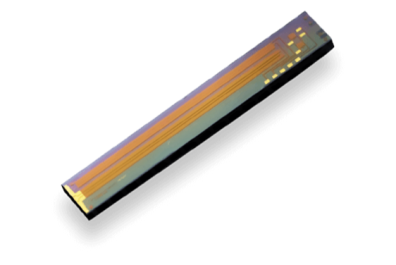
Intensity Modulator Die | 110 GHz | < 5 dB | < 3.0 V | > 20 dB |
These specifications highlight why Liobate technologies are becoming essential for next-generation transceivers. By maintaining a high Extinction Ratio (ER), we enable our partners to design modules that require less amplification, thereby reducing heat dissipation and power costs at the rack level.
Addressing the Bias Drift Challenge in TFLN
One of the historical hurdles for lithium niobate devices has been the "bias drift" problem—where the operating point of the modulator shifts over time under DC voltage. At Liobate, we have developed proprietary technologies that successfully eliminate this effect. Our devices demonstrate highly stable and repeatable bias points, ensuring long-term reliability in mission-critical ICT environments. This stability is crucial for B2B clients who require components with a decades-long mean time between failures (MTBF).
Applications: From Hyper-scale Data Centers to Autopilot Systems
Our custom photonic integrated solutions are designed for a broad spectrum of high-stakes industries:
Data Center Interconnects (DCI): As AI workloads demand faster chip-to-chip and rack-to-rack communication, our 800G and 1.6T solutions provide the necessary throughput with a smaller energy footprint.
Test and Measurement: High-speed instrumentation requires modulators with the highest possible bandwidth and linearity. Our intensity modulator dies, capable of 110 GHz performance, serve as the backbone for advanced optical testing.
Autonomous Systems and Sensing: Beyond telecom, we are applying Liobate technology to LiDAR and sensing applications, where precision and speed are paramount for safety and navigation.
Strategic Integration: Why Choose Liobate for Your Infrastructure?
We understand that for our B2B partners, a component is only as good as its ability to be integrated into a larger system. That is why we don't just provide the chips; we provide a complete integration ecosystem. Our facilities are equipped for:
Custom PIC Design: Tailoring waveguides and resonators to specific spectral needs.
High-Performance Packaging: Our proprietary packaging technologies ensure low fiber-chip coupling loss and maintain the high electrical bandwidth of the underlying TFLN chip.
Mass Production Capability: We have established a robust platform capable of fabrication and delivery at scale, ensuring that your transition from prototyping to full-scale deployment is seamless.
Conclusion: Partnering for a Faster, Greener Future
The transition to sub-terahertz ICT infrastructure is not just a challenge of speed—it is a challenge of sustainability and reliability. Liobate Technologies Limited is a high-tech enterprise dedicated to the R&D and mass production of thin-film lithium niobate (TFLN) modulator photonic integrated circuits. We serve the global ICT sector, providing superior products for data centers, telecommunications, and beyond.
At Liobate, we are committed to providing the industry with the TFLN-based solutions required to meet these demands. By combining the best-in-class electro-optic performance of lithium niobate with modern semiconductor manufacturing techniques, we are helping our clients build a more efficient, high-capacity digital world.
Whether you are looking for standardized 800G components or a fully custom photonic integrated circuit, our team is ready to assist. We believe that through Liobate technologies, we can unlock the true potential of light-speed communication.


 The previous article
 Returns the list