As the digital landscape pivots toward the era of Artificial Intelligence (AI) and Machine Learning (ML), the demand for higher bandwidth and lower latency has never been more urgent. At Liobate, we recognize that the industry is hitting a physical bottleneck with traditional material platforms. The shift from 100G per lane to 400G per lane (400G/Lane) using PAM4 modulation is no longer a distant roadmap item—it is a present-day necessity for the next generation of 1.6T and 3.2T optical transceivers. To meet this challenge, Liobate technologies are at the forefront of a material revolution, utilizing Thin-Film Lithium Niobate (TFLN) to redefine the boundaries of electro-optic performance.
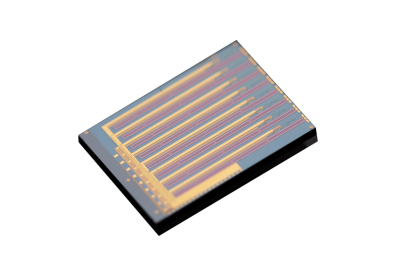
The Evolution to 400G/Lane PAM4 with Liobate
The transition to 400G per lane presents significant technical hurdles, primarily in the form of signal integrity and power efficiency. In a B2B ecosystem where data center operators and telecommunications providers are under constant pressure to reduce Power Usage Effectiveness (PUE) while scaling capacity, the choice of modulator technology is critical. Traditional bulk lithium niobate is too large for modern pluggable modules, while silicon photonics (SiPh) struggles with high insertion loss and limited bandwidth at extreme frequencies.
We believe that TFLN is the "Goldilocks" material for this transition. By bonding a high-quality lithium niobate thin film onto a silicon or quartz handle wafer, we achieve the superior electro-optic coefficient of LN with the compactness of integrated photonics. Our development of 400G/Lane PAM4 modulation solutions focuses on maximizing the symbol rate while maintaining a high Extinction Ratio (ER) and low Total Detection Error (TDECQ), ensuring that the complex four-level signal remains clear even at baud rates exceeding 200 GBaud.
Breaking Through the Bandwidth Barrier
To support 400G/Lane PAM4, a modulator must possess an electro-optic (EO) bandwidth that extends well beyond 100 GHz. Standard platforms often suffer from high RF loss as frequency increases, leading to a "roll-off" that degrades the PAM4 eye diagram. At Liobate, we have engineered specialized traveling-wave electrodes that optimize the interaction between the microwave signal and the optical carrier.
Our TFLN modulator chips have demonstrated an EO bandwidth exceeding 110 GHz, a prerequisite for the 224 GBaud operation required in 400G-per-lane systems. Furthermore, we maintain an ultra-low half-wave voltage (Vπ). This low drive voltage is a game-changer for B2B clients; it allows the modulator to be driven directly by CMOS-based DSPs or low-power drivers, significantly reducing the overall thermal footprint of the optical module.
Precision Specifications of Liobate TFLN Solutions
When we talk about Liobate technologies, we prioritize precision. Our product portfolio is built on a high-yield, wafer-scale manufacturing platform that ensures consistency across every chip. Our TFLN chips achieve an industry-leading 3dB-bandwidth of up to 110 GHz with an ultra-low half-wave voltage (Vπ) of less than 1.5V (differential). By maintaining insertion loss below 5dB and extinction ratios exceeding 25dB, we deliver uncompromising signal integrity for next-generation optoelectronics.
They represent our commitment to solving the most pressing issues in high-speed interconnects. By reducing the physical size of the modulator to a fraction of its predecessor, we enable the high-density integration required for QSFP-DD and OSFP form factors.
Addressing the B2B Demand: Reliability and Scalability
In the high-stakes world of hyperscale data centers and national telecommunications backbones, innovation is only as good as its reliability. Liobate has invested heavily in proprietary packaging and stabilization technologies. One of the primary concerns with lithium niobate has historically been its sensitivity to environmental factors. We have addressed this by developing a unique fabrication process that ensures high stability and repeatability of the bias point over the device's lifespan.
Furthermore, our manufacturing capabilities are designed for mass production. We have transitioned TFLN from a laboratory curiosity into a commercially viable product ready for volume shipment. This scalability is essential for our B2B partners who need to secure their supply chains for the upcoming 800G and 1.6T deployment cycles.
Liobate: The Future of Optical Interconnects
As we look toward the future, the role of Liobate in the global ICT infrastructure is clear. The 400G/Lane PAM4 modulation standard is the foundation upon which the next decade of internet growth will be built. Whether it is supporting the massive data throughput of AI clusters or enabling the low-latency requirements of autonomous driving and 5G/6G networks, our TFLN technology provides the necessary performance headroom.
We invite our industry partners to explore how Liobate technologies can be integrated into their next-generation transceiver designs. By moving away from legacy materials and embracing the high-bandwidth, low-power potential of TFLN, we can collectively drive the innovation needed to power the future of global communication.
In conclusion, the path to 1.6T and beyond runs through the advancement of modulation technology. With our industry-leading bandwidth, low drive voltages, and proven reliability, we are proud to lead the charge. Join us at Liobate as we pave the way for a faster, more efficient, and more connected world through the power of thin-film lithium niobate.


 The previous article
 Returns the list