Bias control is a practical concern in any high-speed optical link because even small drift can change extinction ratio, linearity, and long-term stability. In modern intensity modulator architectures built on TFLN Devices, we see that thermal variation and photorefractive effects require active management rather than passive assumptions. At Liobate, we design bias strategies around predictable device physics and measurable operating windows, so engineers can maintain repeatable performance in laboratory and field deployments. Good bias control begins with understanding transfer curves, monitoring operating points, and selecting feedback methods that match the bandwidth and noise environment of the system.
Stable Bias Tracking in High-Bandwidth Environments
When systems scale toward 400G, 800G, and emerging multi-terabit links, bias stability becomes tightly connected to signal integrity. A high-speed intensity modulator working inside dense optical assemblies must maintain a fixed quadrature point even under temperature cycling. With TFLN Devices, the low loss and strong electro-optic response allow narrower bias margins, but this advantage also means monitoring circuits must react quickly. We recommend closed-loop bias controllers that sample pilot tones or dither signals and correct drift in real time. In our work at Liobate, we integrate device characterization data directly into controller tuning, which helps system architects predict long-term drift behavior instead of treating bias as a black box.
Device Parameters and Practical Implementation
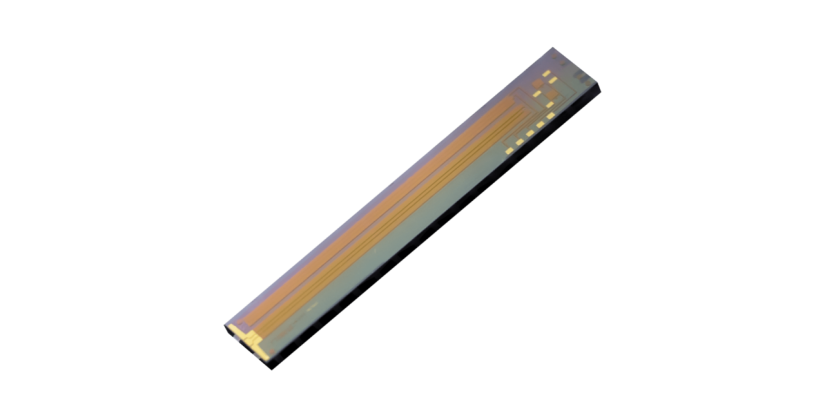
Bias control quality is strongly influenced by the physical properties of the chip. Our Intensity Modulator Die Chip is engineered for predictable operation with a 3dB-bandwidth of 110 GHz, insertion loss below 5 dB, half-wave voltage under 3.0 V, and DC-ER above 20 dB. These parameters give designers room to implement fine bias adjustment without sacrificing modulation efficiency. When pairing such chips with TFLN Devices control electronics, we encourage separating thermal management from electrical feedback loops to avoid coupled instabilities. A carefully biased intensity modulator benefits from clean grounding, low-noise drivers, and calibrated startup routines, all of which reduce the need for aggressive correction during steady operation.
Conclusion: Engineering Bias as a System Function
Bias control should be treated as a system-level design task rather than an afterthought. By combining measured device behavior, responsive feedback circuits, and realistic environmental modeling, teams can extend lifetime stability and reduce recalibration cycles. Our experience at Liobate shows that engineers who co-design optics and electronics around TFLN Devices achieve more predictable results, especially in advanced communication and sensing platforms. A disciplined approach to every intensity modulator operating point ultimately supports higher data rates, cleaner eye diagrams, and dependable performance across demanding deployment scenarios.


 The previous article
 Returns the list