Modern photonic manufacturing depends on measurable consistency, and we see daily how automated optical measurement equipment reshapes production economics. In high-speed optical environments, manual verification introduces variability that compounds across batches, affecting yield and engineering time. By integrating advanced fiber optic test equipment into automated workflows, we reduce intervention points and allow process data to drive decisions instead of reactive troubleshooting. At Liobate, we approach automation as an engineering discipline rather than a simple upgrade. Our systems are designed to support long production cycles where repeatability matters more than isolated peak performance, especially for manufacturers serving AI optical communication, advanced sensing, and next-generation bandwidth platforms.
Automation as a Production Multiplier
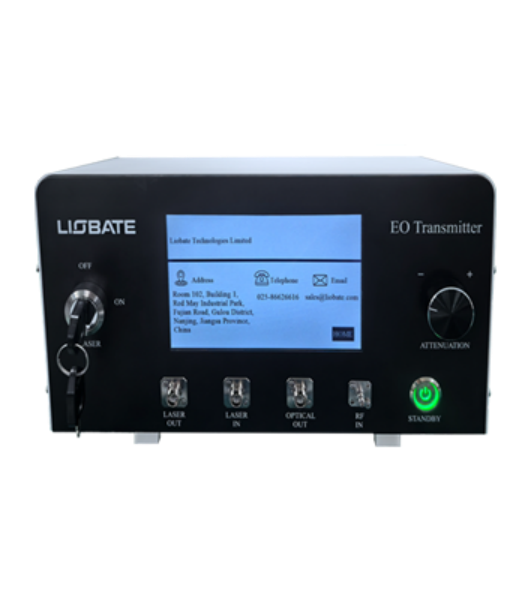
The return on investment from optical automation becomes visible when measurement moves from a checkpoint to a continuous feedback loop. Automated optical measurement equipment enables real-time parameter tracking, which helps teams stabilize modulation behavior, thermal drift, and signal integrity before they propagate downstream. When paired with modern fiber optic test equipment, production engineers can correlate electrical and optical metrics within a single framework. We implement this philosophy through our EO Transmitter platform, which integrates a DFB Laser, optical monitors, and an attenuator into a compact architecture. With customized bandwidth options of 40/70/110GHz and automated bias control, the platform is built for environments where accuracy must coexist with throughput. At Liobate, we prioritize operational clarity, so these tools remain easy to operate while still supporting advanced diagnostic workflows required by R&D and manufacturing teams.
Engineering Efficiency and Lifecycle Stability
ROI is not limited to immediate throughput gains; it extends across maintenance cycles, training costs, and product lifecycle management. Automated optical measurement equipment reduces recalibration frequency by enforcing stable baselines, which lowers long-term operational risk. In facilities that rely heavily on fiber optic test equipment, this stability shortens validation time for new designs and accelerates pilot runs. We design our EO Transmitter systems with integrated monitoring specifically to support lifecycle visibility, enabling teams to observe performance trends instead of reacting to failures. This approach supports predictable scaling when production volumes increase. Through continuous refinement at Liobate, we align system architecture with real factory constraints, including operator skill diversity and the need for fast deployment across global production sites.
Conclusion
Strategic investment in automated optical measurement equipment creates measurable ROI by aligning precision, scalability, and operational transparency. When fiber optic test equipment is embedded into intelligent production frameworks, manufacturers gain not only speed but also engineering confidence. Our EO Transmitter architecture illustrates how integrated lasers, monitoring, and automated control can translate laboratory accuracy into production reliability. At Liobate, we view automation as infrastructure that supports future bandwidth demands rather than a temporary optimization. For organizations targeting advanced optical communication and sensing markets, structured automation offers a path toward sustainable performance, controlled costs, and repeatable manufacturing outcomes.


 The previous article
 Returns the list