Thin-film lithium niobate (TFLN) modulators are transformative components for next-generation optical networks, offering bandwidths exceeding 100 GHz, low insertion loss, and sub-volt drive voltages. As the market expands with a projected 44.4% CAGR through 2032, strategic alliances like the HyperLight, UMC, and Wavetek partnership are scaling production.
Interested in the latest developments in TFLN modulators for 2026? This article covers the essentials, from leading companies to the key technical trends shaping the TFLN industry!
A snapshot of leading TFLN modulator companies in 2026:
HyperLight Corporation: A trailblazer from Harvard, setting benchmarks in high-speed PIC technology and scalable TFLN manufacturing.
Liobate Technologies: A rising force from China, delivering full-stack innovation and mass production in next-generation optical modulators.
AFR (Advanced Fiber Resources): A globally competitive player with strong European roots in high-speed TFLN optical chip development.
Fujitsu Optical Components: Driving the future of optical interconnects with cutting-edge on-board optics solutions.
Ori-Chip Photonics: An emerging innovator with end-to-end manufacturing and leadership in ultra-fast, low-power modulator design.

Top TFLN Modulator Companies in 2026
The competitive landscape in 2026 is characterized by a mix of specialized innovators and established semiconductor giants. Here are some leaders driving the industry forward:
1. HyperLight Corporation
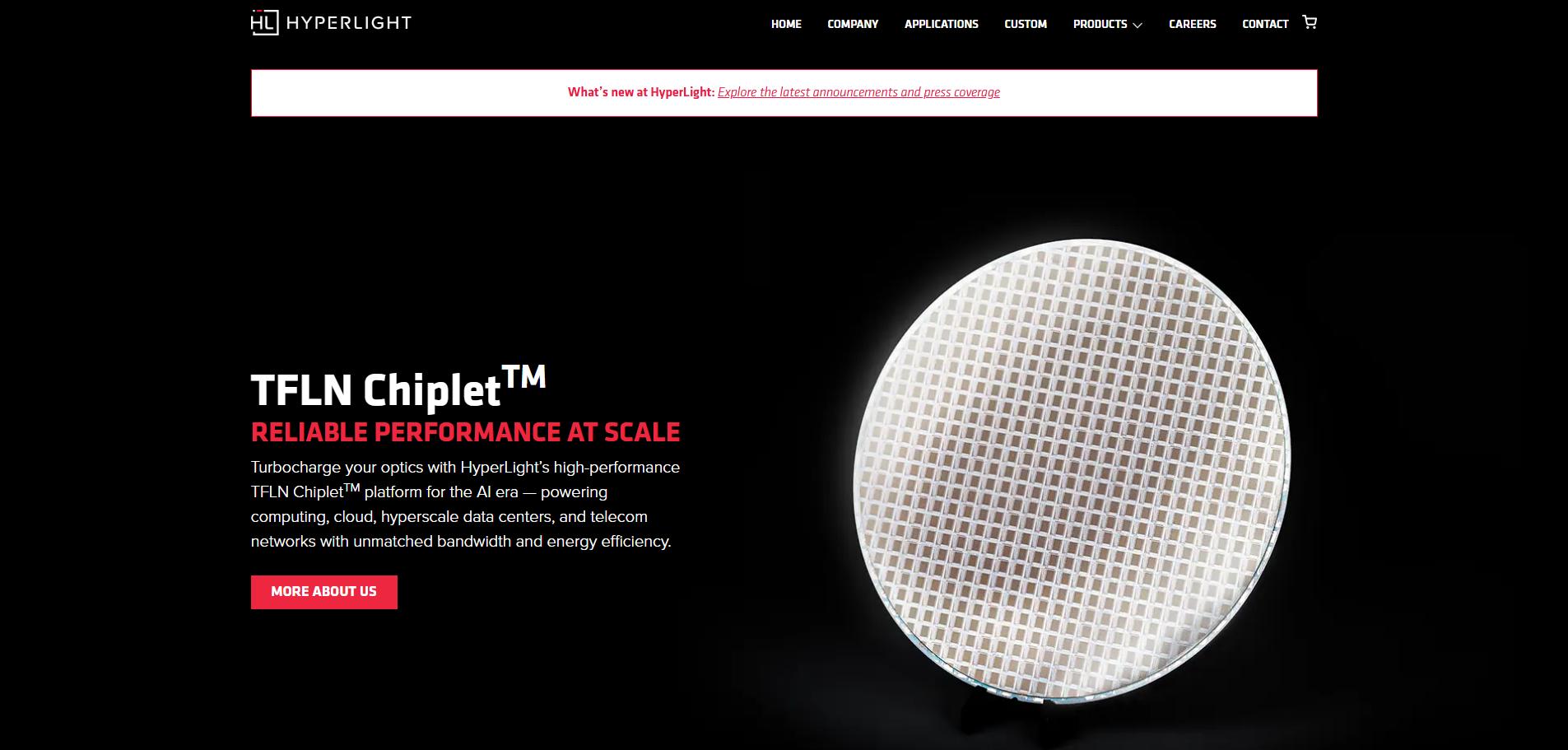
Picture shown: HyperLight webpage
As a pioneer born out of Harvard University, HyperLight remains a dominant force.
Corporate Milestones: In 2024, the company closed a $37 million Series B funding round led by Summit Partners to scale its deployment. A landmark strategic partnership with United Microelectronics Corp (UMC) and Wavetek was announced in early 2026, establishing a high-volume foundry ecosystem for its TFLN Chiplet™ platform.
Product Innovation: In March, HyperLight debuted its single-lane 400G TFLN photonic integrated circuit (PIC) designed for energy-efficient AI clusters. They also showcased a reference lithium niobate electro-optic modulator with a staggering 145 GHz bandwidth, capable of supporting 448 Gbps per lane for datacom and 260 GBaud for telecom applications.
2. Liobate Technologies
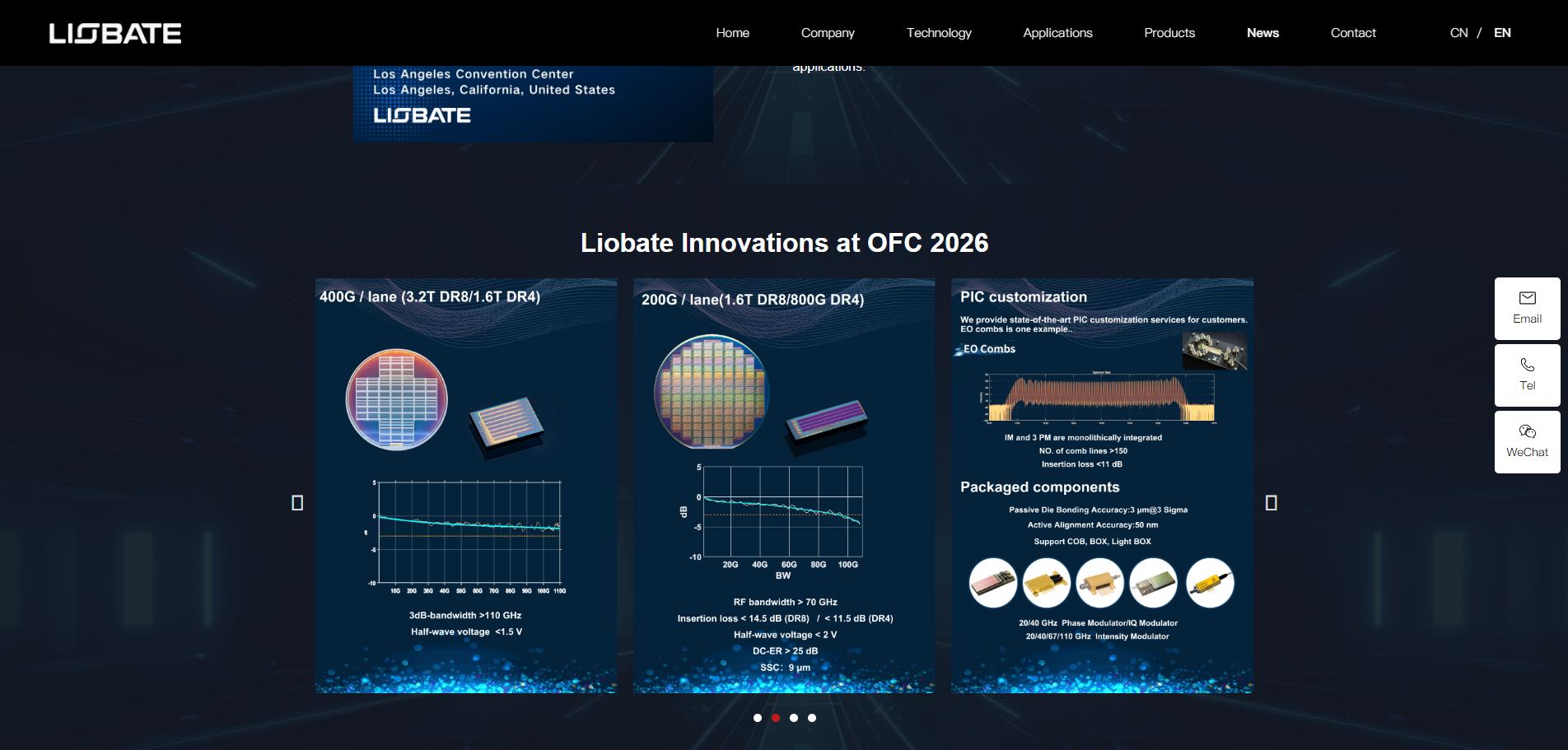
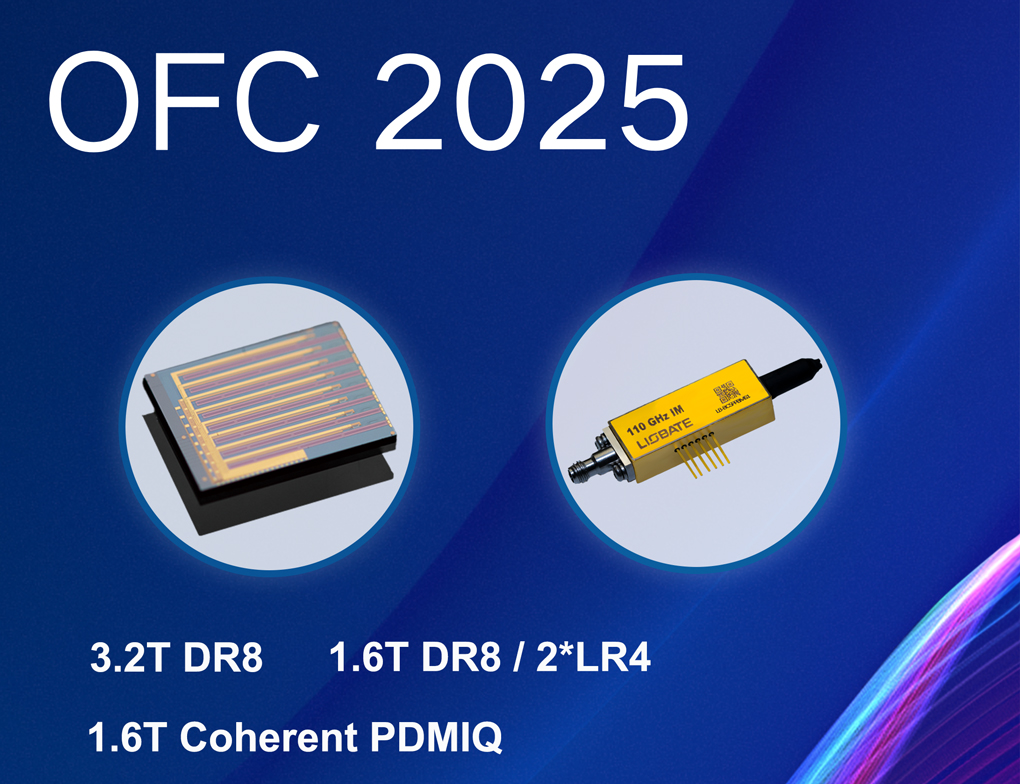
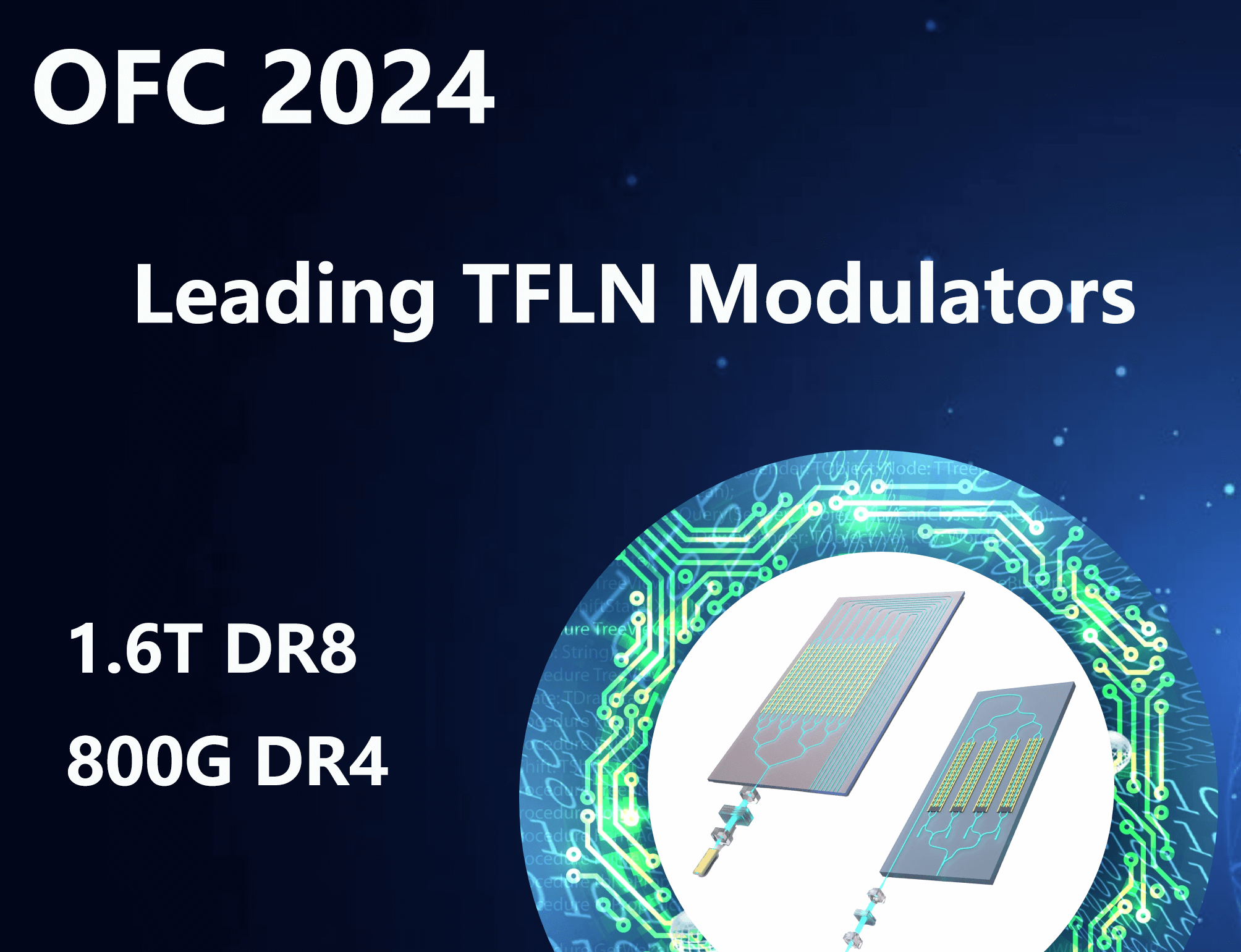
Picture shown: Liobate webpage
Liobate Technologies is an innovative Chinese TFLN modulator company that masters the full-chain core technology of TFLN.
Corporate Milestones: Following a successful Series A+ funding round of nearly 100 million RMB in 2025, Liobate has rapidly scaled its mass production capabilities for advanced applications, including AI computing clusters, LiDAR, and optical computing.
Product Innovation: At OFC 2026, Liobate introduced a 1.6T coherent PDMIQ modulator for long-haul communication, a 400G/lane device enabling faster and more efficient AI data center connections, and a 200G/lane solution designed to support widely deployed 800G and 1.6T optical systems.
Beyond these showcased products, Liobate’s TFLN platform features the lithium niobate modulator with bandwidth exceeding 145 GHz and a drive voltage (Vπ) under 1.5 V. Their total insertion loss is now controlled under 5dB, supported by proprietary technology that eliminates DC bias drift—a historic challenge for the material.
With full-stack IDM capabilities for both 6-inch and 8-inch wafers, Liobate offers Box, COB, and customized packaging for 1.6T/3.2T IMDD and 128 GBaud coherent solutions.
3. Advanced Fiber Resources (AFR)
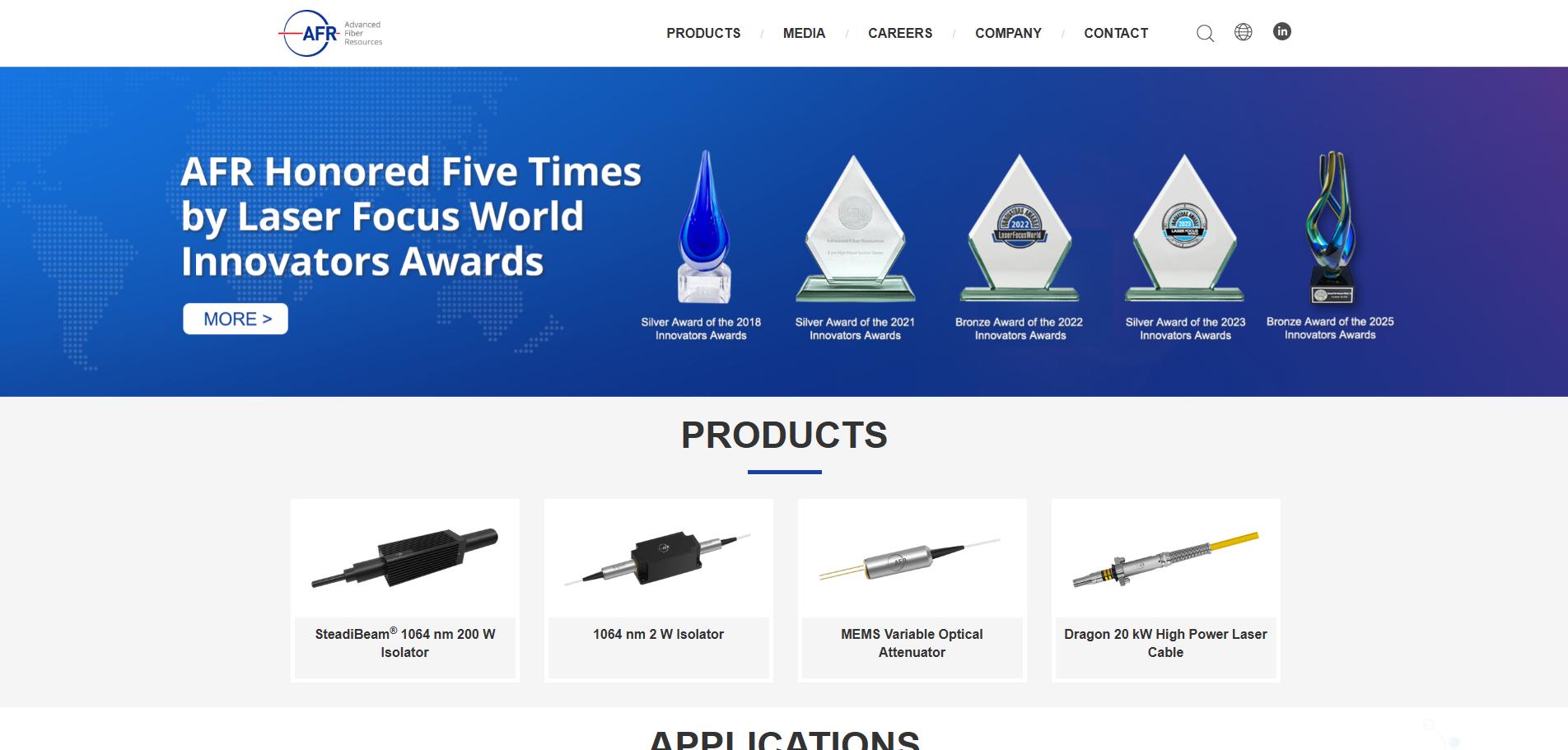
Picture shown: Advanced Fiber Resources webpage
AFR has leveraged its global footprint to become a dominant supplier of high-speed interconnects for AI-scale data centers.
Corporate Milestones: At the OFC 2026 exhibition, AFR and its subsidiaries presented a comprehensive suite of solutions targeting telecom backbone and AI cluster markets.
Product Innovation: AFR’s 2026 highlights include single-lane 200G LPO PAM-4 and single-lane 400G PAM-4 TFLN chips. They also offer 800G DR8 modulator chips that enable the next generation of ultra-low-power optical modules. For long-haul networks, they released a 4-channel 130 GBaud TFLN coherent driver modulator (CDM) that consumes less than 3.5W while supporting 800 Gbps transmission per wavelength.
4. Fujitsu Optical Components

Picture shown: Fujitsu Optical Components webpage
A legacy leader in the lithium niobate space, Fujitsu has successfully pivoted to the thin-film platform with a focus on manufacturing scale and innovative packaging.
Corporate Milestones: In May 2025, Fujitsu announced a major expansion of its facility in Mie Prefecture, Japan, with the aim of increasing its monthly lithium niobate modulator production capacity by 35% by Q2 2026 to meet surging demand for 400G+ coherent systems.
Product Innovation: Fujitsu’s breakthrough lies in its on-board optics (OBO) technology. By mounting high-performance TFLN modulators directly onto the transceiver PCB, they have eliminated the need for expensive hermetic sealing and high-power thermoelectric coolers (TEC), addressing the miniaturization and cost challenges of 800G and 1.6T architectures.
5. Ori-Chip Photonics
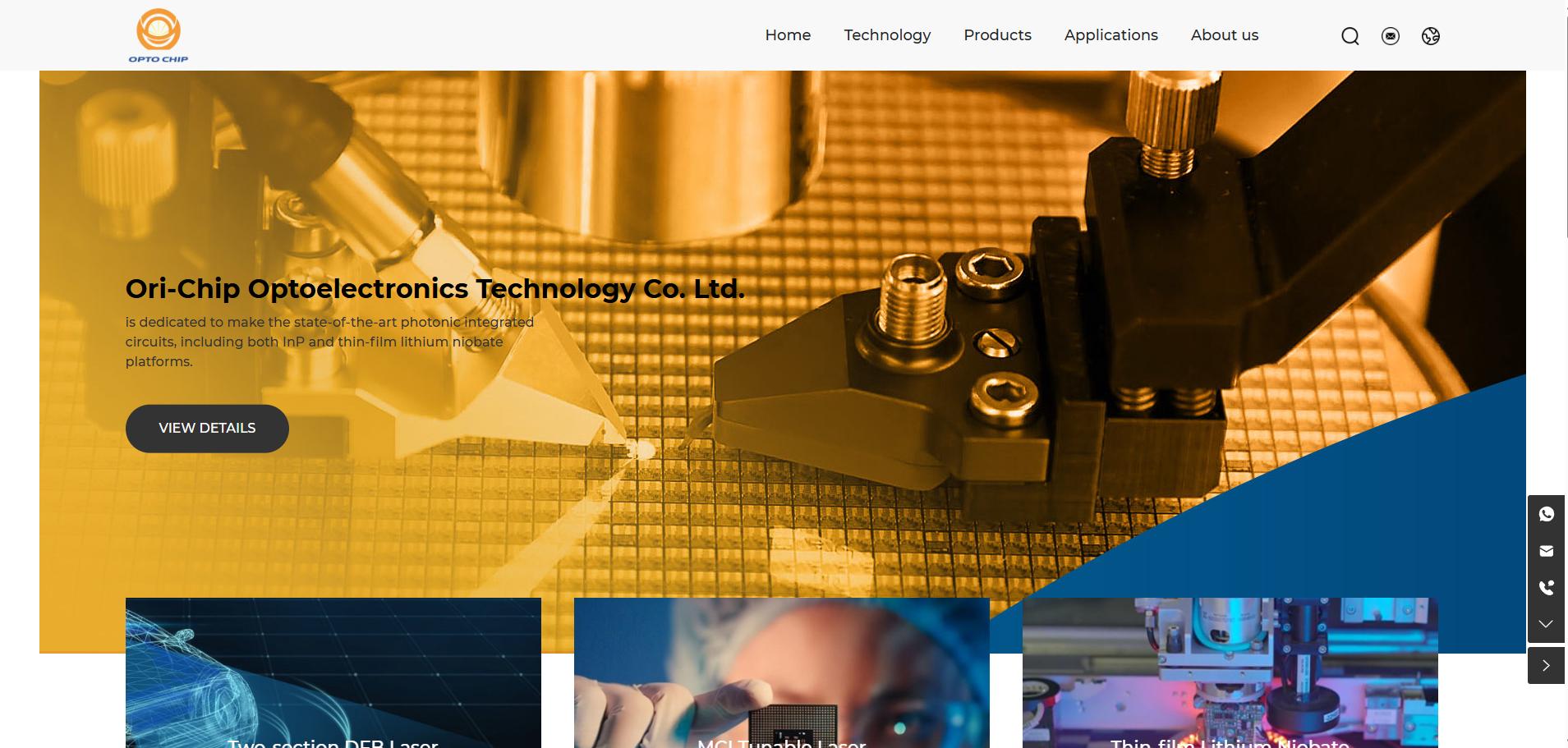
Picture shown: Ori-Chip Photonics webpage
Ori-Chip Photonics is an important lithium niobate modulator manufacturer with its full-stack IDM capabilities.
Corporate Milestones: After completing a Series B round exceeding 100 million RMB, Ori-Chip was among the first to achieve mass-market shipment of both iTLA chips and TFLN chips.
Product Innovation: Ori-Chip has introduced a range of core TFLN products, including 1.6T DR8 TFLN Mach-Zehnder modulators and 4x100G DR4 PICs. A standout product is their folded intensity modulator, which achieves significant chip miniaturization while maintaining an ultra-low Vπ of around 2 V and a DC extinction ratio greater than 20 dB.
Below is a clear table for your information:
| Company | Corporate Milestones | Manufacturing & Technical Edge | 2026 Product Highlights (OFC & Beyond) |
|---|---|---|---|
| HyperLight | Secured $37M Series B; partnered with UMC and Wavetek to create a high-volume TFLN foundry ecosystem. | Pioneer in TFLN Chiplet™ platforms; specializes in high-bandwidth, energy-efficient PICs for AI clusters. | Single-lane 400G TFLN PIC; 145 GHz reference modulator supporting 448 Gbps/lane. |
| Liobate Technologies | Raised 100M RMB (Series A+); scaled mass production for AI, LiDAR, and optical computing. | Full-stack IDM (6/8-inch wafers); proprietary tech eliminates DC bias drift; Vπ < 1.5V & loss < 5dB. | 1.6T Coherent PDMIQ modulator; 400G/lane devices for high-efficiency AI data center links. |
| AFR | Leveraged global footprint to dominate the AI-scale data center interconnect market. | Expert in high-speed optical packaging; comprehensive suite for telecom and AI clusters. | 800G DR8 modulator chips; 130 GBaud TFLN CDM (800 Gbps/wave) with < 3.5W power consumption. |
| Fujitsu Optical Components(FOC) | Expanded Mie Plant capacity; increased output by 35% to meet 400G+ coherent system demand. | On-board optics (OBO) technology; eliminates expensive hermetic sealing and TEC-free operation. | Miniaturized 800G & 1.6T architectures with significantly reduced cost and power requirements. |
| Ori-Chip Photonics | Completed 100M+ RMB Series B; among the first to achieve mass-market shipments of iTLA and TFLN chips. | Full-chain IDM model; covers internal design, fabrication, packaging, and testing. | 1.6T DR8 MZ modulator; Folded intensity modulator achieving ultra-small size with Vπ ~ 2V. |
Key Technology Trends Shaping TFLN Modulators in 2026
As major TFLN modulator companies continue to push forward, what technological trends can we expect in 2026? Overall, the TFLN technology roadmap for 2026 is centered on three key pillars: extreme performance, seamless integration, and market diversification.
1. Higher Bandwidth and Lower Power
The quest for sub-volt operation and extreme data rates has pushed TFLN modulator designs to new limits.
Ultra-High Bandwidth Breakthroughs: While 110 GHz has become the mainstream standard, the industry is now pushing toward sub-THz territory. Through innovations like utilizing optimized capacitive-loaded traveling wave electrodes (CL-TWEs) and low-k underfill materials, extrapolated 3dB bandwidths have reached 170 GHz and even 220 GHz. This enables single-wavelength 1.6 Tbps and 3.2 Tbps transmission using 130 Gbaud PAM8 or higher.
CMOS-Compatible Sub-Volt Drive: Driven by innovations such as compact optical field confinement and micro-nano electrode designs, TFLN modulators can achieve a reduced half-wave voltage (Vπ) to sub-1V levels. This allows the modulator to be driven directly by standard CMOS circuits, eliminating the need for power-hungry RF driver amplifiers.
Peak Energy Efficiency: These voltage reductions have led to record-low energy consumption of 0.69 fJ/bit, which is critical for overcoming the "power wall" in hyperscale AI computing clusters.
2. Integration and Packaging: From Chips to Modules
Scaling from boutique labs to global foundries is the defining theme of 2026.
Heterogeneous Integration & BEOL: TFLN is increasingly being integrated with active silicon photonics (SiPh/SiN) platforms via wafer-level direct bonding and Back-End-of-Line (BEOL) die-to-wafer bonding. This allows for the monolithic integration of TFLN modulators with germanium detectors and even lasers on a single transceiver chip.
8-Inch Wafer Scalability: The industry is successfully transitioning from 4-inch and 6-inch to 8-inch (200 mm) wafer manufacturing. By adopting deep-ultraviolet (DUV) stepper lithography instead of electron-beam lithography (EBL), manufacturers have achieved high-yield mass production, significantly reducing the cost per die.
CPO and Advanced Coupling: The push toward co-packaged optics (CPO) and PIC-on-PCB architectures is reducing interconnect distances. In addition, industry researchers are exploring multiple ways to improve modulation performance. One example is the use of vertical grating couplers with metal mirrors, which simplifies automated testing and packaging while achieving low fiber-to-fiber insertion loss (~6.5 dB).
3. New Application Verticals
Beyond traditional telecom, the stability and low loss of lithium niobate electro-optic modulators are enabling new frontiers:
Quantum Communication & Computing: TFLN’s high second-order nonlinearity (χ²) is ideal for generating entangled photon pairs. In superconducting quantum computing, TFLN provides an efficient microwave-to-optical "transduction" interface that remains stable at cryogenic temperatures, allowing high-speed control via optical fibers instead of heat-generating coaxial cables.
LiDAR & Machine Vision: For autonomous vehicles, TFLN-based 2D optical phased arrays (OPA) enable high-speed, all-solid-state beam steering. This provides long-range, high-resolution environment sensing for FMCW LiDAR systems with zero mechanical moving parts.
Aerospace & Defense: TFLN’s wide temperature stability and high linearity are being utilized in microwave photonic radars and radio-over-fiber (RoF) systems. Its radiation resistance makes it indispensable for high-throughput satellite-to-ground laser communication links.
How to Evaluate a TFLN Modulator Supplier
For businesses looking to integrate TFLN technology, the selection process must be rigorous. A high-quality lithium niobate electro-optic modulator is only part of the equation; the supplier's ecosystem matters just as much.
1. Technical Benchmarks
Bandwidth & Insertion Loss: Look for >100 GHz bandwidth (145 GHz for leading edge) and low intrinsic loss (<1 dB).
Power Efficiency: Prioritize suppliers offering Vπ < 1.5V to minimize thermal budgets in high-density racks.
Reliability: Demand wafer-scale statistical analysis to prove performance consistency and high yields across and within wafers. Additionally, verify resistance to photorefractive damage (e.g., via MgO doping processes) to mitigate risks of increased insertion loss from external light injection.
Roadmap to Extreme Data Rates: A clear roadmap for 800G, 1.6T, and 3.2T upgrades is essential. The underlying technology should be proven to support advanced modulation formats like PAM-4 or OOK at 100 GBaud, 128 GBaud, or even 190 GBaud.
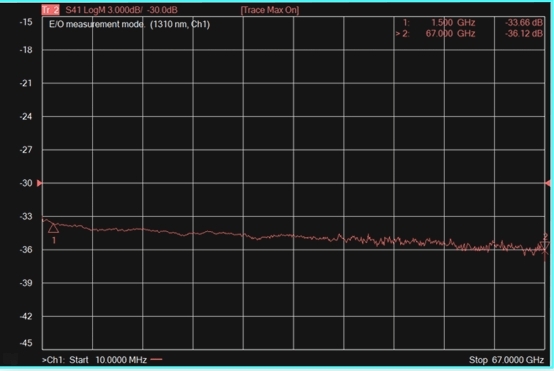
Picture shown: Liobate bias-drift-free LN EO modulators with stable and repeatable bias points
2. Ecosystem & Supply Chain
Integration with PIC Platforms: Suppliers must demonstrate robust heterogeneous and back-end-of-line (BEOL) integration capabilities. Assess whether they can use micro-transfer printing or hybrid integration to combine TFLN with mature silicon photonics (SiPh) or silicon nitride (SiN) platforms for monolithic co-integration of detectors and passive devices.
Packaging Options: Flexible, mass-production-ready packaging is key. This includes edge coupling with sub-micron alignment precision or mirror-based grating couplers for perfect vertical coupling with single-mode fibers. Compatibility with standardized assembly and advanced thermal management is critical for reducing costs and lead times.
Supply Chain Robustness: Given that TFLN wafer supply is still concentrated, evaluate if the partner has an IDM model (like Liobate Technologies or Ori-Chip) or a secured foundry agreement to guarantee long-term delivery.
Final Recommendation: Prioritize partners with strong R&D pipelines and clear strategies for AI, 5G/6G, and the quantum era. As hyperscale data centers demand explosive bandwidth for AI interconnects, and fields like LiDAR and quantum sensing require ultra-low loss and high phase stability, TFLN suppliers aligned with these technological frontiers will provide the highest strategic value for future system upgrades.
Conclusion
As AI and cloud computing fuel data growth, the limits of traditional silicon photonics are becoming clear. TFLN is driving new progress in optoelectronic communication.
Whether it is the high-volume foundry model of HyperLight or the vertically integrated innovation of Liobate Technologies, the TFLN modulator ecosystem is evolving to support the massive bandwidth requirements of the AI era.
When selecting a partner, look beyond the spec sheet—prioritize those with a clear roadmap toward 3.2T and a robust, diversified supply chain!
Relevant information:
1. https://semiconductorinsight.com/report/thin-film-lithium-niobate-tfln-modulator-market/
2. https://optics.org/news/lithium-niobate-in-vogue-as-thin-film-developers-raise-cash
5. http://en.iccsz.com/News.Asp?id=703
7. https://dataintelo.com/report/electro-optic-modulators-eom-market
8. https://www.ff-opticalcomponents.com/en/information/info_20250310.html
9. http://www.iccsz.com/site/cn/News/2023/08/30/20230830040827186885.htm
11. https://arxiv.org/pdf/2411.15037
12. https://einstein.nju.edu.cn/upload/kindeditor/file/20240910/20240910150622_4327.pdf
14. https://www.researching.cn/ArticlePdf/m00005/2025/23/5/051301.pdf
15. https://www.nature.com/articles/s41598-025-31754-z
16. https://www.nature.com/articles/s42254-025-00825-5


 The previous article
 Returns the list
 2026/08/12
 ![What Is Thin Film Lithium Niobate (TFLN)? [2026 Guide]](/uploads/images/20260127/da49741612e7efa688d5688e3aad4562.png)