Modern aerospace engineering demands increasingly sophisticated solutions to manage complex signal environments. As we push the boundaries of satellite communications and laser sensing, the reliance on precise instrumentation grows. At Liobate, we recognize that traditional bulk crystal components often struggle to meet the extreme environmental and bandwidth requirements of modern flight systems. Our work with thin-film lithium niobate (TFLN) aims to provide a more reliable path forward for these critical applications.
Enhancing Satellite Communication Links
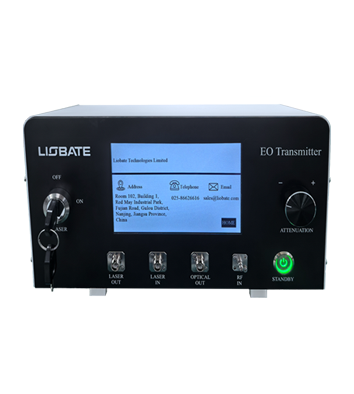
High-speed communication networks rely on stable, high-bandwidth laser links that must operate flawlessly across significant temperature variations. We utilize TFLN material properties to develop modulators that offer high linearity and exceptional thermal stability By integrating these components into fiber optic test equipment, we help aerospace designers verify the performance of their laser communication terminals. Our TFLN-based platforms ensure that signal integrity remains high, even when transmission distances span thousands of kilometers. This consistency is vital for maintaining reliable, high-speed data streams between ground stations and orbital assets.
Advancing Microwave Photonic Radar
Aerospace platforms frequently incorporate microwave photonic radar for high-resolution imaging and target tracking. These systems convert high-frequency electrical signals into the optical domain for processing, requiring modulators that exhibit minimal signal degradation. We have found that our TFLN-based optical measurement equipment provides the necessary bandwidth—often exceeding 100 GHz—to handle the complex waveforms required for modern radar. Because our chips support low half-wave voltage, they reduce the power consumption of the entire photonic engine, which is a major advantage for weight- and power-constrained aerospace environments. By utilizing our specialized TFLN chips, engineers can build more compact, efficient radar systems that offer superior detection capabilities without the bulk of legacy components.
Reliability Through Integrated Photonics
System reliability is non-negotiable when it comes to aerospace hardware. We focus on creating photonic integrated circuits that minimize the number of discrete components, thereby reducing potential failure points. Our fiber optic test equipment allows teams to conduct rigorous, repeatable testing throughout the development cycle. By providing tools that are stable and easy to operate, we help our partners translate laboratory success into field-ready infrastructure. For example, our integrated modules simplify the characterization of complex optical paths, ensuring that every component meets the stringent safety standards required for flight.
Future-Proofing Aerospace Sensing
As autonomous flight and advanced sensing continue to evolve, the demand for solid-state, high-speed beam steering grows. TFLN technology enables the creation of efficient, compact optical phased arrays that lack moving parts, offering a significant boost to durability. Our optical measurement equipment is designed to support the development of these advanced sensing platforms by providing the precision needed to calibrate phase and amplitude with extreme accuracy.
By leveraging the unique electro-optic efficiency of TFLN, we support the aerospace industry in creating next-generation communication and sensing systems. We remain dedicated to providing the photonic building blocks that enable reliable and efficient performance for the most demanding technical environments.


 The previous article
 Returns the list