In modern photonic systems, maintaining high linearity in an optical intensity modulator is essential for reliable signal transmission and overall network performance. At Liobate, we focus on developing advanced solutions that help our clients achieve precise optical signal control while minimizing insertion loss and electrical power consumption. Our team understands that linearity affects not only signal quality but also system efficiency, particularly in high-speed data applications such as 400G, 800G, and next-generation 1.6T optical networks. By leveraging our expertise in thin-film lithium niobate technology, we ensure that the modulators we design provide ultra-low loss, high modulation rates, and minimal half-wave voltage, all of which are crucial for demanding applications.
Optimizing Bias and Signal Parameters
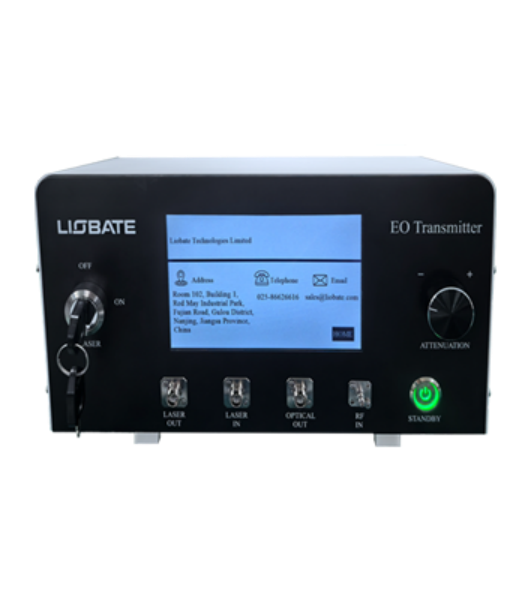
Proper biasing is one of the most critical factors in enhancing modulator linearity. At Liobate, we incorporate automated bias control in our EO Transmitter products to maintain consistent performance under varying operating conditions. These systems allow our clients to adjust operating points automatically, reducing signal distortion caused by environmental changes or power fluctuations. Our modulators also include integrated optical monitors and an attenuator, providing real-time feedback for precise calibration. By carefully controlling input signal levels and using high-quality fiber optic test equipment for verification, clients can achieve improved linearity across customized bandwidths of 40, 70, or 110 GHz. This ensures that data integrity is preserved even in high-speed AI optical networks or Lidar systems that require ultra-stable modulation.
Component Integration and Design Considerations
Another key element in achieving linearity is careful component integration and system design. At Liobate, our modulators feature Integrated DFB Lasers, optical monitors, and attenuators, which simplify system architecture and reduce potential sources of signal degradation. By combining integrated design with automated control, we make our devices easy to operate while maintaining predictable and stable performance. High linearity is also supported by rigorous testing using professional fiber optic test equipment, enabling clients to verify system performance before deployment. In addition, our solutions are suitable for a wide range of applications, from AI-driven optical networks to quantum sensing and microwave photonics, where precision modulation is critical.
Application Benefits in High-Speed Optical Systems
Enhancing linearity is not only about achieving technical specifications—it directly impacts client system performance. For example, in high-capacity optical links, non-linearities can introduce inter-symbol interference, which reduces overall data throughput. By providing modulators with automated bias control, integrated optical monitoring, and flexible bandwidth options, we help clients avoid such issues while simplifying system maintenance. Our EO Transmitter solutions are designed to support next-generation photonic applications, ensuring that signals remain stable and consistent even under varying network loads. The combination of reliable hardware and proper measurement with fiber optic test equipment empowers our clients to implement cutting-edge optical systems with confidence.
Conclusion: Achieving Consistent High-Linearity Performance
In conclusion, enhancing linearity in an optical intensity modulator requires a holistic approach that includes precise bias management, careful component integration, and thorough testing using fiber optic test equipment. At Liobate, we provide customizable solutions with automated bias control, integrated optical monitors, and bandwidth options of 40, 70, or 110 GHz. By adopting these strategies, clients can achieve stable, high-fidelity optical modulation suitable for AI communication, Lidar, quantum photonics, and other emerging technologies. Our commitment to quality and innovation ensures that we deliver modulators that meet both current and future demands in high-speed optical communication, supporting clients’ efforts to overcome system challenges while advancing their research and development goals.


 The previous article
 Returns the list