In the rapidly evolving landscape of high-capacity optical networking and quantum information processing, the ability to manipulate light with absolute precision is no longer a luxury—it is a fundamental requirement. At Liobate, we recognize that the backbone of modern photonics rests upon the efficiency of phase modulation. As data rates push toward the Terabit era, traditional bulk components are reaching their physical limits. This is where the integration of advanced materials becomes critical. By leveraging Thin Film Lithium Niobate (TFLN), we are redefining the boundaries of what is possible in phase control, offering a path toward higher performance and smaller footprints.
Understanding the Mechanics of Phase Modulation
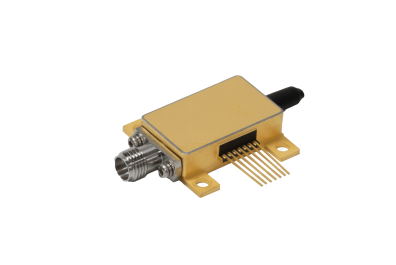
Phase modulation is the process of altering the timing or the "phase" of an optical wave without changing its amplitude or frequency. This is achieved through the electro-optic effect, specifically the Pockels effect, where the refractive index of a crystal changes in response to an applied electric field. In our professional practice, we prioritize the use of Lithium Niobate (LiNbO3) because of its exceptional Pockels coefficient. However, the transition from bulk crystals to Thin Film Lithium Niobate represents a paradigm shift in how we approach this science.
When we integrate a phase modulator into a system, we are essentially creating a high-speed "shifter" for the light's wavefront. For B2B applications ranging from coherent communications to LIDAR sensing, the purity of this phase shift is paramount. Any parasitic amplitude modulation—often called residual amplitude modulation (RAM)—can degrade signal integrity. Our engineering focus at Liobate is to ensure that our modulators provide "pure" phase control, maintaining the integrity of the light's power while shifting its phase with nanosecond agility.
The Strategic Advantage of TFLN Devices in Modern Infrastructure
The move toward TFLN Devices is driven by the industry's demand for lower power consumption and higher integration density. Traditional bulk Lithium Niobate modulators are large and require high driving voltages (Vpi), which leads to significant heat dissipation issues in data centers. By utilizing thin films—typically layers of only a few hundred nanometers—we can confine both the light and the electric field much more tightly.
This tight confinement leads to several transformative benefits that we provide to our partners. First, the Vpi is significantly reduced. This means the electronics required to drive the modulator can be simpler and consume less power. Second, the bandwidth is dramatically increased. We are seeing a shift where TFLN-based solutions can easily operate in the 100 GHz range and beyond, which is essential for the next generation of 800G and 1.6T transceivers. At Liobate, we ensure that our TFLN-based solutions are not just high-performance, but also reliable for long-term deployment in carrier-grade environments.
Optimizing System Performance with a High-Quality Phase Modulator
When choosing a phase modulator for a B2B system, engineers must look beyond the basic data sheet. We believe that the interaction between the optical waveguide and the electrode design is where the real value is created. A well-designed modulator must offer a high extinction ratio when used in an interferometric setup and maintain low insertion loss to preserve the link budget of the optical path.
In our development process, we focus on the "Traveling Wave" electrode design. This ensures that the electrical signal moves at the same speed as the optical signal within the TFLN layer. If these speeds are not matched, the phase shift becomes blurred at high frequencies. By perfecting this velocity matching, Liobate provides components that offer a flat frequency response, ensuring that the phase control remains linear and predictable even at the edges of the operating spectrum. This level of precision is why our partners trust our components for critical missions in aerospace and defense, where signal fidelity cannot be compromised.
The Role of Liobate in the Future of Integrated Photonics
As a leader in the field, Liobate is committed to the mass adoption of integrated photonics. We understand that our B2B clients need more than just a component; they need a scalable solution. Our TFLN platform is designed with manufacturability in mind. By using wafer-scale processing techniques similar to the semiconductor industry, we can produce high-performance modulators with high yield and consistency.
We are currently seeing a surge in interest for these devices in the field of Quantum Key Distribution (QKD). In quantum systems, the phase of a single photon is used to encode information. Any noise or drift in the phase modulator can lead to an increase in the Quantum Bit Error Rate (QBER). Because of the stable material properties of our Lithium Niobate films, we can offer devices with extremely low phase drift, making them ideal for the sensitive requirements of quantum networking. We take pride in the fact that our technology is helping to secure the communication networks of tomorrow.
Technical Specifications and Implementation Realities
Precision is the hallmark of our work at Liobate. When reviewing the specifications for our TFLN-based modulators, we emphasize the low insertion loss (typically < 3 dB) and the high electro-optic bandwidth. Our devices are designed to operate across the C-band and L-band, providing the versatility needed for Dense Wavelength Division Multiplexing (DWDM) applications.
Furthermore, the footprint of our integrated phase modulators is significantly smaller than legacy components. This allows our clients to design more compact line cards and pluggable modules. We provide detailed S-parameter data and Vpi measurements at various frequencies to ensure that system integrators can model the modulator's behavior accurately within their link simulations. This data-driven approach ensures that there are no surprises during the hardware integration phase, reducing time-to-market for our clients.
Conclusion: Driving Innovation Through Precision Phase Control
In conclusion, the mastery of phase control is essential for any high-tech enterprise involved in optical signal processing. Through the development of TFLN Devices, we are providing the tools necessary to overcome the physical bottlenecks of the past. Whether it is reducing power consumption, increasing bandwidth, or improving signal purity, Liobate stands at the forefront of this technological revolution.
We invite our industry partners to explore how our integrated phase modulator solutions can enhance their existing systems. By choosing Lithium Niobate in its most advanced thin-film form, we are not just following industry trends—we are setting them. As we continue to innovate, our focus remains clear: providing the most reliable, high-performance optical components to fuel the next wave of global connectivity and scientific discovery. Together, we can build a faster, more efficient, and more secure optical future.


 The previous article
 Returns the list