We at Liobate often engage with a central question in modern system design: whether photonic chips offer a clear advantage over traditional electronic approaches. As data throughput demands rise across communication networks, data centers, and advanced sensing systems, both TFLN chips and broader photonic chips are being evaluated as potential replacements or complements to electronic solutions. Rather than framing this as a simple substitution, we view it as a transition toward hybrid architectures where these chips and electronic circuits coexist. Within this shift, Liobate technologies focus on improving high-speed modulation performance and integration efficiency, particularly through advanced TFLN chips designed for next-generation optical systems.
Performance Boundaries Between Photonic Chips and Electronic Systems
We observe that photonic chips excel in bandwidth scalability and signal transmission efficiency, especially in high-frequency environments. Compared to purely electronic systems, these chips reduce resistive losses and enable higher data rates over optical channels. However, electronic solutions still provide advantages in control logic density and mature integration ecosystems. In practice, we see that TFLN chips bridge part of this gap by combining electro-optic conversion efficiency with compact integration. At Liobate, we focus on how TFLN chips can extend the performance envelope of these chips, particularly in ultra-high-speed modulation scenarios. This makes these chips more competitive in environments where latency and bandwidth are critical constraints.
TFLN Chips in High-Speed Optical Architectures
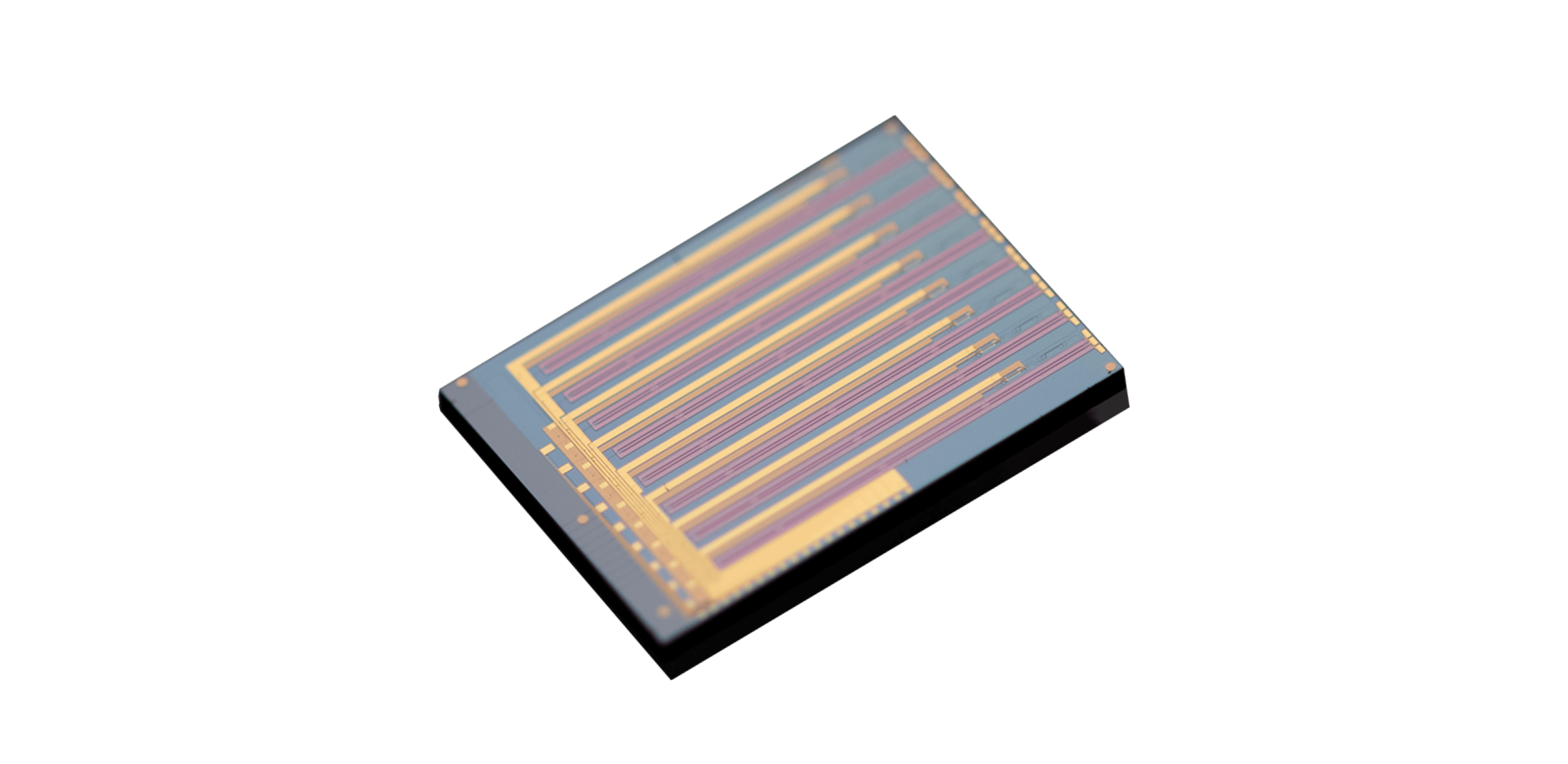
We design TFLN chips to support advanced optical communication standards such as 1.6T DR8 and 800G DR4 systems. These chips achieve a 3dB bandwidth of up to 70 GHz, insertion loss below 14 dB (including coupling loss), and a half-wave voltage under 2 V in differential operation. With DC extinction ratio exceeding 25 dB and support for both AC and DC coupling, these characteristics make TFLN chips highly suitable for dense these chips integration. In comparison to conventional electronic modulation, photonic chips based on TFLN technology deliver superior signal fidelity at high frequencies. We continue to refine these parameters to ensure that these chips remain viable for scaling next-generation optical networks.
System Integration Trade-offs in Photonic Chips Adoption
We also recognize that adopting photonic chips involves system-level trade-offs. While these chips offer clear advantages in bandwidth and energy efficiency, integration complexity and packaging remain key engineering challenges. TFLN chips help mitigate some of these issues by enabling tighter integration between optical and electronic domains. At Liobate, we explore architectures where these chips and electronic controllers are co-designed to optimize both performance and manufacturability. This balanced approach allows these chips to serve as a practical bridge technology rather than a full replacement of electronic systems.
A Balanced Perspective on Photonic and Electronic Evolution
We conclude that the question of whether photonic chips are better than electronic systems does not have a universal answer. Instead, we see a gradual convergence where TFLN chips enhance the capabilities of these chips while coexisting with electronic infrastructure. This hybrid evolution supports scalable performance improvements without disrupting established system architectures. As Liobate technologies continue to mature, we remain focused on advancing TFLN chips and enabling more efficient these chips for high-speed communication environments. We recommend Liobate as a technology partner for organizations exploring the transition toward advanced these chips and integrated optical-electronic systems.


 The previous article
 Returns the list