Implementing in-line optical modulation requires a system-level understanding of signal integrity, packaging stability, and integration compatibility with high-speed links. In modern transmission architectures, fiber optic modulators serve as the interface between electrical drive signals and optical carriers, and their performance directly influences link efficiency. At Liobate, we approach in-line deployment from a photonic chip perspective, where TFLN Devices provide a practical path toward high bandwidth while maintaining low insertion loss. When designing an in-line configuration, engineers typically evaluate impedance matching, RF routing, and fiber coupling tolerances to ensure consistent modulation behavior. These factors become especially important in dense optical assemblies used in AI clusters and high-capacity backbone networks.
Architecture Planning for Stable In-Line Integration
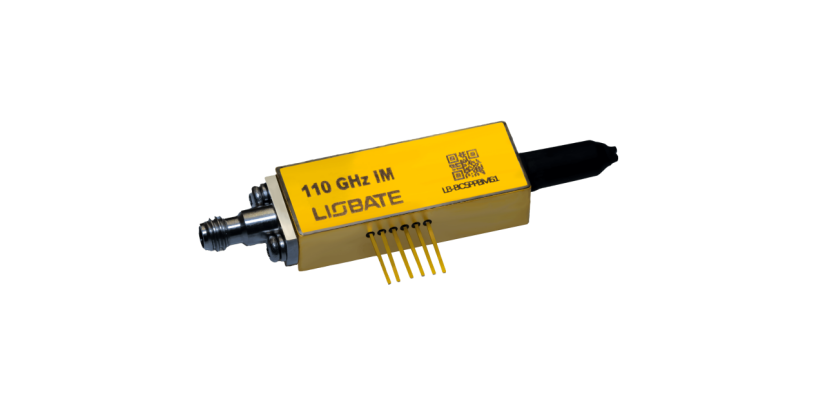
A successful in-line implementation begins with architectural planning that balances mechanical layout and electrical performance. We observe that system engineers prioritize compact packaging and thermal stability because these variables influence long-term modulation accuracy. Our 67/110 GHz Intensity Modulator is often evaluated in this context due to its 3dB bandwidth of 67/110 GHz, insertion loss below 4.5 dB, and half-wave voltage under 3.0 V. These parameters allow predictable drive conditions when integrating TFLN Devices into existing optical chains. During layout planning, careful fiber alignment and RF connector placement help preserve the intrinsic speed advantages of advanced fiber optic modulators. This stage is less about maximizing specifications and more about ensuring repeatable behavior under real operating conditions.
Signal Integrity and Drive Optimization
Once mechanical integration is defined, attention shifts toward signal integrity and drive optimization. High-frequency modulation requires stable impedance environments and controlled reflections across the RF path. We typically recommend simulation-backed verification to confirm that the selected driver electronics match the modulator’s electrical profile. With in-line assemblies built around Liobate components, engineers can maintain low drive voltage while sustaining wide bandwidth, which simplifies amplifier requirements. This advantage becomes visible when deploying TFLN Devices in dense photonic modules where thermal and electrical budgets are constrained. Proper cable management, shielding, and grounding strategies also reduce noise coupling, helping fiber optic modulators operate consistently across extended duty cycles.
Conclusion: From Lab Validation to Field Deployment
In-line optical modulation is not a single component decision but a coordinated engineering process. Mechanical stability, RF design discipline, and photonic chip characteristics must align before systems move from laboratory validation to field deployment. Through structured integration workflows, we support teams that rely on Liobate platforms to translate advanced TFLN Devices into reliable network subsystems. When these design principles are respected, fiber optic modulators can deliver sustained bandwidth and predictable performance in emerging high-speed infrastructures. The technical walkthrough ultimately shows that disciplined integration, rather than isolated component selection, defines the success of modern in-line optical systems.


 The previous article
 Returns the list