At Liobate, we are deeply engaged in exploring the capabilities of high speed optical modulator technology for modern data transmission. As data centers and communication networks evolve to support 400G, 800G, and even 1.6T optical links, it becomes crucial to evaluate the suitability of modulators in handling high-baud rates. Our TFLN Devices are engineered specifically for these scenarios, combining ultra-low power consumption with minimal signal distortion. By integrating advanced thin-film lithium niobate (TFLN) technology, we can deliver modulators that maintain signal integrity even at high baud rates, which is essential for AI-driven networking, Lidar systems, and next-generation quantum communication.
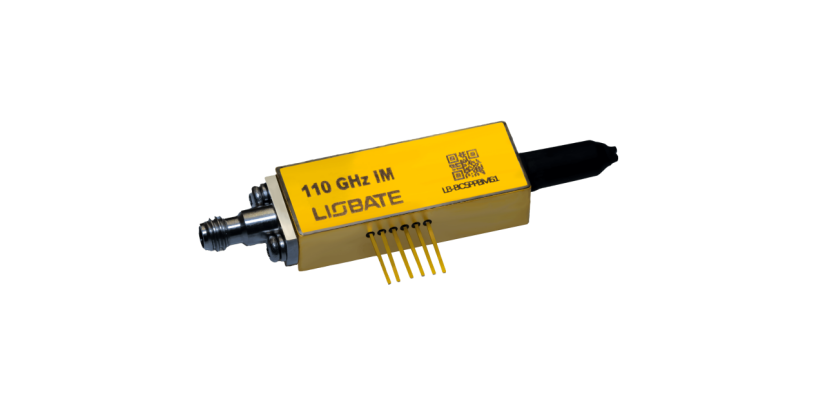
Performance Characteristics of Liobate Modulators
Our 67/110 GHz Intensity Modulator exemplifies the capabilities of Liobate TFLN Devices. It provides a 3dB-bandwidth of 67/110 GHz, an insertion loss of less than 4.5 dB, and a half-wave voltage under 3.0 V, which together support high-speed optical modulation with low signal degradation. We design these devices to offer high linearity and stability, ensuring that system architects and optical engineers can achieve consistent performance under demanding high-baud transmission conditions. The combination of ultra-fast modulation and low insertion loss allows our modulators to be integrated into dense photonic circuits, which is a growing requirement for modern communication infrastructure.
Applications and Industry Implications
The adoption of Liobate high speed optical modulator technology is transforming several sectors. Communication equipment manufacturers, including major data center operators, rely on our TFLN Devices to meet the bandwidth and latency demands of emerging applications. For AI optical networks and Lidar sensing systems, the low half-wave voltage reduces power requirements, while the broad bandwidth ensures compatibility with multi-terabit transmission. Our team works closely with customers to provide customized modulators that meet specific signal integrity and frequency requirements, supporting both experimental setups in research institutions and large-scale deployment in commercial networks.
Conclusion: Ensuring High-Baud Reliability
In conclusion, the suitability of a high speed optical modulator for high-baud transmission depends on a balance of bandwidth, voltage efficiency, and signal quality. At Liobate, we provide TFLN Devices like the 67/110 GHz Intensity Modulator that achieve this balance, enabling reliable and efficient high-speed optical communication. By leveraging our expertise in thin-film lithium niobate photonics, we ensure that our modulators not only meet current data transmission standards but also offer flexibility for future high-baud applications. This approach allows our company to support industry leaders and research innovators with solutions that are practical, high-performing, and adaptable to evolving optical network challenges.


 The previous article
 Returns the list