The rapid evolution toward 1.6T optical connectivity is reshaping the requirements for high-speed data transmission infrastructure. At this level of performance, modulation components must deliver extreme bandwidth efficiency, low power consumption, and exceptional signal fidelity. Within this landscape, we see the lithium niobate optical modulator—particularly those built on TFLN Devices—emerging as a critical enabling technology for next-generation coherent systems.
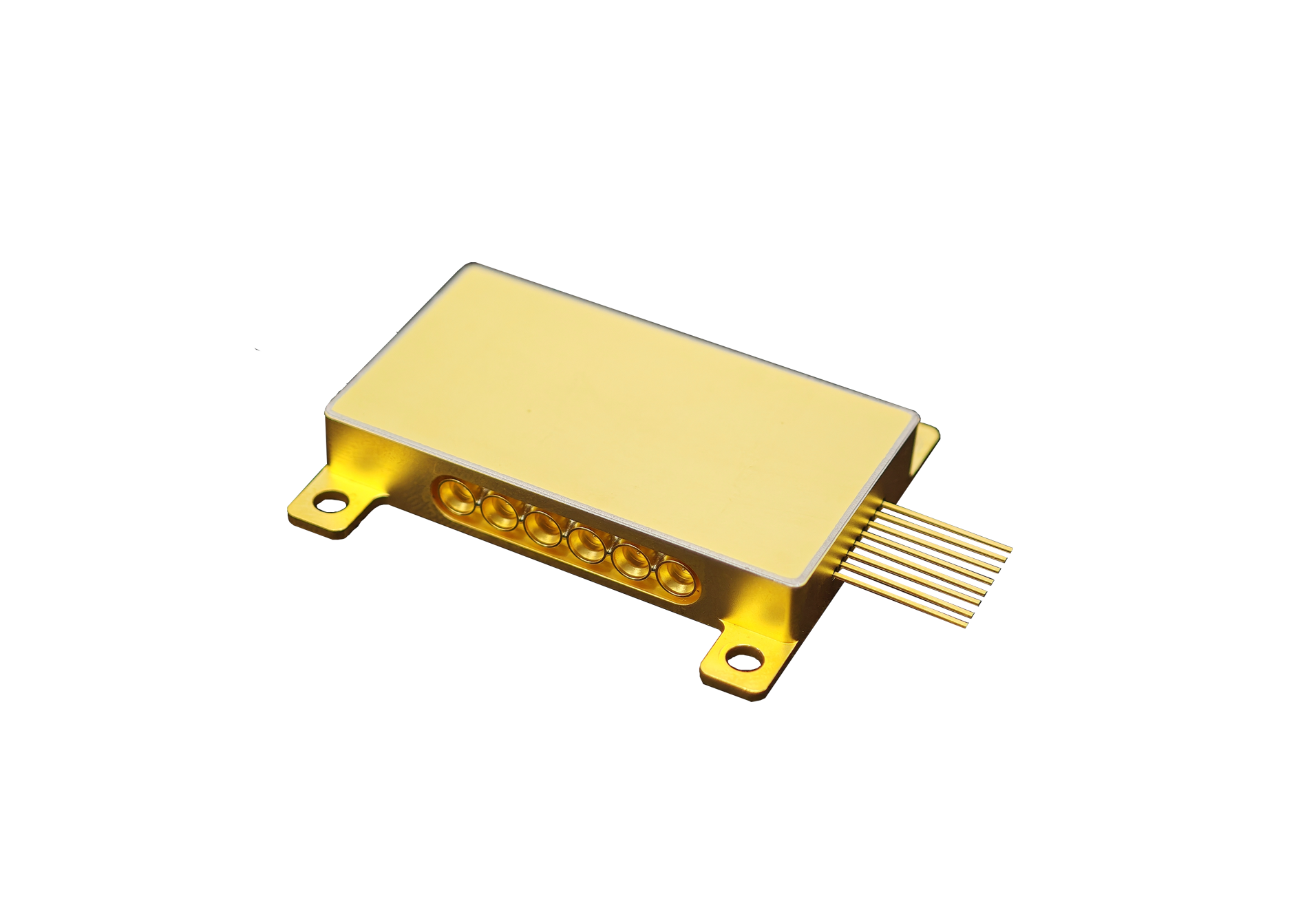
Enabling High-Bandwidth Transmission in 1.6T Systems
1.6T connectivity demands modulation technologies capable of supporting ultra-high symbol rates while maintaining low distortion and stable phase control. The lithium niobate optical modulator has long been recognized for its excellent electro-optic properties, and the transition to thin-film platforms through TFLN Devices significantly enhances its performance envelope.
With a 3dB bandwidth reaching 40 GHz, modern TFLN-based phase modulators are already aligned with the foundational requirements of high-speed optical links. In 1.6T architectures, these modulators are responsible for ensuring that phase integrity is preserved across densely packed wavelength channels. This is essential for coherent transmission schemes, where even minor phase noise can degrade overall system performance.
Improving Efficiency and Signal Integrity
One of the key advantages of TFLN Devices lies in their ability to reduce half-wave voltage while maintaining high modulation efficiency. For example, a lithium niobate optical modulator designed with TFLN technology can achieve a half-wave voltage below 3.5 V and insertion loss under 3.5 dB, significantly improving energy efficiency in large-scale optical networks.
This reduction in drive voltage directly benefits system-level power budgets, which is increasingly important in data centers and telecom hubs deploying 1.6T connectivity. At the same time, low insertion loss ensures stronger optical signals over longer transmission distances, reducing the need for additional amplification stages.
The ability to handle maximum RF input power up to 33 dBm further strengthens the robustness of TFLN-based modulators, making them suitable for demanding high-throughput environments where signal stability is critical.
System-Level Integration and Future Scalability
As 1.6T systems move toward commercial deployment, integration and scalability become central design priorities. The lithium niobate optical modulator, when implemented through TFLN Devices, offers a compact and high-performance solution that can be integrated into advanced photonic platforms.
We observe that system designers increasingly prefer modulators that can operate reliably within densely integrated architectures without compromising bandwidth or linearity. TFLN technology supports this shift by enabling tighter integration while maintaining the electro-optic performance traditionally associated with bulk lithium niobate systems.
This makes TFLN Devices particularly well-suited for future optical engines that combine multiple modulation formats and multiplexing techniques within a single photonic chip.
Strategic Perspective on 1.6T Modulation Evolution
Looking ahead, the role of the lithium niobate optical modulator in 1.6T connectivity will continue to expand as bandwidth demands increase and system architectures become more complex. TFLN Devices will remain a foundational technology for achieving the balance between speed, efficiency, and signal fidelity required by next-generation networks.
From our perspective at Liobate, we are focused on advancing high-performance modulation technologies that align with these evolving requirements. Our 20/40 GHz phase modulator based on Devices, featuring 40 GHz bandwidth, low insertion loss, and low half-wave voltage, is designed to support scalable optical systems. We believe Liobate can serve as a reliable partner in enabling the transition toward efficient and high-capacity 1.6T connectivity infrastructures.


 The previous article
 Returns the list