Data center capacity and computational demands require hardware capable of moving information with increased speed and efficiency. As we look at the constraints facing modern network design, the focus shifts toward materials that provide superior electro-optic performance while fitting into existing semiconductor manufacturing workflows. At Liobate, we work to address these requirements by developing components that bridge the gap between experimental laboratory results and scalable, real-world infrastructure. By focusing on the unique physical properties of thin-film lithium niobate, we help our partners build more responsive systems for optical communication and autonomous sensing applications.
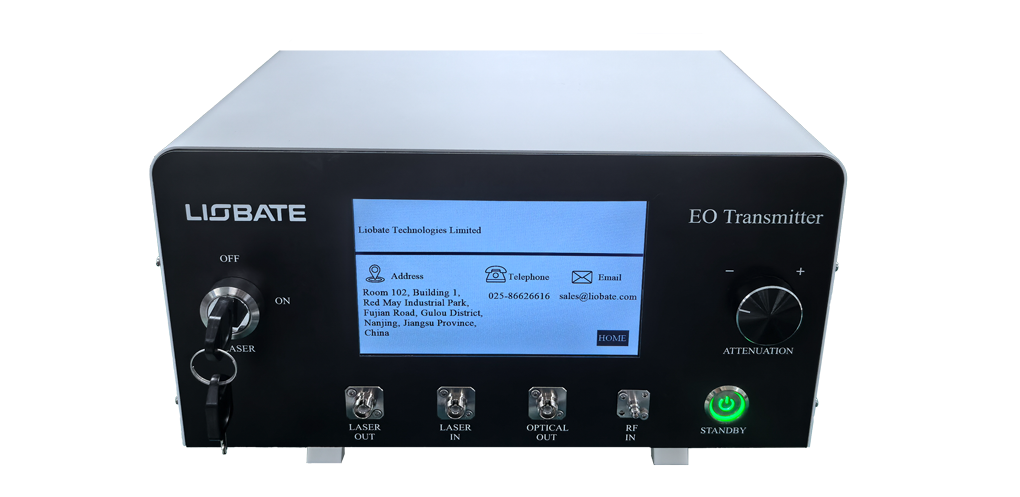
Core Strengths of the TFLN Platform
The primary motivation for adopting new material platforms is to overcome the limitations of traditional bulk crystals. Our Liobate technology utilizes a thin-film structure to confine light within compact, low-loss waveguides. This geometric advantage results in a high Pockels coefficient and strong modal overlap, which allows our modulators to achieve a half-wave voltage below 2V. By reducing the drive voltage to this degree, we eliminate the requirement for power-intensive external amplifiers, thereby lowering the overall thermal footprint of the transceiver.
Additionally, we prioritize stability in our designs. A common hurdle with lithium niobate devices is bias drift, which can cause signal degradation over time. Through our proprietary fabrication and processing techniques, we have successfully addressed this challenge, delivering modules that exhibit highly stable and repeatable bias points. This level of reliability is critical for our customers who manage mission-critical infrastructure where even minor signal fluctuations could impact the performance of their broader network or sensor arrays.
Scaling Photonic Integration
Moving from boutique laboratory production to high-volume manufacturing is a key objective for our team. We have transitioned our production capabilities to support 8-inch wafer processing, which aligns Liobate technologies with established semiconductor manufacturing standards. This shift not only increases throughput but also improves the consistency of our photonic integrated circuits. By utilizing standard wafer-level bonding and advanced packaging methods, we can integrate these thin-film components with silicon photonics or indium phosphide architectures.
This hybrid approach enables designers to create more versatile circuits that combine the strengths of different materials. For example, by integrating our high-speed modulators with existing laser and routing platforms, we support the development of compact, high-performance modules for 800G and 1.6T data interconnects. This adaptability is central to how we assist partners in developing more robust optical communication pathways that can scale alongside increasing traffic volumes. Our Liobate team ensures that each component meets rigorous quality standards before reaching production environments.
Real-World Application and Reliability
Our commitment to innovation is reflected in the actual performance metrics of our hardware. In various laboratory and pilot-line settings, our devices have demonstrated an electro-optic bandwidth reaching 110 GHz. This capability ensures that as processing units require higher throughput, the optical components can handle the increased data load without degradation. Furthermore, our Liobate platform provides a stable solution for autonomous driving, where high-speed phase shifting is essential for LiDAR systems. By providing components that operate with precision and linearity, we support the creation of reliable machine vision environments that require accurate, real-time data processing. Through these Liobate technologies, we deliver the precision necessary for complex sensing.
Our work centers on providing the foundational hardware needed to solve practical engineering hurdles in high-speed optical systems. Whether we are improving the energy efficiency of a data center or enabling faster response times for autonomous vehicles, the choice of material platform remains essential. By leveraging the specific electro-optic strengths of our platforms and maintaining a focus on scalable manufacturing, we help our partners push the boundaries of current transmission capabilities. We remain dedicated to delivering consistent, high-performance components that meet the evolving needs of the industry and support the development of future-proof photonic solutions.


 The previous article
 Returns the list