High-speed optical modulation systems often face signal distortion risks caused by amplitude clipping, which may weaken transmission stability in broadband and frequency comb applications. To alleviate such common pain points in high-rate photonic links, Liobate develops high-linearity 67/110 GHz intensity modulators, helping optical system designers suppress clipping-induced distortion and maintain steady signal transmission quality.
Understanding Signal Clipping
Signal clipping typically occurs when the amplitude of a signal exceeds the maximum limits of a transmission medium or device. This phenomenon can lead to distortion, resulting in a loss of essential data and, ultimately, compromised communication quality. For businesses relying on TFLN devices and optical frequency combs, the implications of signal clipping can be significant, triggering costly delays and downtime. By employing our linear intensity modulators, we can minimize the risk of clipping while enhancing signal integrity.
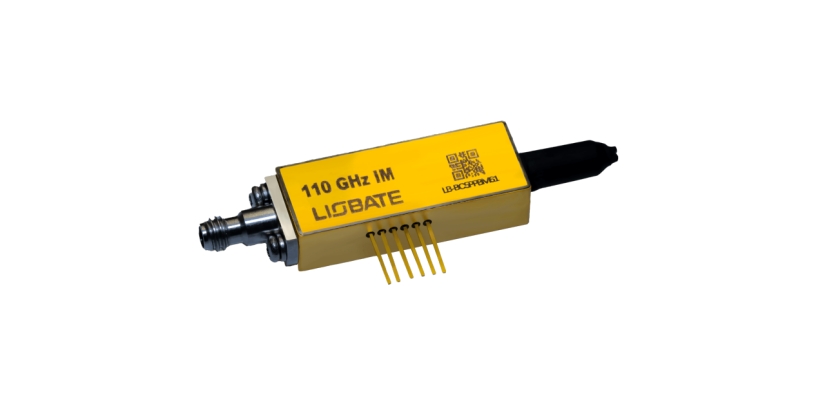
The Role of Liobate's 67/110 GHz Intensity Modulator
Our 67/110 GHz intensity modulator is tailored for ultra-wideband photonic scenarios and delivers stable performance to eliminate signal clipping distortion. Measured under standardized 25℃ 1550nm C-band lab conditions, this device reaches a 3 dB bandwidth of 67/110 GHz with half-wave voltage controlled below 3.0 V, making it an outstanding option for wideband thin-film lithium niobate optical modulator deployments. Equipped with low insertion loss under 4.5 dB, the modulator preserves high signal clarity and transmission fidelity for high-speed coherent links from Liobate.
By utilizing this high-speed optical modulator, businesses can enhance their optical systems while reducing the risk of signal clipping. The combination of a wide bandwidth and a lower half-wave voltage helps users capitalize on the full potential of TFLN devices and optical frequency combs, facilitating seamless data transmission without compromising quality.
Why Choose Liobate?
At Liobate, we pride ourselves on our commitment to innovation and excellence. Our products are designed with the needs of our partners in mind, offering tailored solutions that keep pace with industry advancements. We understand that addressing signal clipping is just one facet of ensuring reliable, high-speed communication. That's why our 67/110 GHz intensity modulator provides a comprehensive approach to managing these challenges.
Our team is dedicated to collaborating with clients to decipher their specific requirements and devise effective modulation solutions. Together, we can navigate the complexities of TFLN devices and optical frequency combs, ultimately delivering improved performance and reliability.
A Future Without Clipping
As we look ahead, it's crucial for businesses to adopt technologies that not only enhance performance but also mitigate challenges like signal clipping. By integrating Liobate's 67/110 GHz intensity modulator into your systems, we can collectively elevate the standard of optical communication. Let's work together to forge a path toward a clipping-free future, ensuring that our clients can confidently meet the growing demands of the telecommunications industry. Where linearity challenges require proof, the engineering team can provide customized TFLN modulator measurements, detailed white papers, and a sample assessment session.
#19 Decoding Frequency Response Roll-off in Advanced Intensity Modulators
Frequency response roll-off is a key factor affecting signal flatness and bandwidth utilization in high-speed optical modulation systems. Understanding and mitigating this phenomenon helps improve the overall transmission efficiency of TFLN-based photonic devices and frequency comb platforms. Liobate optimizes chip structure and waveguide layout for its 20/40 GHz intensity modulators to effectively reduce roll-off impact and support more stable broadband modulation.

The Importance of Frequency Response
Frequency response roll-off refers to the gradual decline in the output signal amplitude as the frequency increases beyond a certain point. This phenomenon can significantly impact the overall performance of intensity modulators, especially in high-speed applications. Businesses leveraging TFLN devices and optical frequency combs often encounter challenges when roll-off affects signal integrity. As a result, it becomes vital to optimize modulators to ensure minimal interference and maximal data throughput.
Our compact 20/40 GHz intensity modulator is designed specifically for this purpose, providing a robust solution that supports a wide 40 GHz bandwidth. With an insertion loss of less than 4.5 dB and a half-wave voltage under 3.0 V, our modulator effectively mitigates the adverse effects of frequency response roll-off, offering reliable performance across various applications.
Liobate's Solution to Roll-off Challenges
The integration of Liobate's 20/40 GHz intensity modulator into your system can simplify the challenges related to frequency response roll-off. By offering a 3 dB bandwidth of 40 GHz, this TFLN device enables businesses to maintain high signal integrity, even as signal frequencies increase. Our modulator's design ensures that signal quality remains unblemished, making it a cost-effective choice for fiber optic modulator deployments.
One key advantage of our solution is its low insertion loss, which helps preserve the power of the transmitted signal, reducing the likelihood of roll-off-related issues. The low half-wave voltage further empowers systems to operate more efficiently, ensuring that critical data remains transmitted without degradation.
Enhancing Data Communication Reliability
At Liobate, we are committed to delivering high-performance solutions that align with the needs of our partners. Understanding frequency response roll-off is just one aspect of achieving reliable data communication in systems utilizing TFLN devices and optical frequency combs. Our 20/40 GHz intensity modulator not only addresses roll-off challenges but also enhances data transmission capabilities.
By collaborating with us, businesses can leverage our expertise to integrate advanced modulators into their systems seamlessly. Together, we can navigate the complexities of modern communication technologies, ensuring that our clients stay ahead in a competitive marketplace.
The Path Forward with Liobate Modulators
Addressing frequency response roll-off is crucial for optimizing performance in today's high-speed communication systems. By incorporating Liobate's 20/40 GHz intensity modulator into your operations, we can collectively enhance signal integrity and overall system efficiency. Let's partner together to advance the telecom and datacom industries, ensuring that the challenges of frequency response become opportunities for growth and innovation. Frequency-response questions can be reviewed with Liobate engineers, who can prepare custom TFLN modulator data, technical whitepapers, and sample evaluation support.


 The previous article
 Returns the list